


Extensive Dysregulation of Phenylalanine Metabolism Is Associated With Stress Hyperphenylalaninemia and 30-Day Death in Critically Ill Patients With Acute Decompensated Heart Failure
- PMID: 39258552
- PMCID: PMC11935636
- DOI: 10.1161/JAHA.124.035821
Extensive Dysregulation of Phenylalanine Metabolism Is Associated With Stress Hyperphenylalaninemia and 30-Day Death in Critically Ill Patients With Acute Decompensated Heart Failure
Abstract
Background: Stress hyperphenylalaninemia predicts elevated mortality rates in patients with acute decompensated heart failure (ADHF). This study investigated the metabolic pathways underlying this association and identified a unique metabolic phenotype underlying the association between stress hyperphenylalaninemia and adverse outcomes in ADHF.
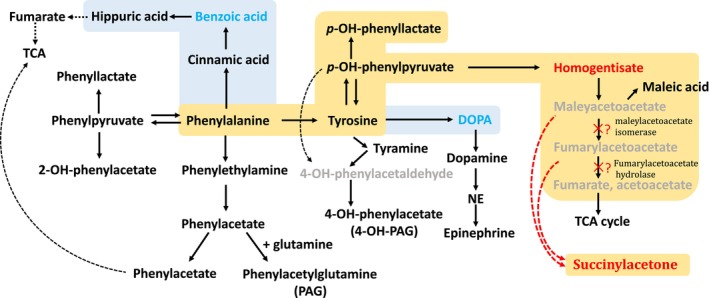
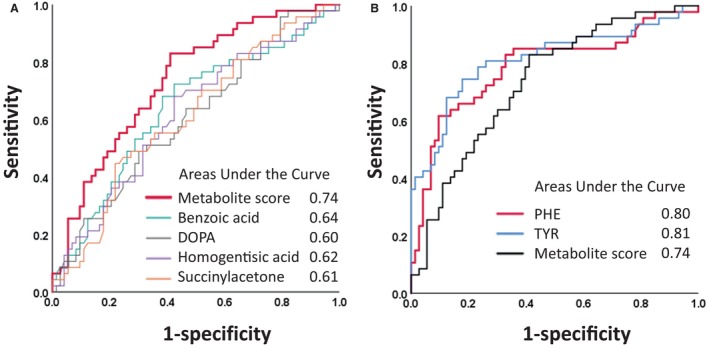
Methods and results: This was a retrospective cohort study. We enrolled 120 patients with ADHF in an intensive care unit (60 with a phenylalanine level ≥112 μM, 60 with a phenylalanine level <112 μM), and 30 controls. Plasma phenylalanine-derived metabolites were measured, and participants were evaluated for 30-day death. Patients with ADHF had extensive activations of the alternative pathways for metabolizing phenylalanine, leading to the levels of phenylalanine-derived downstream metabolites 1.5 to 6.1 times higher in patients with ADHF than in the controls (all P<0.001). Extensive dysregulation of these alternative pathways significantly increased phenylalanine levels and contributed to a distinct metabolic phenotype, characterized by increased phenylalanine, tyrosine, homogentisic acid, and succinylacetone levels but decreased benzoic acid and 3,4-dihydroxyphenylalanine levels. Throughout the 30-day follow-up period, 47 (39.2%) patients died. This distinct metabolic phenotype was associated with an increased mortality rate (odds ratio, 1.59 [95% CI, 1.27-1.99]; P<0.001). A multivariable analysis confirmed the independent association of this metabolic phenotype, in addition to phenylalanine and tyrosine levels, with 30-day death.
Conclusions: In patients with ADHF, extensive dysregulation of the alternative pathways for metabolizing phenylalanine was correlated with stress hyperphenylalaninemia and a distinct metabolic phenotype on the phenylalanine-tyrosine-homogentisic acid-succinylacetone axis. Both stress hyperphenylalaninemia and metabolic dysregulation on this axis were associated with poor outcomes.
Keywords: death; heart failure; intensive care unit; metabolism; phenylalanine.
Figures
References
-
- Romani C, Manti F, Nardecchia F, Valentini F, Fallarino N, Carducci C, De Leo S, MacDonald A, Palermo L, Leuzzi V. Adult cognitive outcomes in phenylketonuria: explaining causes of variability beyond average Phe levels. Orphanet J Rare Dis. 2019;14:273. doi: 10.1186/s13023-019-1225-z - DOI - PMC - PubMed
-
- Delles C, Rankin NJ, Boachie C, McConnachie A, Ford I, Kangas A, Soininen P, Trompet S, Mooijaart SP, Jukema JW, et al. Nuclear magnetic resonance‐based metabolomics identifies phenylalanine as a novel predictor of incident heart failure hospitalisation: results from PROSPER and FINRISK 1997. Eur J Heart Fail. 2018;20:663–673. doi: 10.1002/ejhf.1076 - DOI - PMC - PubMed
MeSH terms
Substances
LinkOut - more resources
Full Text Sources
Medical
