


Safety and efficacy of a novel 0.5% epinastine topical eyelid cream in allergic conjunctivitis: a phase 3 trial
- PMID: 39259242
- PMCID: PMC11607043
- DOI: 10.1007/s10384-024-01108-9
Safety and efficacy of a novel 0.5% epinastine topical eyelid cream in allergic conjunctivitis: a phase 3 trial
Abstract
Purpose: The high prevalence of allergic conjunctivitis in Japan necessitates novel, easy-to-use treatment options for prophylactic use. We evaluated the safety and efficacy of a newly-developed 0.5% epinastine topical eyelid cream to prevent the development of allergic conjunctivitis.
Study design: This was a phase 3, single-centre, double-masked, intra-patient randomised trial in asymptomatic adults (aged 20-65 years) with seasonal allergic conjunctivitis in Japan.
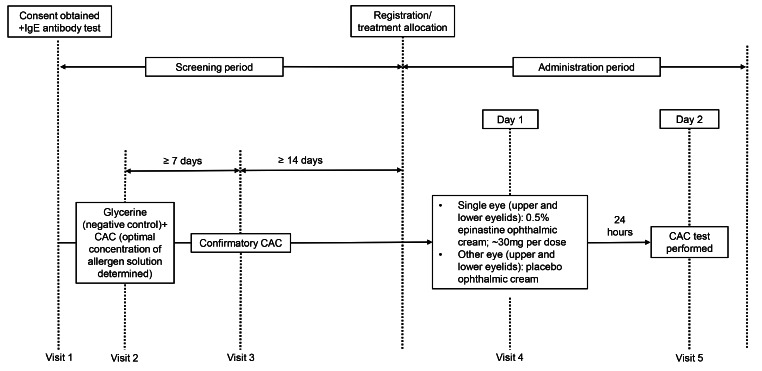
Methods: The left and right eyes of eligible patients were randomised to receive a topical application of either 0.5% epinastine cream (~ 30 mg per dose) to one eye or placebo cream to the other (on the outer skin of the upper and lower eyelids) after a conjunctival antigen challenge (CAC) test. Symptom severity was assessed up to 24 h post-treatment. Primary efficacy endpoints were mean ocular itching and conjunctival hyperaemia severity scores in each eye; safety endpoints included adverse events (AEs) and adverse drug reaction (ADRs).
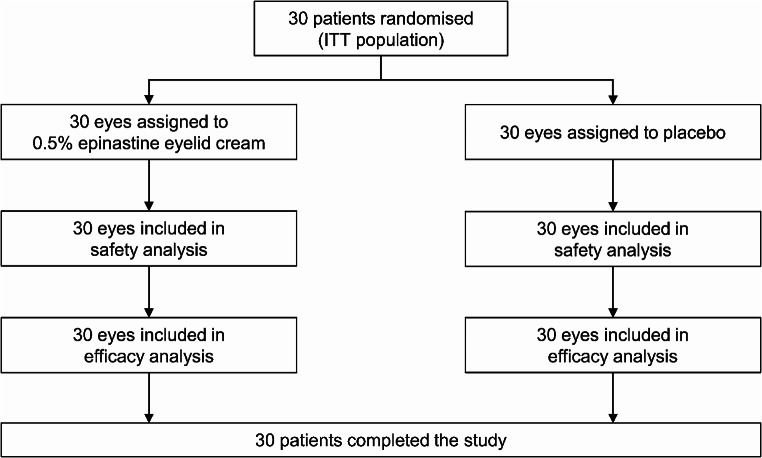
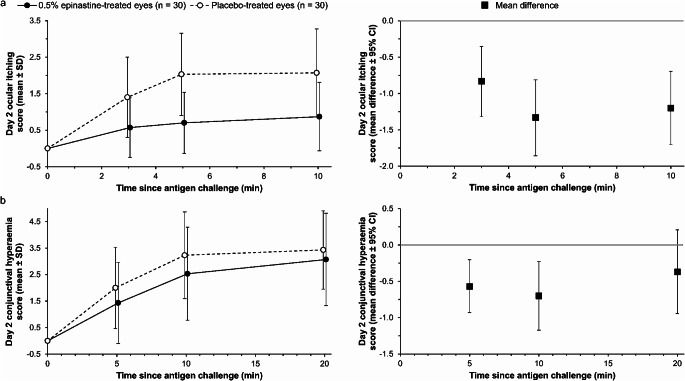
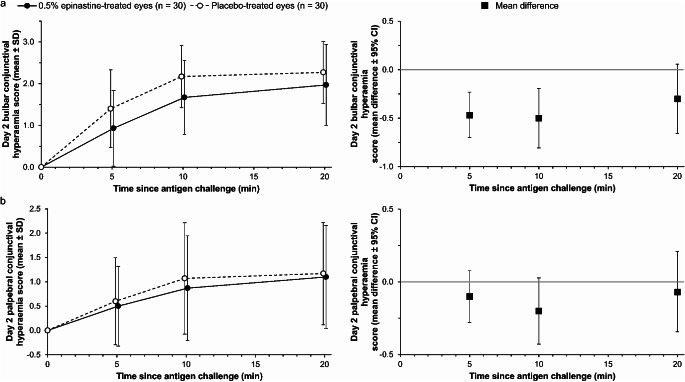
Results: In total, 30 patients (60 eyes) were included in the study. The 0.5% epinastine topical eyelid cream reduced mean ocular itching scores (difference in least squares means ± standard error, - 1.12 ± 0.214; p < 0.0001) and mean conjunctival hyperaemia scores (- 0.54 ± 0.197; p = 0.0097) 24 h after treatment versus placebo. The 0.5% epinastine topical eyelid cream was well tolerated, with no AEs or ADRs reported.
Conclusion: With its novel route of administration, 0.5% epinastine topical eyelid cream may be considered a unique, easy-to-use, once-daily treatment option to prevent the onset of seasonal allergic conjunctivitis.
Keywords: Allergic conjunctivitis; Conjunctival hyperaemia; Epinastine; Ocular itching; Ophthalmic cream.
© 2024. The Author(s).
Conflict of interest statement
Declarations. Conflict of interest: H. Fujishima, Grants to the author’s institution (Santen), Research grant (White Medical, Kobayashi), Consulting fees (Santen), Lecture fees (Santen, Senju, Otsuka), Payment for expert testimony (Santen, Kobayashi); J. Shoji, Grants to the author’s institution (Santen), Consulting fees (Santen); Lecture fees (Santen, Senju, AbbVie, Rohto Nitten).
Figures
References
-
- Japanese society of ophthalmic allergy clinical practice guideline development committee. Clinical practice guidelines for allergic conjunctival diseases (3rd edition). Nippon Ganka Gakkai Zasshi. 2021;125:741–85. (in Japanese).
Publication types
MeSH terms
Substances
Grants and funding
LinkOut - more resources
Full Text Sources
Medical
