


Biomarkers differentiating regression from progression among untreated cervical intraepithelial neoplasia grade 2 lesions
- PMID: 39260797
- PMCID: PMC12302658
- DOI: 10.1016/j.jare.2024.09.009
Biomarkers differentiating regression from progression among untreated cervical intraepithelial neoplasia grade 2 lesions
Abstract
Background: Cervical intraepithelial neoplasia grade 2 (CIN2) is one of the precursor stages before cervical lesions develop into cervical cancer. The spontaneous development of CIN2 is ambiguous. One part of CIN2 lesions will progress to cervical intraepithelial neoplasia grade 3 or worse (CIN3+), another part will regress to cervical intraepithelial neoplasia grade 1 or less (CIN1-), and the last part will persist. Although the guidelines suggest that CIN2 patients with fertility requirements can be treated conservatively to minimize the risk of infertility and obstetric complications, most CIN2 patients undergo surgical treatment to prevent the progression of the disease, which will lead to over-treatment and unnecessary complications.
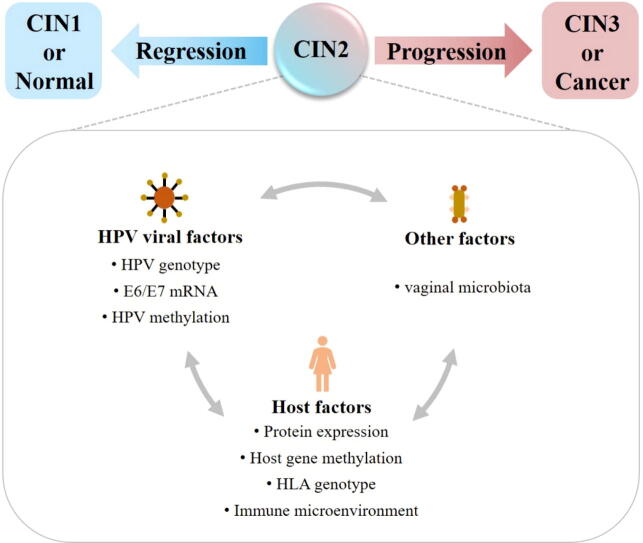
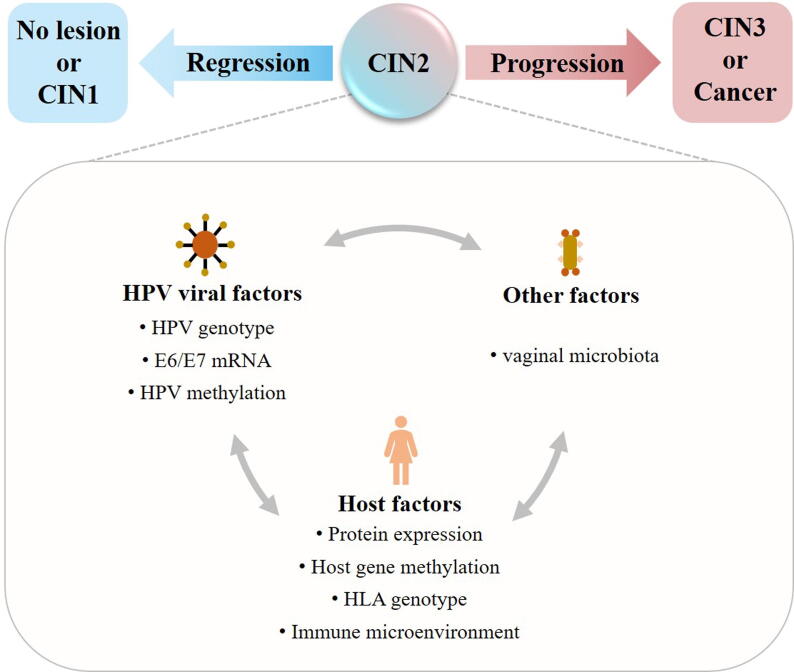
Aim of review: The clinical outcome of CIN2 lesions is unpredictable and depends on histopathological examinations. Thus, it is necessary to identify the biomarkers differentiating regression lesions from progression lesions, which is conducive to supporting individualised treatment. The natural history of CIN2 is commonly regulated by the interaction of human papillomavirus (HPV) viral factors (HPV genotype and HPV methylation), host factors (p16/Ki-67 status, host gene methylation effects, human leukocyte antigen subtypes and immune microenvironment) and other factors (vaginal microbiota).
Key scientific concepts of review: This review summarized the biomarkers predicting the spontaneous regression of CIN2, which correlated with HPV infection, the (epi)genetic change of host genes and microenvironment change. However, potential biomarkers must be validated with prospective cohort studies, which should be conducted with expanded enrollment, a longer observational period and the tracking of more patients.
Keywords: Cervical intraepithelial lesion; Human papillomavirus; Methylation; Progression; Regression.
Copyright © 2024. Published by Elsevier B.V.
Conflict of interest statement
Declaration of competing interest The authors declare that they have no known competing financial interests or personal relationships that could have appeared to influence the work reported in this paper.
Figures
References
-
- Organization WH. WHO guideline for screening and treatment of cervical pre-cancer lesions for cervical cancer prevention, 2021. - PubMed
-
- Voelker R.A. Cervical cancer screening. Jama. 2023;330(20):2030. - PubMed
-
- Lycke K.D., Kahlert J., Damgaard R.K., et al. Clinical course of cervical intraepithelial neoplasia grade 2: a population-based cohort study. Am J Obstet Gynecol. 2023;229(6) 656.e651–656.e615. - PubMed
