Neighborhood Disadvantage and Prostate Tumor Aggressiveness among African American and European American Men
- PMID: 39264110
- PMCID: PMC11614192
- DOI: 10.1158/1055-9965.EPI-24-0450
Neighborhood Disadvantage and Prostate Tumor Aggressiveness among African American and European American Men
Abstract
Background: Studies have identified associations between neighborhood disadvantage (ND), which is more likely to affect African American (AA) individuals, and aggressive prostate cancer. Thus, ND may contribute to prostate cancer disparities. However, it is unknown what ND components drive aggressive disease and whether associations vary by race.
Methods: We evaluated associations between aggressive prostate cancer and four ND metrics-Area Deprivation Index (ADI), validated Bayesian Neighborhood Deprivation Index (NDI), racial isolation (RI) index, and historical redlining, and whether these factors interacted with race, among men with prostate cancer treated at the University of Maryland Greenebaum Comprehensive Cancer Center (2004-2021).
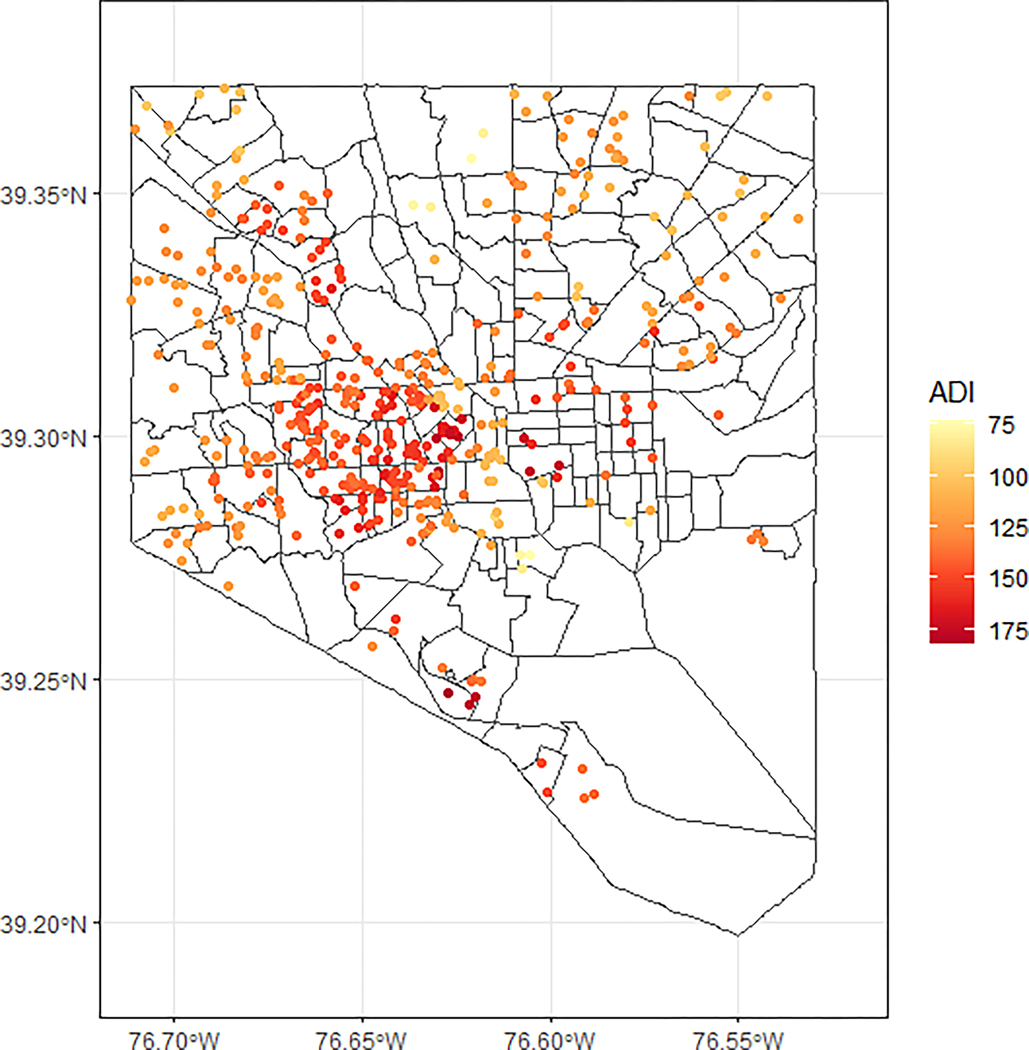
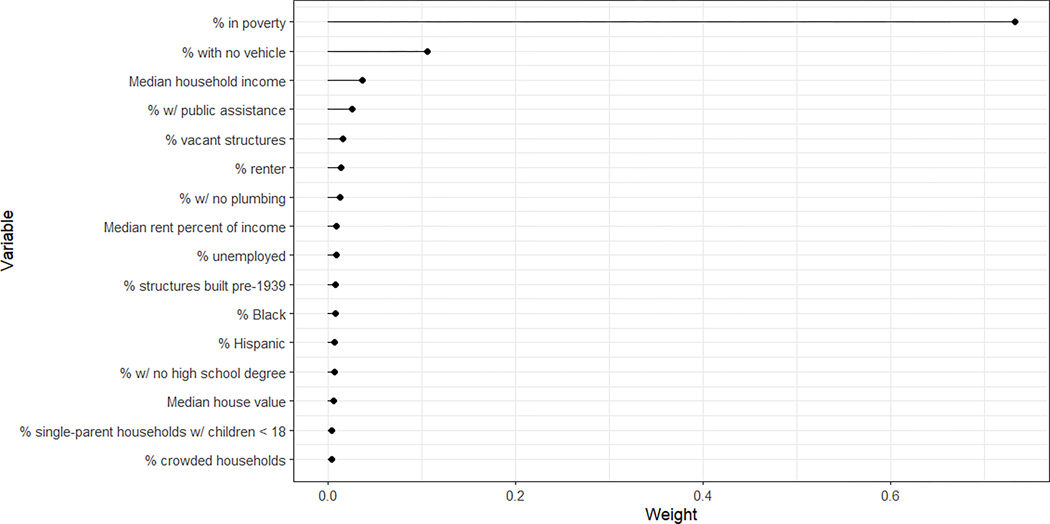
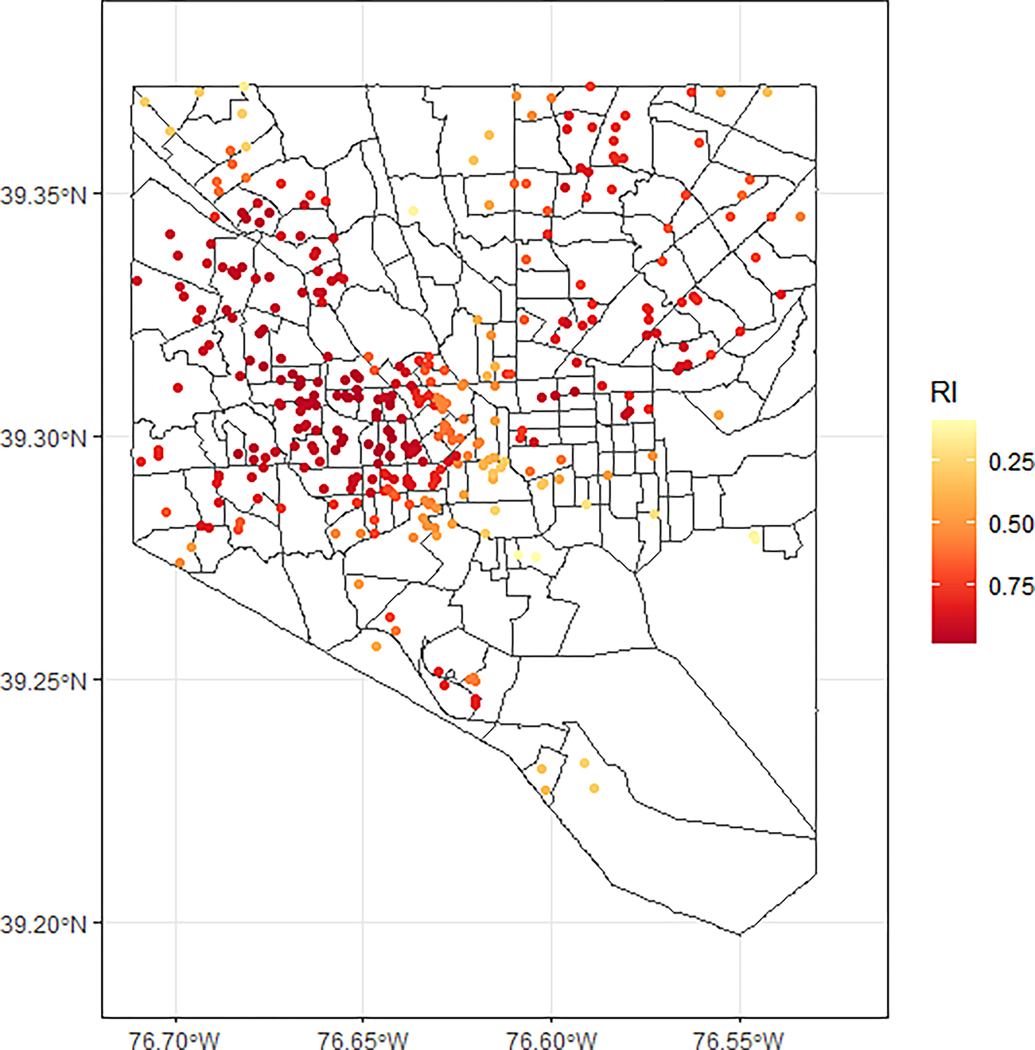
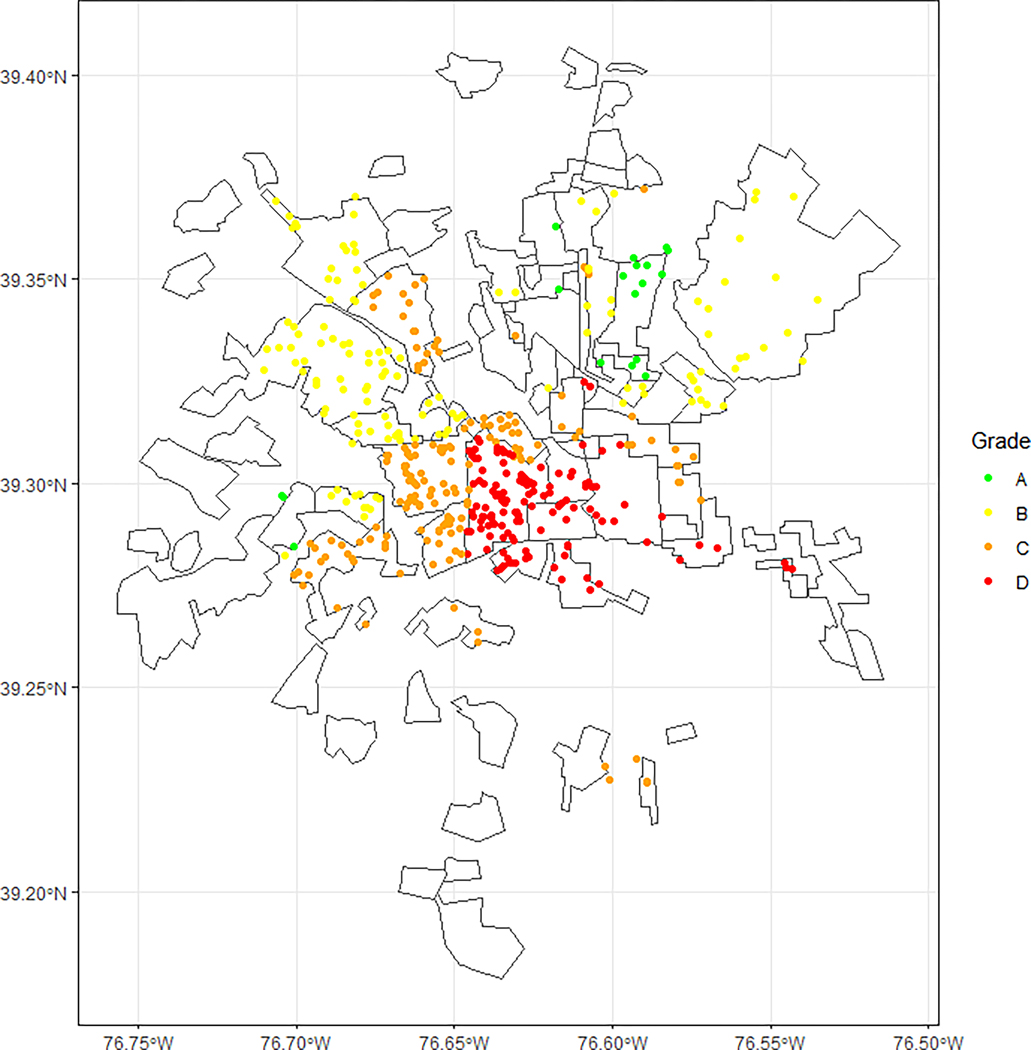
Results: We included 1,458 men (698 European American and 760 AA). AA men were more likely to experience ND. In adjusted models, the ADI, RI, and redlining were significantly associated with aggressive versus nonaggressive prostate cancer overall [ADI, OR for one SD increase = 1.14, 95% confidence interval (CI), 1.00-1.30; RI, OR = 1.27, CI, 1.07-1.51; redlining, OR = 1.77; CI, 1.23-2.56] and among AA men. The NDI was associated with aggressive prostate cancer among AA men (OR = 1.32, 95% credible interval: 1.13-1.57); percent in poverty received the largest importance weight. The ADI (P heterogeneity = 0.002) and NDI (exceedance probability heterogeneity = 98.1%) significantly interacted with race, such that associations were significantly stronger for AA men.
Conclusions: We identified novel significant positive associations for racial segregation and historical redlining with aggressive prostate cancer and significant interactions between ND indices and race.
Impact: Findings inform specific ND components that are associated with aggressive prostate cancer and suggest the ND effect is stronger for AA men, which has implications for interventions to reduce disparities.
©2024 American Association for Cancer Research.
Conflict of interest statement
Figures
References
-
- Siegel RL, Giaquinto AN, Jemal A. Cancer statistics, 2024. CA: A Cancer Journal for Clinicians. 2024;12–49. - PubMed
-
- Shariff-Marco S, Breen N, Landrine H, Reeve BB, Krieger N, Gee GC, et al. MEASURING EVERYDAY RACIAL/ETHNIC DISCRIMINATION IN HEALTH SURVEYS: how best to ask the questions, in one or two stages, across multiple racial/ethnic groups? 1. Du Bois Review: Social Science Research on Race. 2011;8(1):159–77. - PMC - PubMed
-
- Golub M, Calman N, Ruddock C, Agarwal N, Davis JH, Foley RL Sr, et al. A community mobilizes to end medical apartheid. Progress in Community Health Partnerships: Research, Education, and Action. 2011;5(3):317–25. - PubMed
MeSH terms
Grants and funding
LinkOut - more resources
Full Text Sources
Medical