


Active Visual Art Therapy and Health Outcomes: A Systematic Review and Meta-Analysis
- PMID: 39264631
- PMCID: PMC11393726
- DOI: 10.1001/jamanetworkopen.2024.28709
Active Visual Art Therapy and Health Outcomes: A Systematic Review and Meta-Analysis
Abstract
Importance: Art therapy has a long-standing tradition in patient treatment. As scientific interest in its use has recently grown, a comprehensive assessment of active visual art therapy is crucial to understanding its potential benefits.
Objective: To assess the association of active visual art therapy with health outcomes across patient groups and comparators.
Data sources: The systematic literature search included the Cochrane Library, Embase, MEDLINE, CINAHL, ERIC, American Psychological Association PsycArticles, American Psychological Association PsycInfo, PSYNDEX, the German Clinical Trials Register, and ClinicalTrials.gov. No filters regarding language were applied. The search covered all dates before March 2021. Data analysis was conducted from April 24 to September 8, 2023.
Study selection: Randomized clinical trials with any type of patient population comparing the intervention with any control not using active visual art therapy were included. Two researchers independently screened the abstracts and full texts.
Data extraction and synthesis: Data extraction followed the Preferred Reporting Items for Systematic Reviews and Meta-Analyses guidelines, and study quality was evaluated using the Cochrane Risk of Bias tool. Data were synthesized using narrative summaries, forest plots, and random effects meta-analyses.
Main outcome and measures: In line with the protocol, all outcome measures of the included studies were extracted.
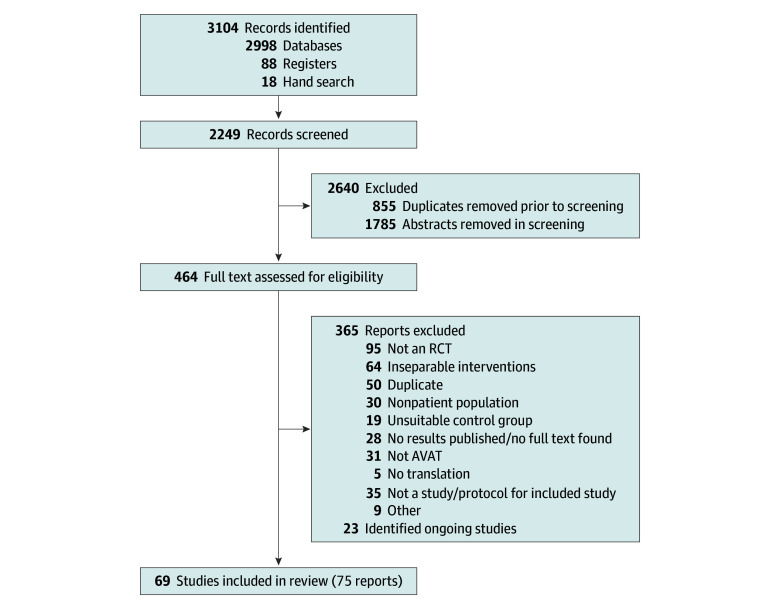
Results: The search identified 3104 records, of which 356 outcomes of 69 studies were included, with a total of approximately 4200 participants, aged 4 to 96 years, in the review. The meta-analyses included 50 studies and 217 outcomes of 2766 participants. Treatment indications included mental, neurological, and other somatic disorders, and prevention. Most outcome measures focused on depression, anxiety, self-esteem, social adjustment, and quality of life. Art therapy was associated with an improvement in 18% of the 217 outcomes compared with the controls (1%), while 81% showed no improvement. The standardized mean difference in the change from baseline of the meta-analyses of 0.38 (95% CI, 0.26-0.51) and posttest analysis of 0.19 (95% CI, 0.12-0.26) also indicated an improvement of outcomes associated with art therapy. Overall study quality was low.
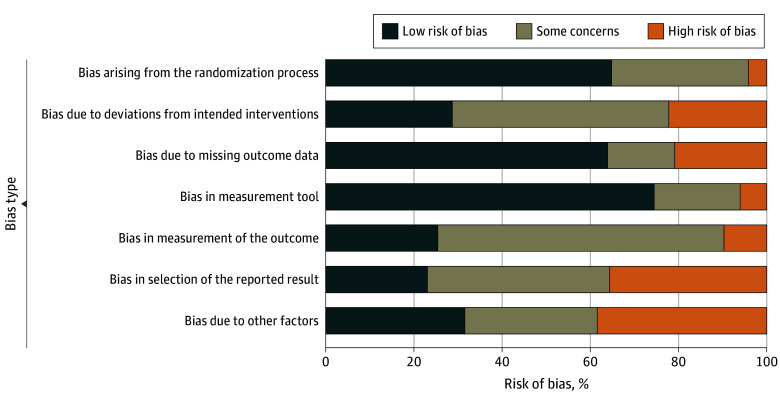
Conclusions and relevance: In this systematic review and meta-analysis of randomized clinical trials, visual art therapy was associated with therapeutic benefits for some outcomes, although most studies were of low quality. Further good-quality studies are needed to provide additional insights for its best possible integration into routine care.
Conflict of interest statement
Figures
References
-
- Haeyen S, van Hooren S, van der Veld WM, Hutschemaekers G. Promoting mental health versus reducing mental illness in art therapy with patients with personality disorders: a quantitative study. Arts Psychother. 2018;58:11-16. doi: 10.1016/j.aip.2017.12.009 - DOI
Publication types
MeSH terms
LinkOut - more resources
Full Text Sources
Research Materials
Miscellaneous
