


Efficacy of respiratory support therapies during pulmonary rehabilitation exercise training in chronic obstructive pulmonary disease patients: a systematic review and network meta-analysis
- PMID: 39267046
- PMCID: PMC11395947
- DOI: 10.1186/s12916-024-03605-7
Efficacy of respiratory support therapies during pulmonary rehabilitation exercise training in chronic obstructive pulmonary disease patients: a systematic review and network meta-analysis
Abstract
Background: Exercise training is fundamental in pulmonary rehabilitation (PR), but patients with chronic obstructive pulmonary disease (COPD) often struggle with exercise intolerance. Respiratory support during exercise in COPD patients may be a beneficial adjunct therapy. In this study, the effect of different respiratory support therapy during pulmonary rehabilitation exercise training in COPD patients was assessed through a network meta-analysis.
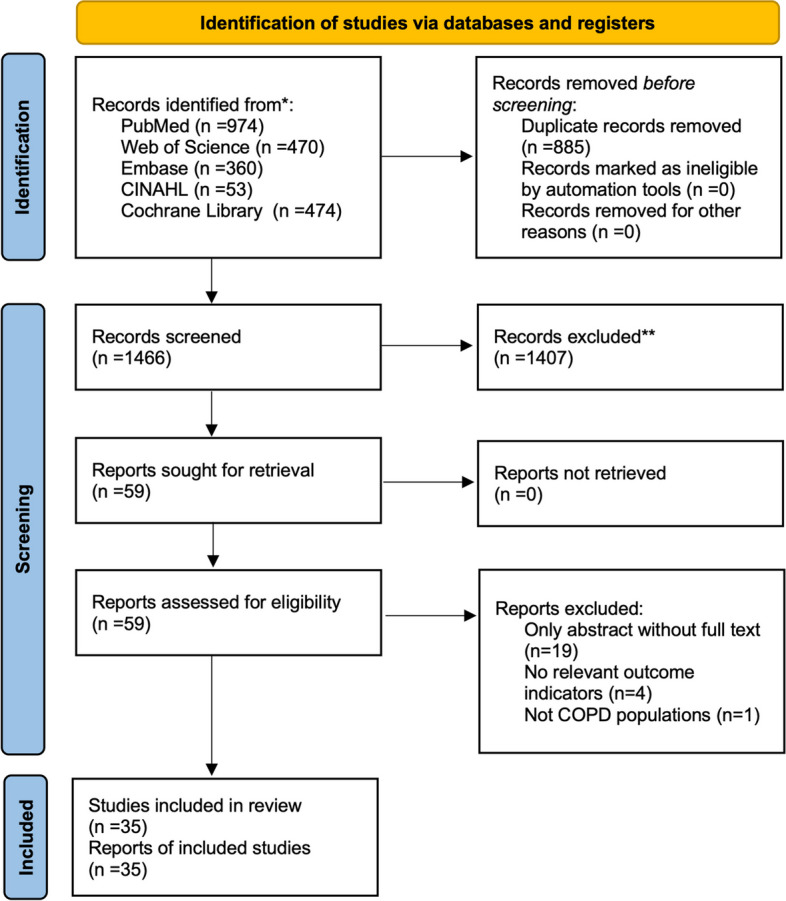
Methods: Five databases were searched to obtain randomized controlled trials involving different respiratory support therapies during PR exercise training in COPD patients. The Cochrane Handbook tool was employed to assess the risk bias of included studies. Network meta-analysis was performed using the STATA software. The study protocol was registered at PROSPERO (CRD42023491139).
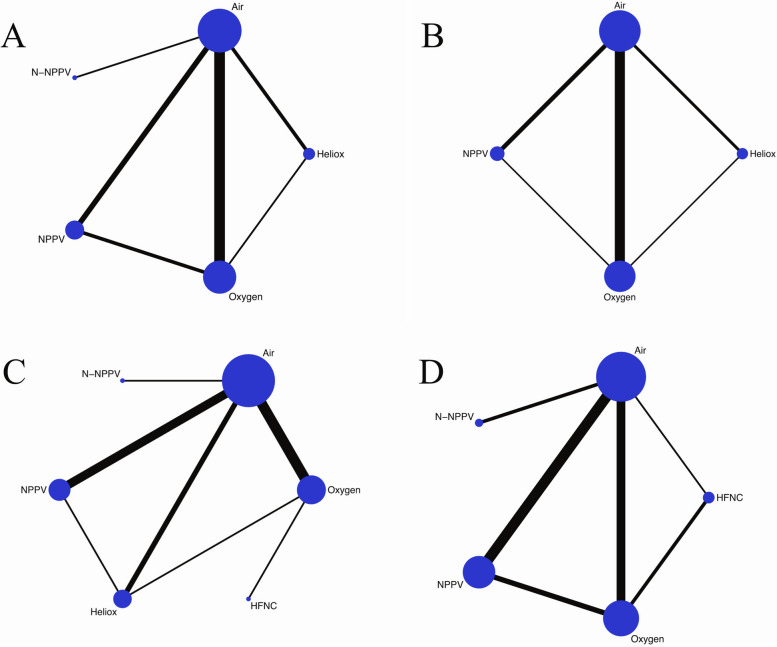
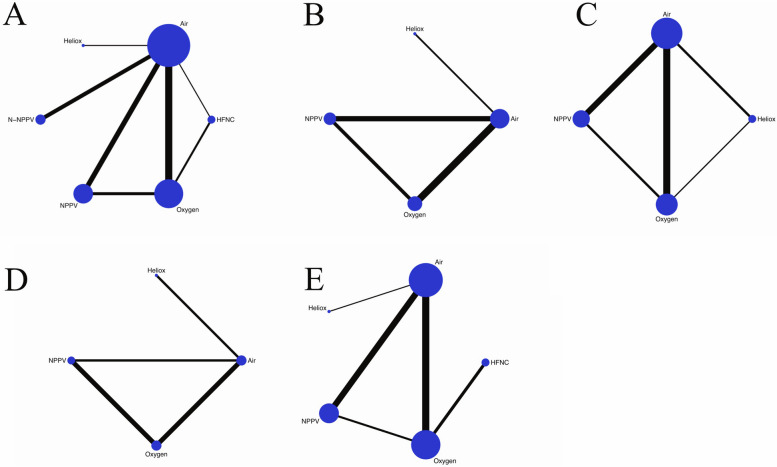
Results: A total of 35 studies involving 1321 patients and 6 different interventions were included. Network meta-analysis showed that noninvasive positive pressure ventilation (NPPV) is superior in improving exercise capacity (6-Minute Walk Test distance, peak work rate, endurance time), dyspnea, and physiological change (peak VO2, tidal volume, minute ventilation and lactate level) in stable COPD patients who were at GOLD stage III or IV during PR exercise training. The final surface under the cumulative ranking curve value indicated that NPPV therapy achieved the best assistive rehabilitation effect.
Conclusions: The obtained results indicate that NPPV is most powerful in assisting exercise in severe COPD patients under stable condition. Researchers should focus more on the safety, feasibility, and personalization of interventions. Furthermore, there is a need for additional high-quality trials to assess the consistency of evidence across various respiratory support approaches.
Trial registration: The study was registered at PROSPERO (CRD42023491139).
Keywords: Chronic obstructive pulmonary disease; Network meta-analysis; Pulmonary rehabilitation; Respiratory support therapy.
© 2024. The Author(s).
Conflict of interest statement
The authors declare no competing interests.
Figures
References
-
- Chen S, Kuhn M, Prettner K, Yu F, Yang T, Barnighausen T, Bloom DE, Wang C. The global economic burden of chronic obstructive pulmonary disease for 204 countries and territories in 2020–50: a health-augmented macroeconomic modelling study. Lancet Glob Health. 2023;11(8):e1183–93. 10.1016/S2214-109X(23)00217-6 - DOI - PMC - PubMed
-
- Rochester CL, Alison JA, Carlin B, Jenkins AR, Cox NS, Bauldoff G, Bhatt SP, Bourbeau J, Burtin C, Camp PG, et al. Pulmonary rehabilitation for adults with chronic respiratory disease: an official American Thoracic Society clinical practice guideline. Am J Respir Crit Care Med. 2023;208(4):e7–26. 10.1164/rccm.202306-1066ST - DOI - PMC - PubMed
-
- Garvey C, Bayles MP, Hamm LF, Hill K, Holland A, Limberg TM, Spruit MA. Pulmonary rehabilitation exercise prescription in chronic obstructive pulmonary disease: review of selected guidelines: an official statement from the American Association of Cardiovascular and Pulmonary Rehabilitation. J Cardiopulm Rehabil Prev. 2016;36(2):75–83. 10.1097/HCR.0000000000000171 - DOI - PubMed
Publication types
MeSH terms
LinkOut - more resources
Full Text Sources
Medical
Research Materials
