


Conservative Management of Vulvar Cancer-Where Should We Draw the Line?
- PMID: 39272849
- PMCID: PMC11394072
- DOI: 10.3390/cancers16172991
Conservative Management of Vulvar Cancer-Where Should We Draw the Line?
Abstract
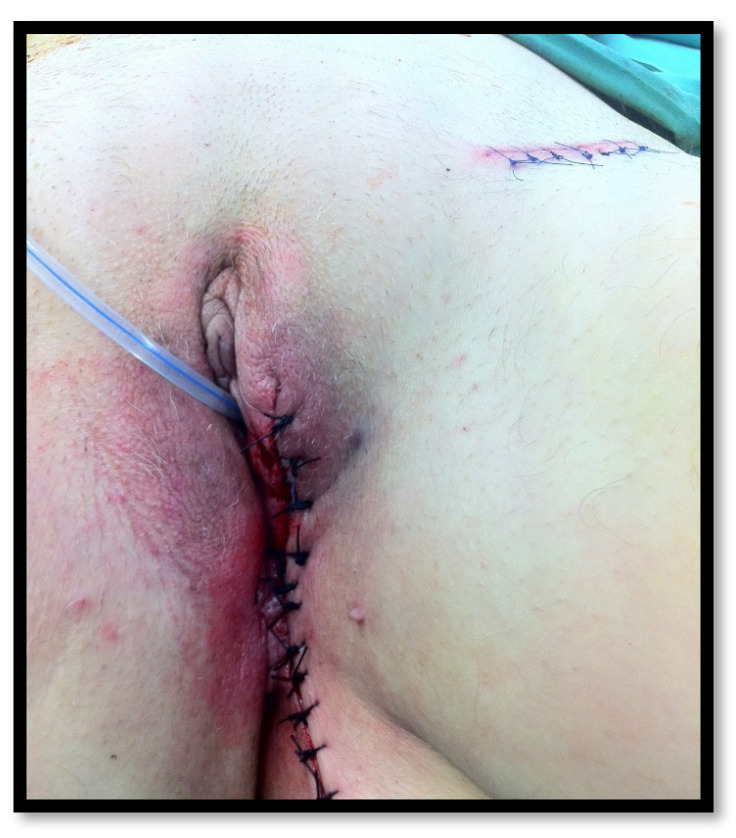
Vulvar cancer is a rare disease, and cure rates were low until the mid-20th century. The introduction of an en bloc radical vulvectomy and bilateral groin and pelvic lymph node dissection saw them rise from 15-20% to 60-70%. However, this very radical surgery was associated with high physical and psychological morbidity. Wounds were usually left open to granulate, and the average post-operative hospital stay was about 90 days. Many attempts have been made to decrease morbidity without compromising survival. Modifications that have proven to be successful are as follows: (i) the elimination of routine pelvic node dissection, (ii) the use of separate incisions for groin dissection, (iii) the use of unilateral groin dissection for lateral, unifocal lesions, (iv) and radical local excision with 1 cm surgical margins for unifocal lesions. Sentinel node biopsy with ultrasonic groin surveillance for patients with node-negative disease has been the most recent modification and is advocated for patients whose primary cancer is <4 cm in diameter. Controversy currently exists around the need for 1 cm surgical margins around all primary lesions and on the appropriate ultrasonic surveillance for patients with negative sentinel nodes.
Keywords: pelvic lymph node dissection; radical local excision; radical vulvectomy; sentinel node biopsy; surgical margins; ultrasonic groin surveillance; vulvar cancer.
Conflict of interest statement
The authors declare no conflicts of interest.
Figures

References
-
- World Health Organisation Globoscan 2020. Estimated Cancer Incidence, Mortality and Prevalence Worldwide in 2020. [(accessed on 10 March 2024)]; Available online: https://gco.iarc.fr/today/online-analysis.
-
- Van der Avoort I.A., Shirango H., Hoevenaars B.M., Grefte J.M., de Hullu J.A., de Wilde P.C., Bulten J., Melchers W.J., Massuger L.F. Vulvar squamous cell carcinoma is a multifactorial disease following two separate and independent pathways. Int. J. Gynecol. Pathol. 2006;25:22–29. doi: 10.1097/01.pgp.0000177646.38266.6a. - DOI - PubMed
-
- Herrington C.S. WHO Classification of Tumours Editorial Board (Eds.). WHO Classification of Tumours Female Genital Tumours. 5th ed. International Agency for Research on Cancer; Lyon, France: 2020.
-
- Blair-Bell W., Datnow M.M. Primary malignant diseases of the vulva, with special reference to treatment by operation. J. Obstet. Gynaecol. Br. Emp. 1936;43:755–763. doi: 10.1111/j.1471-0528.1936.tb12418.x. - DOI
-
- Green T.H. Carcinoma of the vulva. A Reassessment. Obstet. Gynecol. 1978;52:462–468. - PubMed
Publication types
LinkOut - more resources
Full Text Sources
Research Materials
