


Neuroinflammation and kynurenines in schizophrenia: Impact on cognition depending on cognitive functioning and modulatory properties in relation to cognitive remediation and aerobic exercise
- PMID: 39281320
- PMCID: PMC11399803
- DOI: 10.1016/j.scog.2024.100328
Neuroinflammation and kynurenines in schizophrenia: Impact on cognition depending on cognitive functioning and modulatory properties in relation to cognitive remediation and aerobic exercise
Abstract
Background: In the last decade, the kynurenine pathway (KP) has gained attention in the pathogenesis of cognitive impairment in schizophrenia being at the croassroad between neuroinflammation and glutamatergic and cholinergic neurotransmission. However, clinical findings are scarse and conflicting, and the specific contributions of these two systems to the neurobiology of cognitive symptoms are far from being elucidated. Furthermore, little is known about the molecular underpinnings of non-pharmacological interventions for cognitive improvement, including rehabilitation strategies.
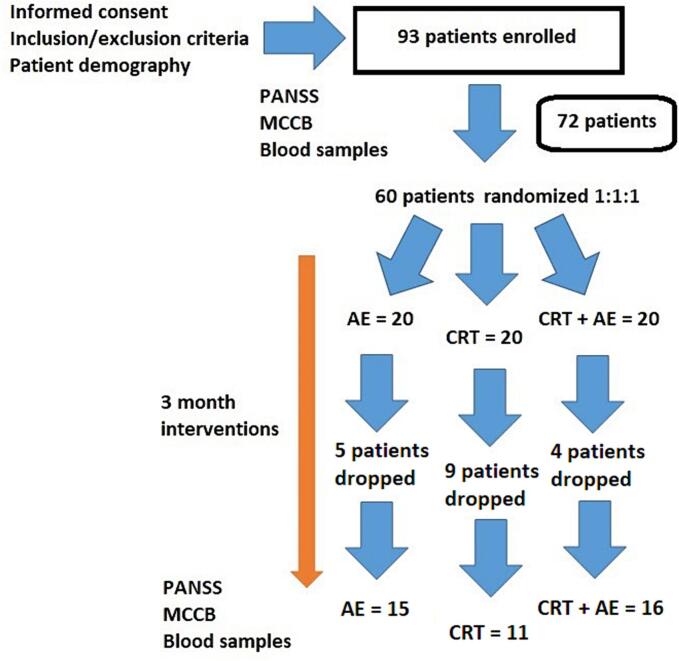
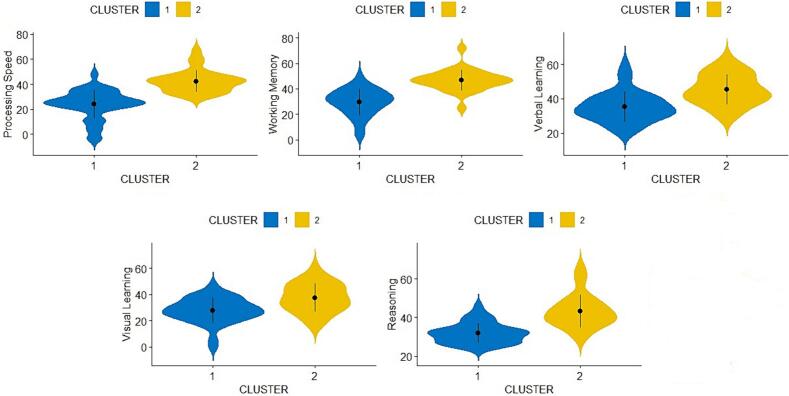
Methods: The current study examined 72 patients with schizophrenia, divided in two clusters depending on the severity of the cognitive impairment, with the aim to evaluate the impact of inflammatory biomarkers and KP metabolites depending on cognitive functioning. Moreover, we studied their possible link to the cognitive outcome in relation to sessions of cognitive remediation therapy (CRT) and aerobic exercise (AE) in a longitudinal arm of 42 patients.
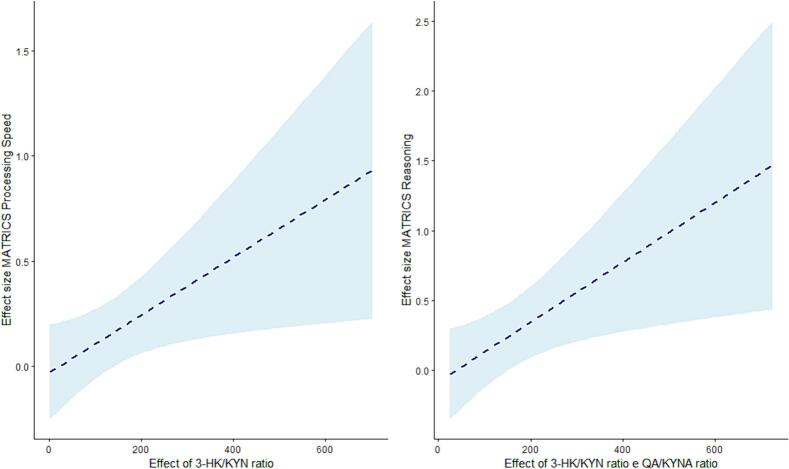
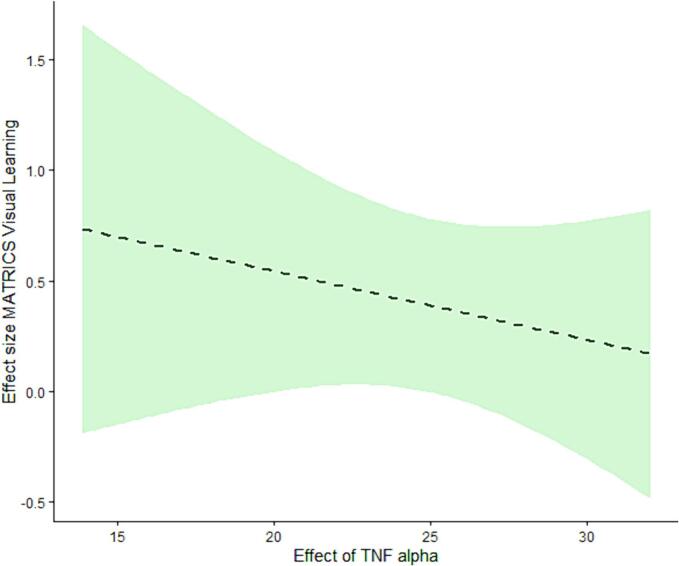
Results: Neuroinflammation appeared to exert a more pronounced influence on cognition in patients exhibiting a higher cognitive functioning, contrasting with the activation of the KP, which had a greater impact on individuals with a lower cognitive profile. Cognitive improvements after the treatments were negatively predicted by levels of TNF-α and positively predicted by the 3-hydroxykynurenine (3-HK)/kynurenine (KYN) ratio, an index of the kynurenine-3-monooxygenase (KMO) enzyme activity.
Conclusion: Overall, these findings add novel evidence on the biological underpinnings of cognitive impairment in schizophrenia pointing at a differential role of neuroinflammation and KP metabolites in inducing cognitive deficits depending on the cognitive reserve and predicting outcomes after rehabilitation.
Keywords: Cognition; Interleukines; Kynurenine 3-monooxygenase; Kynurenine pathway; Non-pharmacological treatments; TNF-α.
© 2024 Published by Elsevier Inc.
Conflict of interest statement
The authors declare that they have no known competing financial interests or personal relationships that could have appeared to influence the work reported in this paper.
Figures
References
-
- Bechdolf A., Knost B., Kuntermann C., Schiller S., Klosterkötter J., Hambrecht M., Pukrop R. A randomized comparison of group cognitive-behavioural therapy and group psychoeducation in patients with schizophrenia. Acta Psychiatr. Scand. 2004;110:21–28. doi: 10.1111/J.1600-0447.2004.00300.X. - DOI - PubMed
-
- van Berckel B.N., Bossong M.G., Boellaard R., Kloet R., Schuitemaker A., Caspers E., Luurtsema G., Windhorst A.D., Cahn W., Lammertsma A.A., Kahn R.S. Microglia activation in recent-onset schizophrenia: a quantitative (R)-[11C]PK11195 positron emission tomography study. Biol. Psychiatry. 2008;64:820–822. doi: 10.1016/j.biopsych.2008.04.025. - DOI - PubMed
LinkOut - more resources
Full Text Sources
Research Materials
