Metabolic ripple effects - deciphering how lipid metabolism in cancer interfaces with the tumor microenvironment
- PMID: 39284708
- PMCID: PMC11423921
- DOI: 10.1242/dmm.050814
Metabolic ripple effects - deciphering how lipid metabolism in cancer interfaces with the tumor microenvironment
Abstract
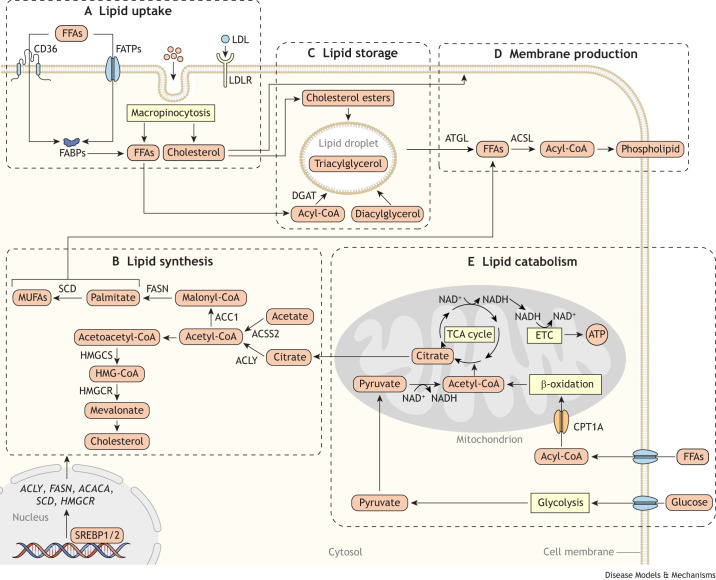
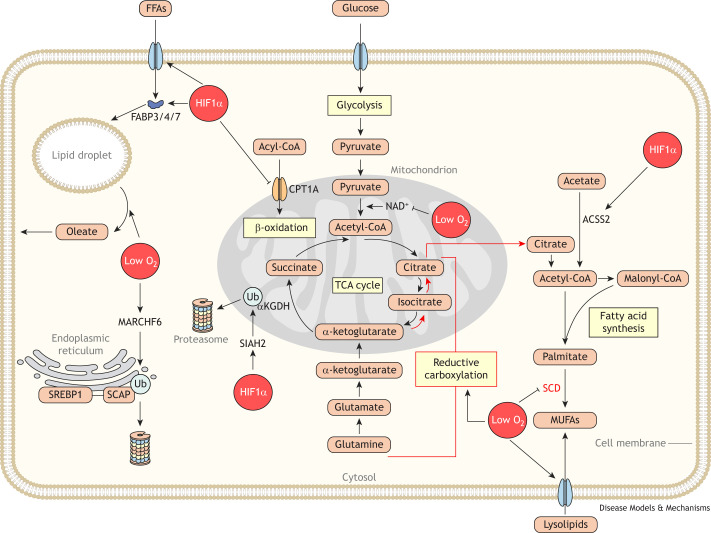
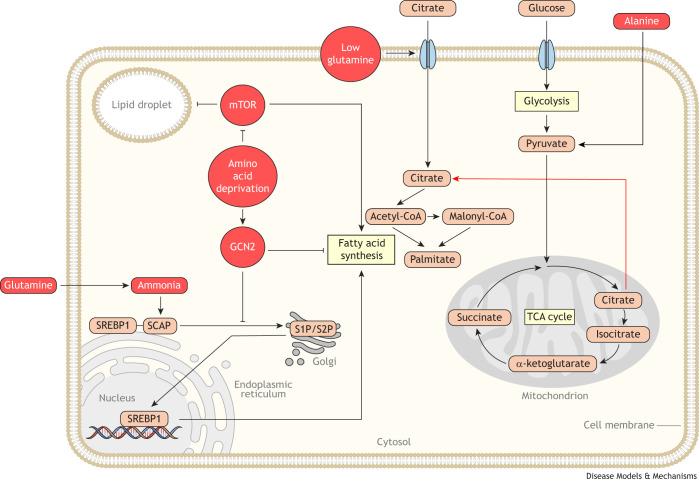
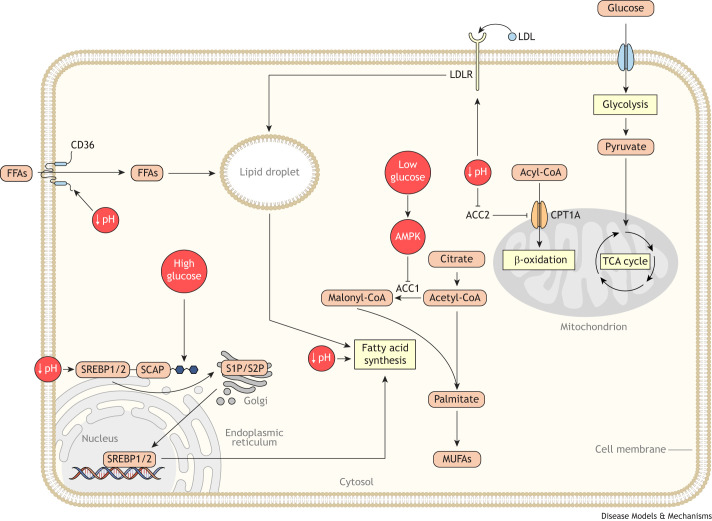
Cancer cells require a constant supply of lipids. Lipids are a diverse class of hydrophobic molecules that are essential for cellular homeostasis, growth and survival, and energy production. How tumors acquire lipids is under intensive investigation, as these mechanisms could provide attractive therapeutic targets for cancer. Cellular lipid metabolism is tightly regulated and responsive to environmental stimuli. Thus, lipid metabolism in cancer is heavily influenced by the tumor microenvironment. In this Review, we outline the mechanisms by which the tumor microenvironment determines the metabolic pathways used by tumors to acquire lipids. We also discuss emerging literature that reveals that lipid availability in the tumor microenvironment influences many metabolic pathways in cancers, including those not traditionally associated with lipid biology. Thus, metabolic changes instigated by the tumor microenvironment have 'ripple' effects throughout the densely interconnected metabolic network of cancer cells. Given the interconnectedness of tumor metabolism, we also discuss new tools and approaches to identify the lipid metabolic requirements of cancer cells in the tumor microenvironment and characterize how these requirements influence other aspects of tumor metabolism.
Keywords: Acidosis; Diet; Hypoxia; Lipid metabolism; Nutrient deprivation; Tumor microenvironment.
© 2024. Published by The Company of Biologists Ltd.
Conflict of interest statement
Competing interests The authors declare no competing or financial interests.
Figures
References
-
- Ackerman, D., Tumanov, S., Qiu, B., Michalopoulou, E., Spata, M., Azzam, A., Xie, H., Simon, M. C. and Kamphorst, J. J. (2018). Triglycerides promote lipid homeostasis during hypoxic stress by balancing fatty acid saturation. Cell Rep 24, 2596-2605.e5. 10.1016/j.celrep.2018.08.015 - DOI - PMC - PubMed
-
- Agarwala, P. K., Nie, S., Reid, G. E. and Kapoor, S. (2023). Global lipid remodelling by hypoxia aggravates migratory potential in pancreatic cancer while maintaining plasma membrane homeostasis. Biochim. Biophys. Acta Mol. Cell Biol. Lipids 1868, 159398. 10.1016/j.bbalip.2023.159398 - DOI - PMC - PubMed
-
- Alicea, G. M., Rebecca, V. W., Goldman, A. R., Fane, M. E., Douglass, S. M., Behera, R., Webster, M. R., Kugel, C. H., Ecker, B. L., Cecilia Caino, M.et al. (2020). Changes in aged fibroblast lipid metabolism induce age-dependent melanoma cell resistance to targeted therapy via the fatty acid transporter FATP2. Cancer Discov. 10, 1282-1295. 10.1158/2159-8290.CD-20-0329 - DOI - PMC - PubMed
Publication types
MeSH terms
Grants and funding
LinkOut - more resources
Full Text Sources
Medical