


Orthostatic intolerance during early mobilization following thoracoscopic lung resection: a prospective observational study
- PMID: 39285467
- PMCID: PMC11403817
- DOI: 10.1186/s12893-024-02556-3
Orthostatic intolerance during early mobilization following thoracoscopic lung resection: a prospective observational study
Abstract
Background: Early postoperative mobilization is important for enhanced recovery but can be hindered by orthostatic intolerance. However, study on postoperative orthostatic intolerance in thoracoscopic lung resection is limited. Thus, this investigation aims to examine the prevalence and variables contributing to orthostatic intolerance on the first day following thoracoscopic lung cancer resection.
Methods: A prospective observational study was conducted from February 01 to May 05, 2023, at the First Affiliated Hospital of Chongqing Medical University. Typically, 215 subjects subjected to thoracoscopic lung resection were enrolled in this study. Their general information, disease, and treatment information were collected, and the occurrence of orthostatic intolerance was recorded.
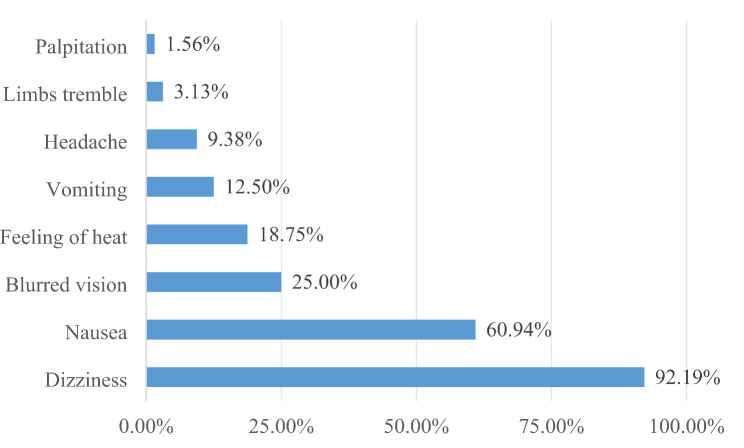
Results: Typically, 64 patients (29.77%) demonstrated orthostatic intolerance during early mobilization, and 43.75% failed to walk. The prevalence of nausea, dizziness, and impaired vision was 60.94%, 92.19%, and 25.00%, respectively, and no patient experienced syncope. The factors shown to be independently linked with orthostatic intolerance were being female (OR = 2.98, 1.53 to 5.82) and high pain level during sitting (OR = 2.69, 1.79 to 4.04). Individuals with orthostatic intolerance had a longer postoperative hospital stay with a mean of 5.42 days against 4.25 days (p = 0.003).
Conclusions: Orthostatic intolerance was prevalent following thoracoscopic lung cancer resection and affected patients' capability to mobilize and prolonged postoperative hospitalization. Being female and having high pain levels during sitting were identified as independent factors for orthostatic intolerance. This suggests that more emphasis should be given to risky patients, and for these groups, we may optimize pain management to adjust the risk of emerging orthostatic intolerance, facilitating early mobilization and early postoperative rehabilitation.
Keywords: Early mobilization; Factors; Lung resection; Orthostatic intolerance; Postoperative.
© 2024. The Author(s).
Conflict of interest statement
The authors declare no competing interests.
Figures
References
-
- Sung H, Ferlay J, Rebecca L, et al. Global cancer statistics 2020: Globocan estimates of incidence and mortality worldwide for 36 cancers in 185 countries. CA: A Cancer J Clinicians. 2021;71:209–49. - PubMed
-
- Granell-Gil M, Murcia-Anaya M, Sevilla S, et al. Clinical guide to perioperative management for videothoracoscopy lung resection (section of Cardiac, vascular and thoracic anesthesia, SEDAR; Spanish Society of thoracic surgery, SECT; Spanish Society of Physiotherapy). Revista Española De Anestesiología Y Reanimación (English Edition). 2022;69:266–301. 10.1016/j.redare.2021.03.015 - DOI - PubMed
Publication types
MeSH terms
Grants and funding
- HLJJ2022-12/The Nursing Research Foundation of the First Affiliated Hospital of Chongqing Medical University
- HLJJ2022-12/The Nursing Research Foundation of the First Affiliated Hospital of Chongqing Medical University
- HLJJ2022-12/The Nursing Research Foundation of the First Affiliated Hospital of Chongqing Medical University
- HLJJ2022-12/The Nursing Research Foundation of the First Affiliated Hospital of Chongqing Medical University
- HLJJ2022-07/The Nursing Research Foundation of the First Affiliated Hospital of Chongqing Medical University
LinkOut - more resources
Full Text Sources
Medical
