


Plasma ceramides as biomarkers for microvascular disease and clinical outcomes in diabetes and myocardial infarction
- PMID: 39285502
- PMCID: PMC11406755
- DOI: 10.1186/s40842-024-00186-5
Plasma ceramides as biomarkers for microvascular disease and clinical outcomes in diabetes and myocardial infarction
Abstract
Background: Ceramides have recently been identified as novel biomarkers associated with diabetes mellitus (DM) and major adverse cardiac and cerebrovascular events (MACCE). This study aims to explore their utility in diagnosing microvascular disease.
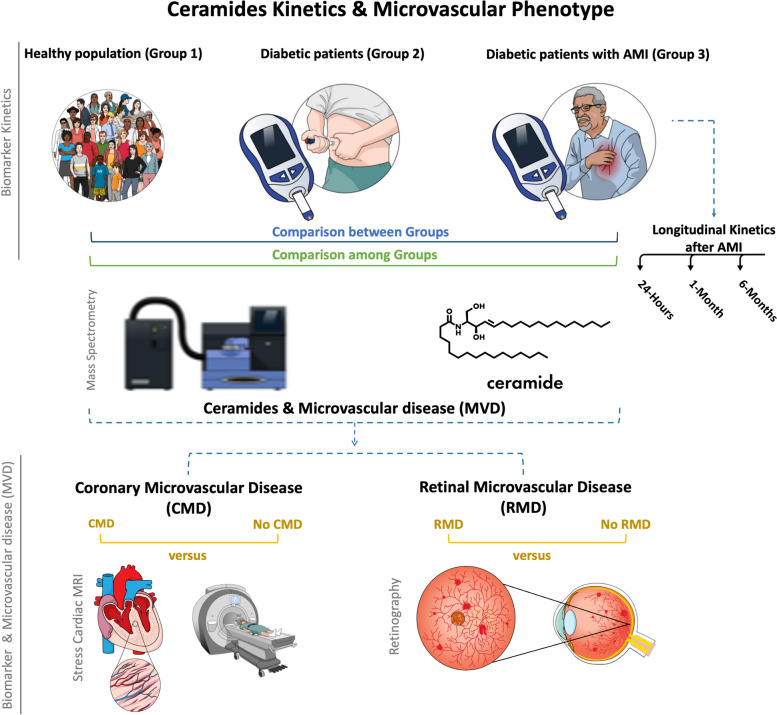
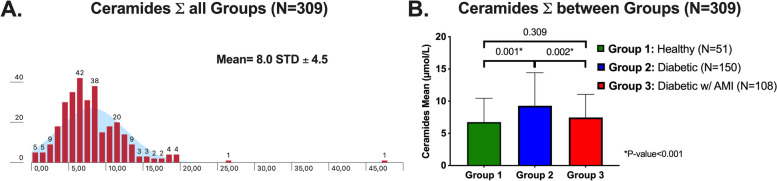
Methods: This study prospectively enrolled 309 patients from 2018 to 2020 into three groups: healthy controls (Group 1, N = 51), DM patients without acute myocardial infarction (AMI) (Group 2, N = 150), and DM patients with AMI (Group 3, N = 108). We assessed outcomes using stress perfusion cardiac magnetic resonance (CMR) imaging for coronary microvascular disease (CMD) (Outcome 1), retinography for retinal microvascular disease (RMD) (Outcome 2), both CMD and RMD (Outcome 3), and absence of microvascular disease (w/o MD) (outcome 4). We evaluated the classification performance of ceramides using receiver operating characteristic (ROC) analysis and multiple logistic regression. 11-ceramide panel previously identified by our research group as related to macrovascular disease were used.
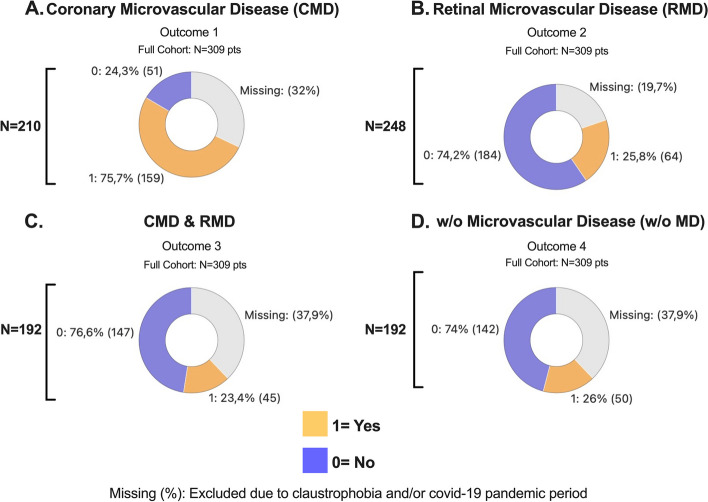
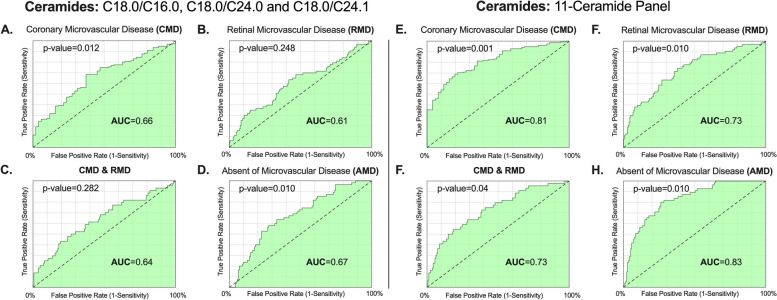
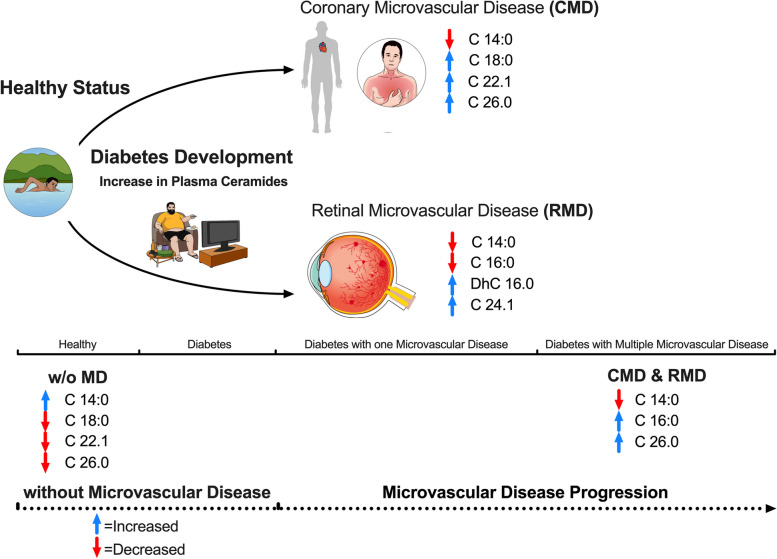
Results: Average glycated hemoglobin (HbA1c) values were 5.1% in Group 1, 8.3% in Group 2, and 7.6% in Group 3. Within the cohort, CMD was present in 59.5% of patients, RMD in 25.8%, both CMD and RMD in 18.8%, and w/o MD in 38.5%. The AUC values for the reference ceramide ratios were as follows: CMD at 0.66 (p = 0.012), RMD at 0.61 (p = 0.248), CMD & RMD at 0.64 (p = 0.282), and w/o MD at 0.67 (p = 0.010). In contrast, the AUC values using 11-ceramide panel showed significant improvement in the outcomes prediction: CMD at 0.81 (p = 0.001), RMD at 0.73 (p = 0.010), CMD & RMD at 0.73 (p = 0.04), and w/o MD at 0.83 (p = 0.010). Additionally, the plasma concentration of C14.0 was notably higher in the w/o MD group (p < 0.001).
Conclusions: Plasma ceramides serve as potential predictors for health status and microvascular disease phenotypes in diabetic patients.
Keywords: And myocardial infarction; Ceramides; Diabetic; Microvascular disease.
© 2024. The Author(s).
Conflict of interest statement
The authors declare that the research was conducted without any commercial or financial relationships that could be construed as a potential conflict of interest.
Figures
References
-
- Saeedi P, Petersohn I, Salpea P, et al. Global and regional diabetes prevalence estimates for 2019 and projections for 2030 and 2045: results from the International Diabetes Federation Diabetes Atlas, 9(th) edition. Diabetes Res Clin Pract. 2019;157:107843. - PubMed
-
- Krentz AJ, Clough G, Byrne CD. Interactions between microvascular and macrovascular disease in diabetes: pathophysiology and therapeutic implications. Diabetes Obes Metab. 2007;9:781–91. - PubMed
-
- Paneni F, Beckman JA, Creager MA, Cosentino F. Diabetes and vascular disease: pathophysiology, clinical consequences, and medical therapy: part I. Eur Heart J. 2013;34:2436–43. - PubMed
Grants and funding
LinkOut - more resources
Full Text Sources
