


Network pharmacological mechanism analysis and evidence-based medical validation of Dahuang Mudan Decoction in the treatment of acute pancreatitis
- PMID: 39287237
- PMCID: PMC11404899
- DOI: 10.1097/MD.0000000000039679
Network pharmacological mechanism analysis and evidence-based medical validation of Dahuang Mudan Decoction in the treatment of acute pancreatitis
Abstract
Background: Dahuang Mudan Decoction is commonly used in China for the treatment of acute pancreatitis. Nevertheless, the therapeutic efficacy of the drug remains a subject of debate, and its active ingredients and potential therapeutic targets remain to be determined. The present study used a network pharmacological approach to investigate the active ingredients and possible targets of the drug, and illustrated the clinical effectiveness of Dahuang Mudan Decoction in the treatment of acute pancreatitis by meta-analysis.
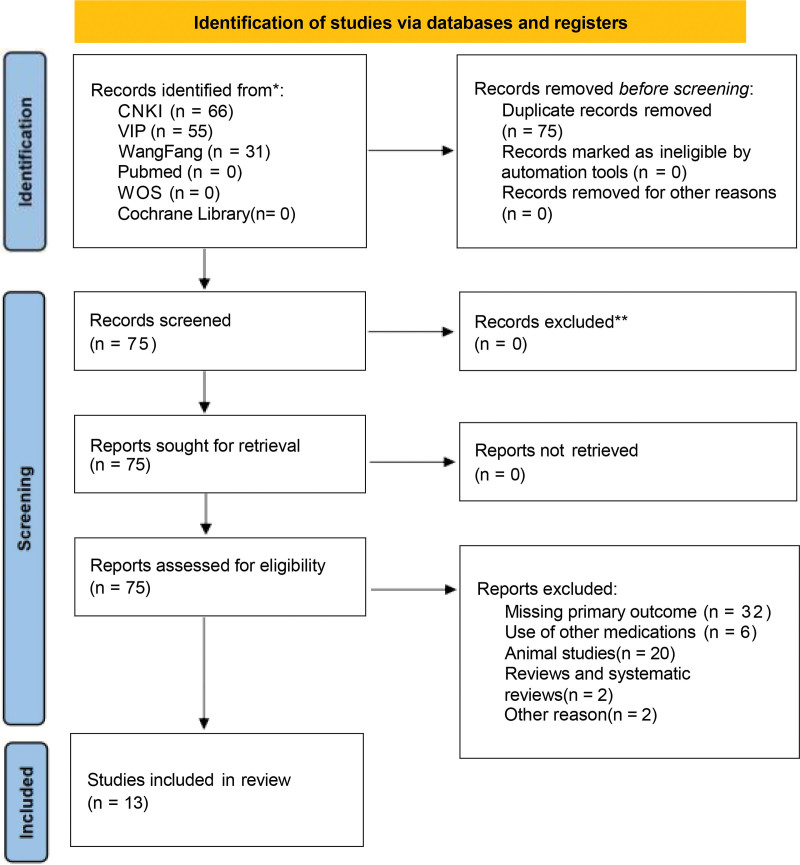
Methods: The present study investigated the active ingredients of the constituent herbs of Dahuang Mudan Decoction using the TCMID database. In order to further identify molecular targets, Swiss Target Prediction, OMIM and Genecards databases was be used. The present study used metascape database for gene ontology function enrichment analysis and Kyoto Genome Encyclopedia pathway enrichment analysis. A gene interaction network diagram was established for predicting the main targets and mechanism of action to Dahuang Mudan Decoction for acute pancreatitis. To further illustrate the validity of the gene targets and the clinical efficacy of the drug, 13 relevant studies were included for meta-analysis and analyzed using the Cochrane Collaboration's Review Manager 5.4 software.
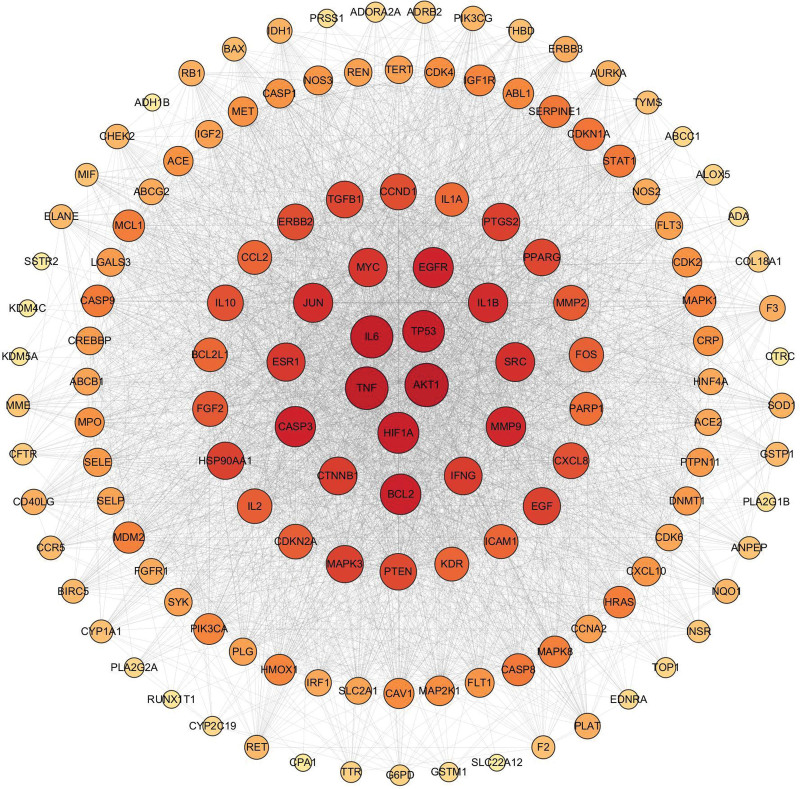
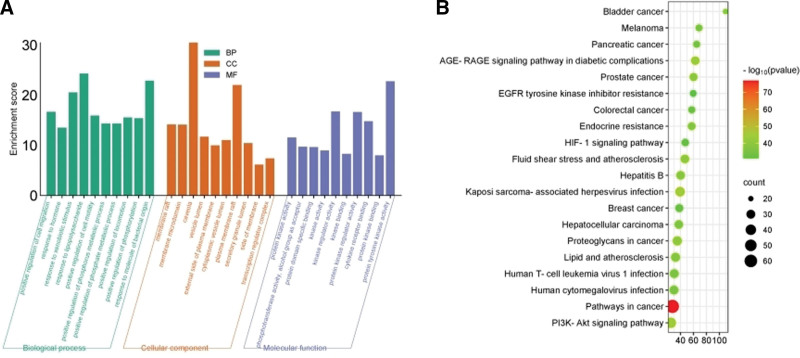
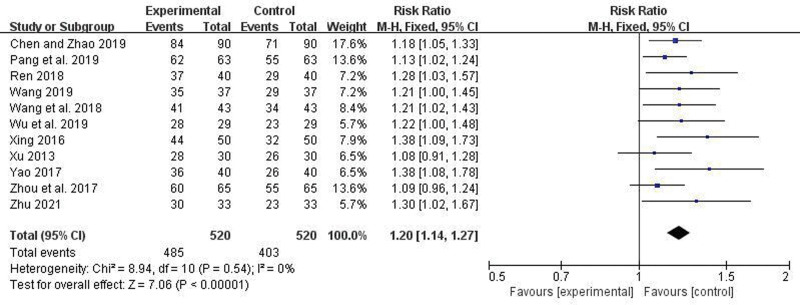
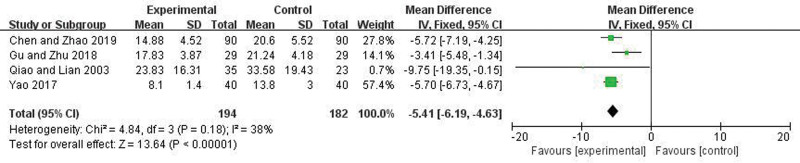
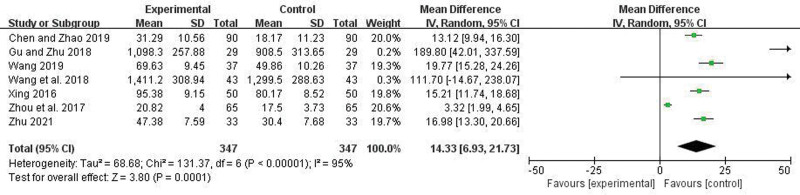
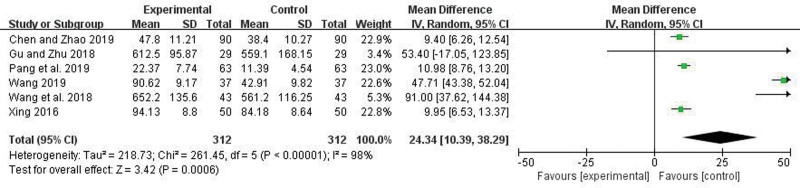
Result: After a thorough screening process, the present study identified three main components of Dahuang Mudan Decoction: kaempferol, quercetin and eupatin. These three major components have the potential to target 5 important proteins: AKT1, TNF-a, IL-6, TP53, HIF1A. In addition, pathway analyses by the Kyoto Genome Encyclopedia showed that Dahuang Mudan Decoction is active through the Pathways in cancer, AGE-RAGE signaling pathway in diabetic complications, PI3K-Akt signaling pathway, etc signaling pathway to act on acute pancreatitis. The results of meta-analysis showed that compared with the control group, the experimental group had superior performance in terms of overall treatment efficacy, reduction of hospital stays and inflammatory factor levels after treatment.
Conclusion: In summary, network pharmacological studies have shown that Dahuang Mudan Decoction affects acute pancreatitis through different components, targets, and mechanisms. In addition, the meta-analysis study strongly supported the effectiveness of Dahuang Mudan Decoction in the treatment of acute pancreatitis.
Copyright © 2024 the Author(s). Published by Wolters Kluwer Health, Inc.
Conflict of interest statement
The authors have no conflicts of interest to disclose.
Figures
References
-
- Boxhoorn L, Voermans RP, Bouwense SA, et al. Acute pan creatitis. Lancet. 2020;396:726–34. - PubMed
-
- Iannuzzi JP, King JA, Leong JH, et al. Global incidence of acute pancreatitis is increasing over time: a systematic review and meta-analysis. Gastroenterology. 2022;162:122–34. - PubMed
-
- Xiao AY, Tan ML, Wu LM, et al. Global incidence and mortality of pancreatic diseases: a systematic review, meta-analysis, and meta-regression of population-based cohort studies. Lancet Gastroenterol Hepatol. 2016;1:45–55. - PubMed
-
- Zhuo Y, Cui L, Li C, et al. Progress in the study of the mechanism of action of traditional Chinese medicine compound formula for the treatment of acute pancreatitis. Chin J Surg Integr Tradit West Med. 2019;25:394–8.
Publication types
MeSH terms
Substances
Grants and funding
- NO. GZY-ZJ-SY-2402/State Administration of Traditional Chinese Medicine Science and Technology Department-Zhejiang Provincial Administration of Traditional Chinese Medicine Co-construction of Key Laboratory of Research on Prevention and Treatment for depression syndrome
- Zhejiang Provincial Health Commission Office [2021]No.40/Zhejiang Province 551 Health Talent Training Project
- Chinese medicine Education Letterã€"2022〕No.1/State Administration of Traditional Chinese Medicine National Clinical Outstanding Talents Training Program
LinkOut - more resources
Full Text Sources
Medical
Research Materials
Miscellaneous
