


DNL343 is an investigational CNS penetrant eukaryotic initiation factor 2B activator that prevents and reverses the effects of neurodegeneration caused by the integrated stress response
- PMID: 39287504
- PMCID: PMC11407769
- DOI: 10.7554/eLife.92173
DNL343 is an investigational CNS penetrant eukaryotic initiation factor 2B activator that prevents and reverses the effects of neurodegeneration caused by the integrated stress response
Abstract
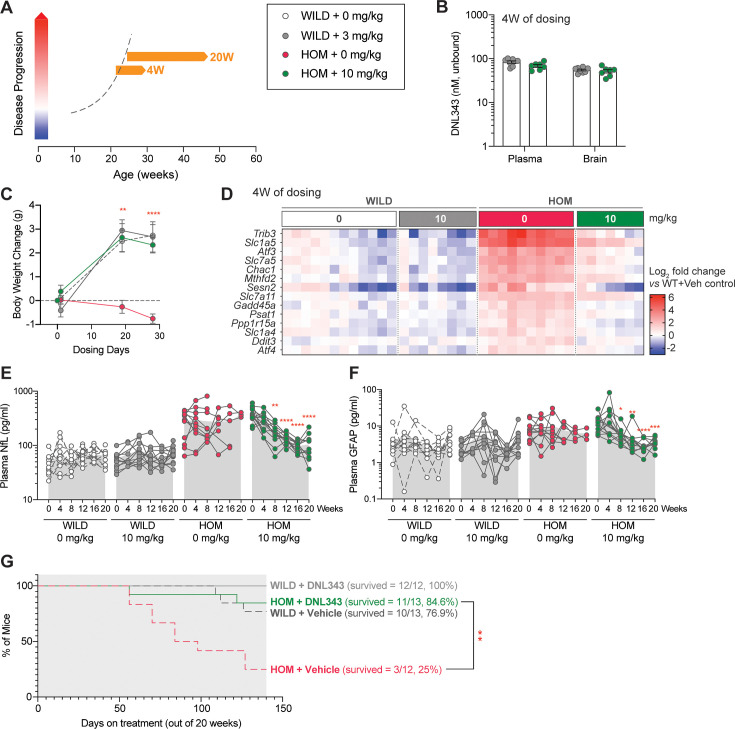
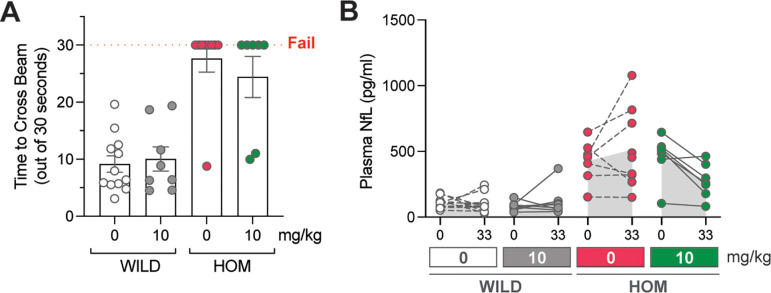
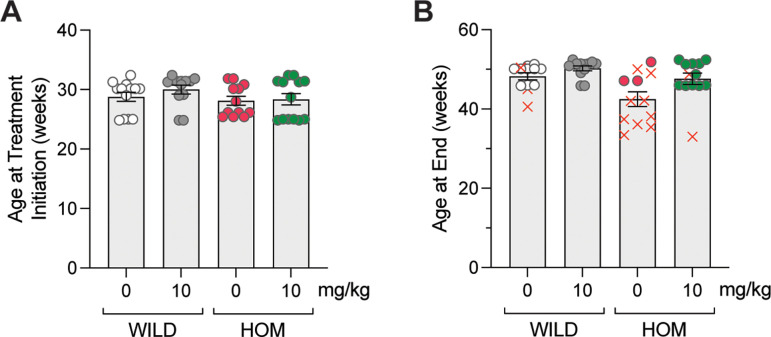
The integrated stress response (ISR) is a conserved pathway in eukaryotic cells that is activated in response to multiple sources of cellular stress. Although acute activation of this pathway restores cellular homeostasis, intense or prolonged ISR activation perturbs cell function and may contribute to neurodegeneration. DNL343 is an investigational CNS-penetrant small-molecule ISR inhibitor designed to activate the eukaryotic initiation factor 2B (eIF2B) and suppress aberrant ISR activation. DNL343 reduced CNS ISR activity and neurodegeneration in a dose-dependent manner in two established in vivo models - the optic nerve crush injury and an eIF2B loss of function (LOF) mutant - demonstrating neuroprotection in both and preventing motor dysfunction in the LOF mutant mouse. Treatment with DNL343 at a late stage of disease in the LOF model reversed elevation in plasma biomarkers of neuroinflammation and neurodegeneration and prevented premature mortality. Several proteins and metabolites that are dysregulated in the LOF mouse brains were normalized by DNL343 treatment, and this response is detectable in human biofluids. Several of these biomarkers show differential levels in CSF and plasma from patients with vanishing white matter disease (VWMD), a neurodegenerative disease that is driven by eIF2B LOF and chronic ISR activation, supporting their potential translational relevance. This study demonstrates that DNL343 is a brain-penetrant ISR inhibitor capable of attenuating neurodegeneration in mouse models and identifies several biomarker candidates that may be used to assess treatment responses in the clinic.
Keywords: biomarkers; human; integrated stress response; mouse; neurodegeneration; neuroscience.
© 2023, Yulyaningsih et al.
Conflict of interest statement
EY, JS, MF, HS, RT, AB, IB, NB, CC, SD, WD, TE, AE, AG, CH, PH, KH, ML, AL, RM, BM, HN, AN, MO, YR, KR, ER, TS, JW, JL, KS, LK, PS employee and shareholder of Denali Therapeutics, RC former employee and shareholder of Denali Therapeutics
Figures
Update of
- doi: 10.1101/2023.08.21.554203
- doi: 10.7554/eLife.92173.1
- doi: 10.7554/eLife.92173.2
References
-
- Abbink TEM, Wisse LE, Jaku E, Thiecke MJ, Voltolini-González D, Fritsen H, Bobeldijk S, Ter Braak TJ, Polder E, Postma NL, Bugiani M, Struijs EA, Verheijen M, Straat N, van der Sluis S, Thomas AAM, Molenaar D, van der Knaap MS. Vanishing white matter: deregulated integrated stress response as therapy target. Annals of Clinical and Translational Neurology. 2019;6:1407–1422. doi: 10.1002/acn3.50826. - DOI - PMC - PubMed
-
- Abdelhak A, Foschi M, Abu-Rumeileh S, Yue JK, D’Anna L, Huss A, Oeckl P, Ludolph AC, Kuhle J, Petzold A, Manley GT, Green AJ, Otto M, Tumani H. Blood GFAP as an emerging biomarker in brain and spinal cord disorders. Nature Reviews. Neurology. 2022;18:158–172. doi: 10.1038/s41582-021-00616-3. - DOI - PubMed
-
- Abdulkarim B, Nicolino M, Igoillo-Esteve M, Daures M, Romero S, Philippi A, Senée V, Lopes M, Cunha DA, Harding HP, Derbois C, Bendelac N, Hattersley AT, Eizirik DL, Ron D, Cnop M, Julier C. A missense mutation in PPP1R15B Causes A syndrome including diabetes, short stature, and microcephaly. Diabetes. 2015;64:3951–3962. doi: 10.2337/db15-0477. - DOI - PMC - PubMed
MeSH terms
Substances
Associated data
- Actions
LinkOut - more resources
Full Text Sources
Molecular Biology Databases
