


Phase I PIANO trial-PIPAC-oxaliplatin and systemic nivolumab combination for gastric cancer peritoneal metastases: clinical and translational outcomes
- PMID: 39288528
- PMCID: PMC11421236
- DOI: 10.1016/j.esmoop.2024.103681
Phase I PIANO trial-PIPAC-oxaliplatin and systemic nivolumab combination for gastric cancer peritoneal metastases: clinical and translational outcomes
Abstract
Introduction: Pressurized intraperitoneal aerosol chemotherapy-oxaliplatin (PIPAC-OX) induces direct DNA damage and immunogenic cell death in patients with gastric cancer peritoneal metastases (GCPM). Combining PIPAC-OX with immune checkpoint inhibition remains untested. We conducted a phase I first-in-human trial evaluating the safety and efficacy of PIPAC-OX combined with systemic nivolumab (NCT03172416).
Methods: Patients with GCPM who experienced disease progression on at least first-line systemic therapy were recruited across three centers in Singapore and Belgium. Patients received PIPAC-OX at 90 mg/m2 every 6 weeks and i.v. nivolumab 240 mg every 2 weeks. Translational studies were carried out on GCPM samples acquired during PIPAC-OX procedures.
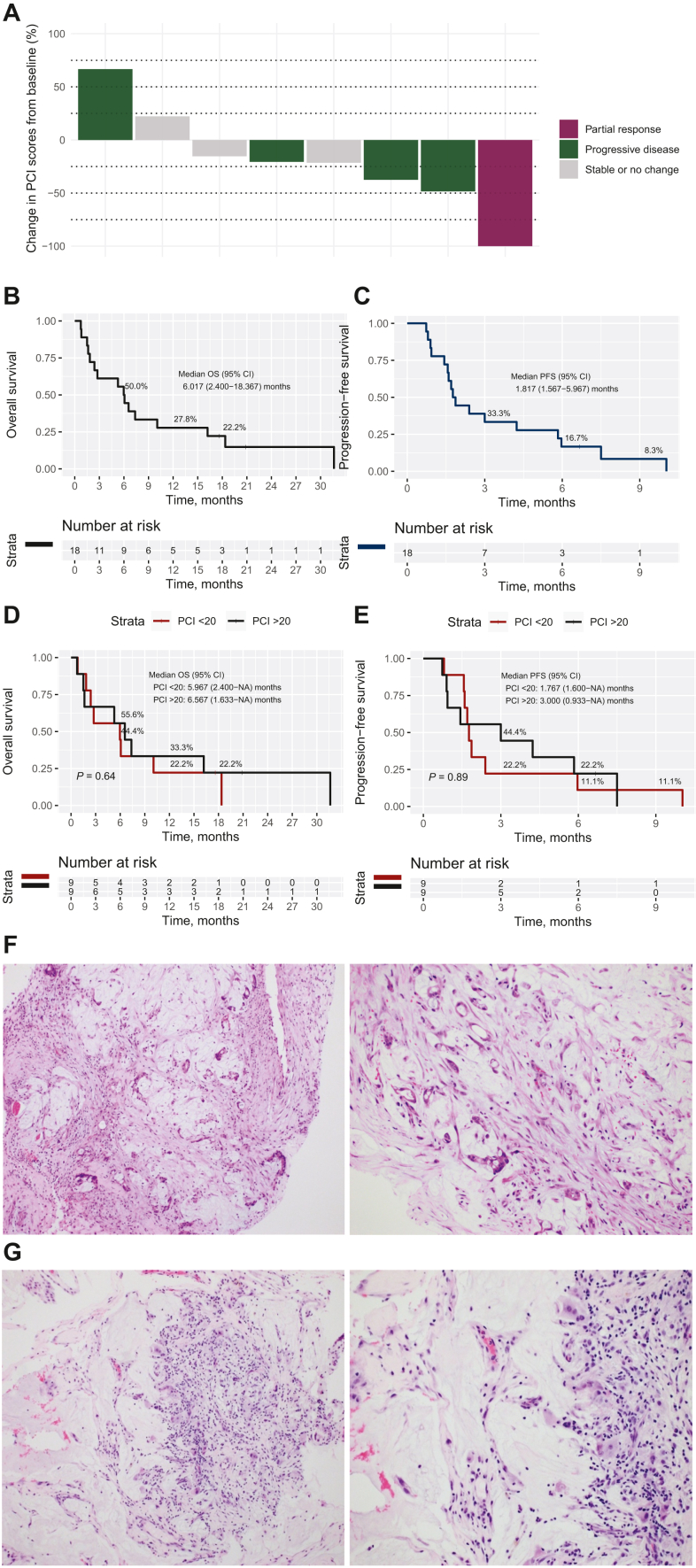
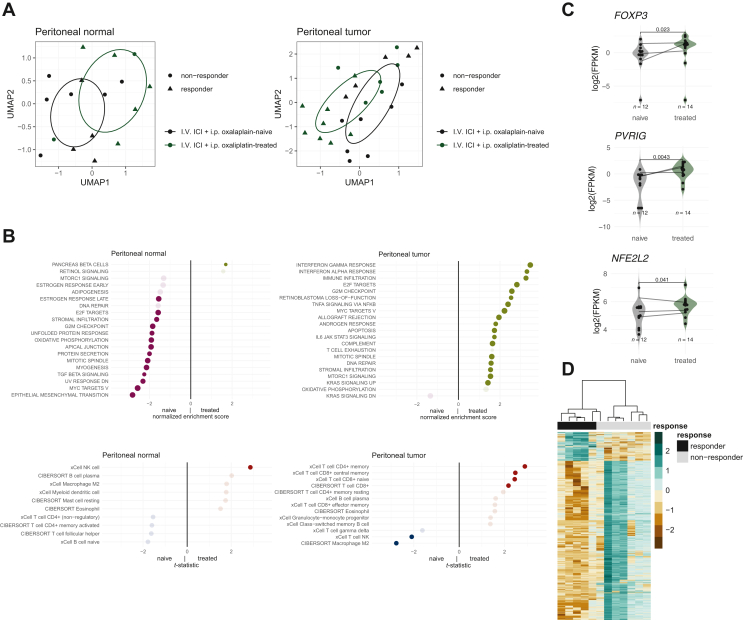
Results: In total, 18 patients with GCPM were prospectively recruited. The PIPAC-OX and nivolumab combination was well tolerated with manageable treatment-related adverse events, although one patient suffered from grade 4 vomiting. At second and third PIPAC-OX, respectively, the median decrease in peritoneal cancer index (PCI) was -5 (interquartile range: -12 to +1) and -7 (interquartile range: -6 to -20) and peritoneal regression grade 1 or 2 was observed in 66.7% (6/9) and 100% (3/3). Translational analyses of 43 GCPM samples revealed enrichment of immune/stromal infiltration and inflammatory signatures in peritoneal tumors after PIPAC-OX and nivolumab. M2 macrophages were reduced in treated peritoneal tumor samples while memory CD4+, CD8+ central memory and naive CD8+ T-cells were increased.
Conclusions: The first-in-human trial combining PIPAC-OX and nivolumab demonstrated safety and tolerability, coupled with enhanced T-cell infiltration within peritoneal tumors. This trial sets the stage for future combinations of systemic immunotherapy with locoregional intraperitoneal treatments.
Keywords: PIPAC; gastric cancer; immunotherapy; intraperitoneal; locoregional therapy; niche; peritoneal metastases; peritoneum; tumor microenvironment.
Copyright © 2024 The Author(s). Published by Elsevier Ltd.. All rights reserved.
Figures

References
-
- Siegel R.L., Miller K.D., Wagle N.S., Jemal A. Cancer statistics, 2023. CA Cancer J Clin. 2023;73(1):17–48. - PubMed
-
- Wagner A.D., Grothe W., Haerting J., Kleber G., Grothey A., Fleig W.E. Chemotherapy in advanced gastric cancer: a systematic review and meta-analysis based on aggregate data. J Clin Oncol. 2006;24(18):2903–2909. - PubMed
-
- Chia C.S., You B., Decullier E., et al. Patients with peritoneal carcinomatosis from gastric cancer treated with cytoreductive surgery and hyperthermic intraperitoneal chemotherapy: is cure a possibility? Ann Surg Oncol. 2016;23(6):1971–1979. - PubMed
-
- Sugarbaker P.H., Ryan D.P. Cytoreductive surgery plus hyperthermic perioperative chemotherapy to treat peritoneal metastases from colorectal cancer: standard of care or an experimental approach? Lancet Oncol. 2012;13(8):e362–e369. - PubMed
Publication types
MeSH terms
Substances
Associated data
LinkOut - more resources
Full Text Sources
Medical
Research Materials
Miscellaneous
