


Specific persistent symptoms of COVID-19 and associations with reinfection: a community-based survey study in southern China
- PMID: 39290408
- PMCID: PMC11405231
- DOI: 10.3389/fpubh.2024.1452233
Specific persistent symptoms of COVID-19 and associations with reinfection: a community-based survey study in southern China
Abstract
Background: Surveillance remains fundamental to understanding the changes in epidemiological patterns regarding post-COVID conditions and reinfections. Persistent symptoms and reinfection in previously infected individuals are increasing being reported in many countries, but their associations among general populations were seldomly reported. Understanding the association with persistent symptoms of COVID-19 reinfection is essential to develop strategies to mitigate the long-term health and socio-economic impacts of the post-COVID conditions. This study aimed to investigate the incidence of COVID-19 persistent symptoms among previously infected Chinese community residents and explore associations of specific COVID-19 persistent symptoms with reinfection and other factors.
Methods: A community-based survey was conducted in a southern city of China with about 20 million residents from August 3 to 24, 2023. Face-to-face questionnaires were distributed to a total of 1,485 residents to collect their information about COVID-19 infection, reinfection, specific ongoing persistent symptoms, and other COVID-19 related information. Multivariable logistic regression analysis was used to examine the association between specific persistent symptoms and reinfection of COVID-19, along with age, gender, and educational level.
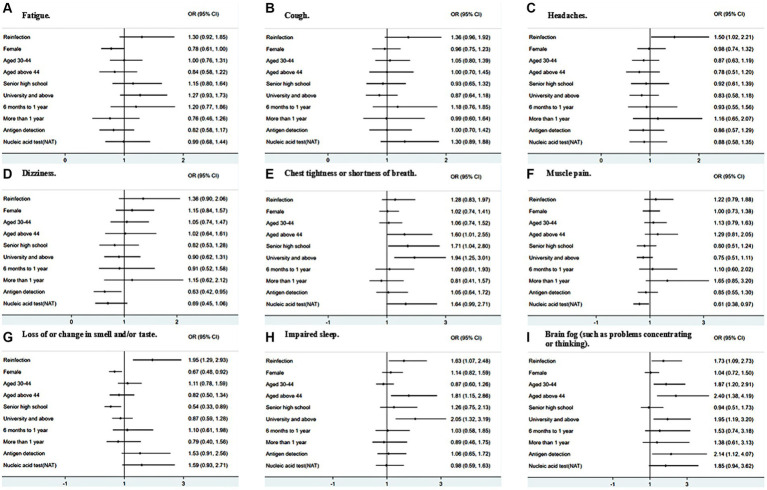
Results: Of the 1,485 participants, 1,089 (73.3%) reported they had been infected with COVID-19. Among them, 89.1% reported having ongoing persistent symptoms and 14.2% reported had two or more times of infection. About 20% participants were infected 1 year or more since their initial infection. Fatigue, cough, and headaches were the top 3 symptoms being reported. Participants with reinfection were associated with a higher probability of reporting headaches (OR: 1.54, 95% CI: 1.06-2.25), loss of or change in smell and/or taste (OR: 1.90, 95% CI: 1.27-2.83), impaired sleep (OR: 1.55, 95% CI: 1.02-2.35), and brain fog (OR: 1.76, 95% CI: 1.12-2.76). Participants aged 45 and above and who had a bachelor's or higher degree were more likely to report chest tightness or shortness of breath, impaired sleep, and brain fog.
Discussion: During the post-emergency period of COVID-19 pandemic, the incidence of ongoing persistent symptoms among Chinese residents remains high. Individuals whose initial infection was longer than 1 year have the highest probability of reporting having multiple symptoms. Reinfection may increase the risk of reporting headaches, loss of or change in smell and/or taste, impaired sleep, and brain fog. It is important to maintain routine syndromic surveillance among previously infected people and provide recommendations for clinical management of individuals with multiple ongoing symptoms.
Keywords: COVID-19; community-based surveillance; infectious disease; persistent symptoms; reinfection.
Copyright © 2024 Liu, Chen, Liao, Zhang, Wei, Han and Xu.
Conflict of interest statement
The authors declare that the research was conducted in the absence of any commercial or financial relationships that could be construed as a potential conflict of interest.
Figures
References
-
- Zhao Y, Shi L, Jiang Z, Zeng N, Mei H, Lu Y, et al. The phenotype and prediction of long-term physical, mental and cognitive COVID-19 sequelae 20 months after recovery, a community-based cohort study in China. Mol Psychiatry. (2023) 28:1793–801. doi: 10.1038/s41380-023-01951-1, PMID: - DOI - PMC - PubMed
-
- World Health Organization . Post COVID-19 condition. (2024) Available at: https://www.who.int/teams/health-care-readiness/post-covid-19-condition Accessed on July 29, 2024
MeSH terms
LinkOut - more resources
Full Text Sources
Medical
