Review
. 2024 Jun 6;9(9):2608-2618.
doi: 10.1016/j.ekir.2024.05.033. eCollection 2024 Sep.

Combination of Cardiovascular, Kidney, and Metabolic Diseases in a Syndrome Named Cardiovascular-Kidney-Metabolic, With New Risk Prediction Equations

Affiliations
Review

Combination of Cardiovascular, Kidney, and Metabolic Diseases in a Syndrome Named Cardiovascular-Kidney-Metabolic, With New Risk Prediction Equations

Ziad A Massy et al. Kidney Int Rep. .

Erratum in

Abstract

Associations of chronic kidney disease (CKD) with metabolic syndrome and cardiovascular disease (CVD) have long been recognized. Until recently, such associations were mainly limited to interrelationships between either heart and kidney, heart and metabolic syndrome, or metabolic syndrome and kidney. It is the merit of the American Heart Association (AHA) to have set up a work group of cardiologists, endocrinologists, and nephrologists for the purpose of combining all 3 disorders in a single entity, as an appreciation of their pathophysiological interrelatedness. To this end, they proposed the term cardiovascular-kidney-metabolic (CKM) syndrome, which reflects multidirectional relationships among metabolic risk factors, CKD, and the cardiovascular system. Following a consensus approach in defining CKM with 5 stages, the work group subsequently developed new risk prediction equations, named predicting risk of CVD events (PREVENT) equations, which included estimated glomerular filtration rate (eGFR) and albuminuria as variables in addition to traditional cardiovascular and metabolic factors. Despite several limitations, this development is a major step forward in cardiovascular risk prediction. Its clinical application should translate into earlier, more appropriate treatment and prevention of CKM syndrome.

Keywords: CKM syndrome; cardiovascular disease; kidney disease; metabolic syndrome; risk prediction.


Figures

Figure 1
Figure 1
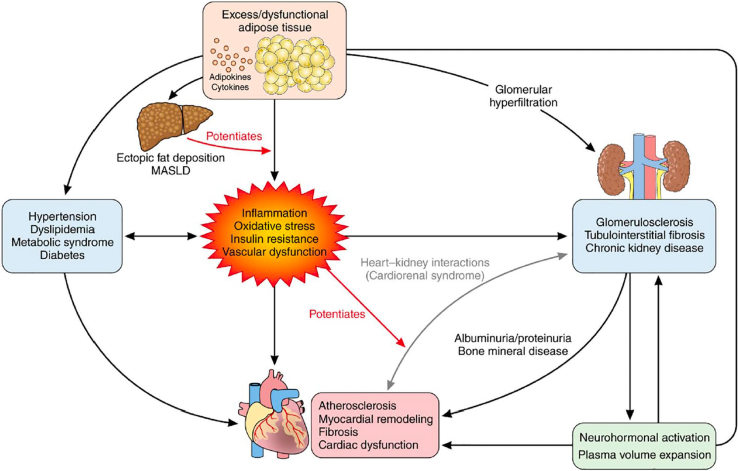
Conceptual diagram for CKM syndrome. The image displays the pathophysiology underlying CKM syndrome. CKM syndrome, most commonly, originates from excess adipose tissue, dysfunctional adipose tissue, or both. Multiple pathological processes related to dysfunctional adipose tissue result in insulin resistance and eventual hyperglycemia. Inflammation, oxidative stress, insulin resistance, and vascular dysfunction are highlighted as central processes leading to the development of metabolic risk factors, progression of kidney disease, potentiation of heart-kidney interactions, and development of cardiovascular diseases. Metabolic risk factors and chronic kidney disease further predispose to cardiovascular diseases through multiple direct and indirect pathways. CKM, cardiovascular-kidney-metabolic; MASLD, metabolic dysfunction-associated steatotic liver disease.
Figure 2
Figure 2
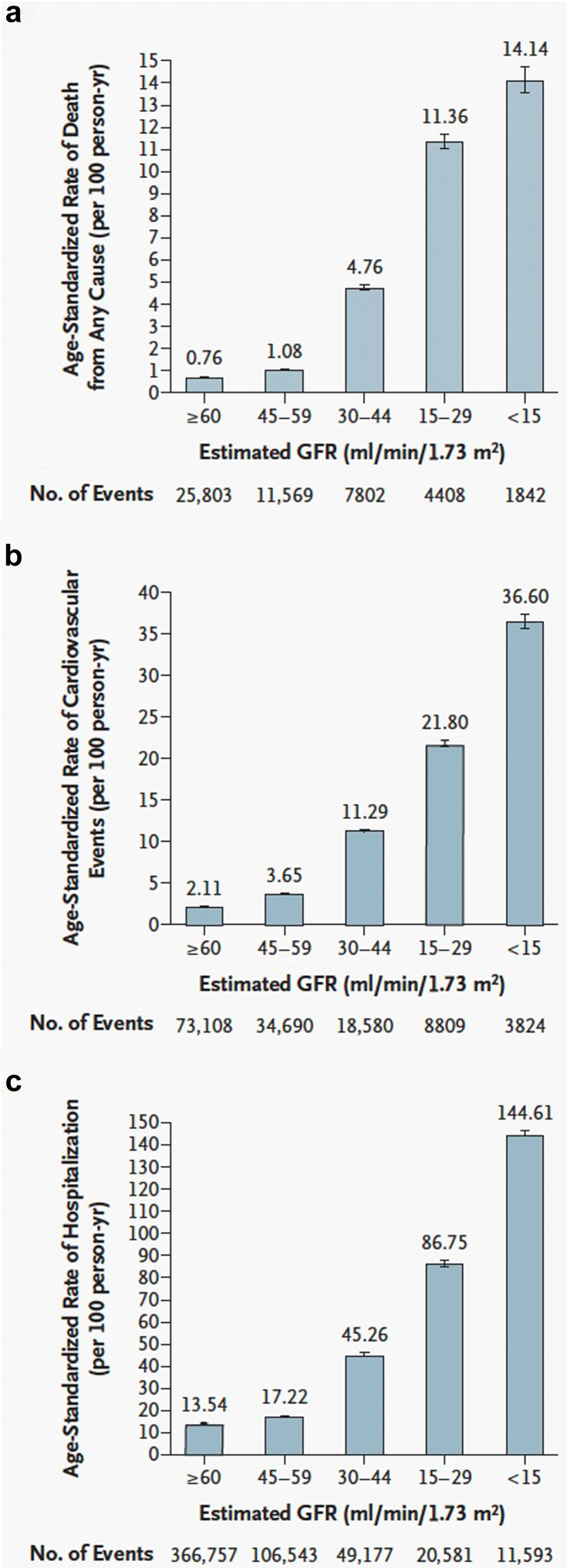
Age-standardized rates of death from (a) any cause, (b) cardiovascular events, and (c) hospitalization, according to the estimated GFR among 1,120,295 ambulatory adults. A cardiovascular event was defined as hospitalization for coronary heart disease, heart failure, ischemic stroke, and peripheral arterial disease. Error bars represent 95 percent confidence intervals. The rate of events is listed above each bar. GFR, glomerular filtration rate.
Figure 3
Figure 3
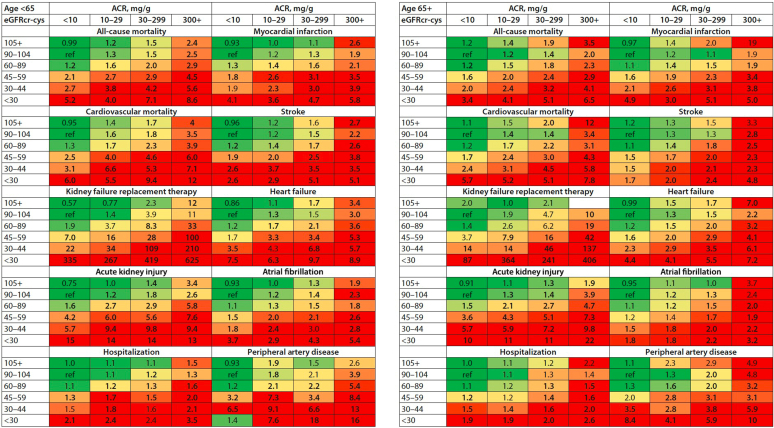
Associations of chronic kidney disease (CKD) staging by estimated glomerular filtration rate by creatinine and cystatin C (eGFRcr-cys) and albumin-to-creatinine ratio (ACR) categories and risks for 10 common complications by age in multivariable-adjusted analyses. Numbers reflect the adjusted hazard ratio compared with the reference cell. Adjustment variables included age; sex; smoking status (current, former, or never); systolic blood pressure; total cholesterol; high-density lipoprotein cholesterol; body mass index; use of antihypertensive medications; and a medical history of diabetes, coronary heart disease, stroke, heart failure, atrial fibrillation, peripheral artery disease, cancer, and chronic obstructive pulmonary disease, where relevant. The colors were determined for each outcome separately using the following rule: the percentile shaded the darkest green color corresponds to the proportion of cells in the grid without CKD (e.g., 6 of 24 cells), and the percentile shaded the darkest red color corresponds to proportion expected to be at highest risk (e.g., 5 of 24 cells). In this manner, the numbers of green and red cells are consistent across outcomes, but the patterns are allowed to differ. ref, reference cell.
Figure 4
Figure 4
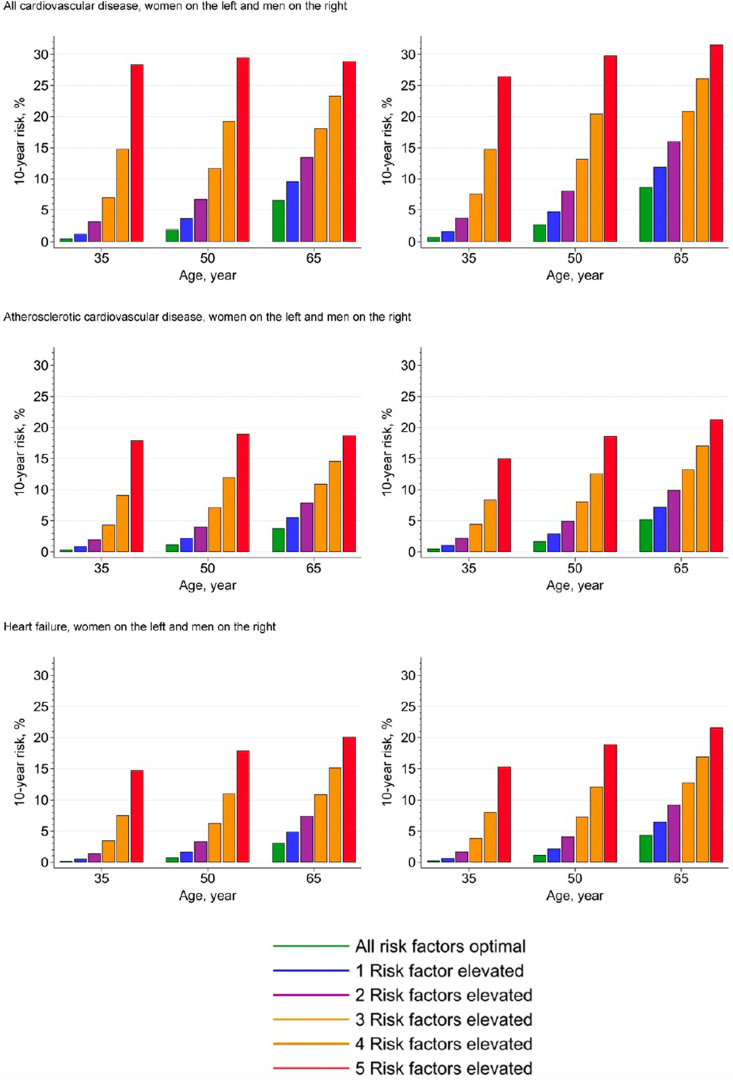
Estimated 10-year risk of total cardiovascular disease, atherosclerotic cardiovascular disease, and heart failure stratified by sex (women on the left and men on the right for each outcome) at varying ages (35, 50, and 65 years) according to the number of elevated risk factors (0–5) adjusted for competing risks of noncardiovascular disease death. Optimal risk factor levels are defined as nonhigh-density lipoprotein cholesterol (3.5 mmol/l; 135 mg/dl), high-density lipoprotein cholesterol (1.5 mmol/l, 58 mg/dl), systolic blood pressure 120 mm Hg, no diabetes, no smoking, no hypertension medications, no statin use, and estimated glomerular filtration rate 90 ml/min per 1.73 m2. Elevated risk factor levels included nonhigh-density lipoprotein cholesterol (5.5 mmol/l; 213 mg/dl), systolic blood pressure 150 mm Hg, diabetes, or smoking and estimated glomerular filtration rate 45 ml/min per 1.73 m2. For multiple elevated risk factors, the risk shown is the average risk of all combinations.

References

    1. Ronco C., McCullough P.A., Anker S.D., et al. Cardiorenal syndromes: an executive summary from the consensus conference of the Acute Dialysis Quality Initiative (ADQI) Contrib Nephrol. 2010;165:54–67. doi: 10.1159/000313745. - DOI - PubMed
    1. Rangaswami J., Bhalla V., Blair J.E.A., et al. Cardiorenal syndrome: classification, pathophysiology, diagnosis, and treatment strategies: a scientific statement from the American Heart Association. Circulation. 2019;139:e840–e878. doi: 10.1161/CIR.0000000000000664. - DOI - PubMed
    1. Zoccali C., Mallamaci F., Halimi J.M., et al. From cardiorenal syndrome to chronic cardiovascular and kidney disorder: a conceptual transition. Clin J Am Soc Nephrol. 2024;19:813–820. doi: 10.2215/CJN.0000000000000361. - DOI - PMC - PubMed
    1. Chen J., Muntner P., Hamm L.L., et al. The metabolic syndrome and chronic kidney disease in U.S. adults. Ann Intern Med. 2004;140:167–174. doi: 10.7326/0003-4819-140-3-200402030-00007. - DOI - PubMed
    1. Kurella M., Lo J.C., Chertow G.M. Metabolic syndrome and the risk for chronic kidney disease among nondiabetic adults. J Am Soc Nephrol. 2005;16:2134–2140. doi: 10.1681/ASN.2005010106. - DOI - PubMed

LinkOut - more resources