


Barriers, facilitators, and other factors associated with health behaviors in childhood, adolescent, and young adult cancer survivors: A systematic review
- PMID: 39291862
- PMCID: PMC11192647
- DOI: 10.1002/cam4.7361
Barriers, facilitators, and other factors associated with health behaviors in childhood, adolescent, and young adult cancer survivors: A systematic review
Abstract
Background: Healthy behaviors are paramount in preventing long-term adverse health outcomes in childhood, adolescent, and young adult (CAYA) cancer survivors. We systematically reviewed and synthesized existing literature on barriers, facilitators, and other factors associated with health behaviors in this population.
Methods: MEDLINE and PsycInfo were searched for qualitative and quantitative studies including survivors aged 16-50 years at study, a cancer diagnosis ≤25 years and ≥2 years post diagnosis. Health behaviors included physical activity, smoking, diet, alcohol consumption, sun exposure, and a combination of these behaviors (defined as health behaviors in general).
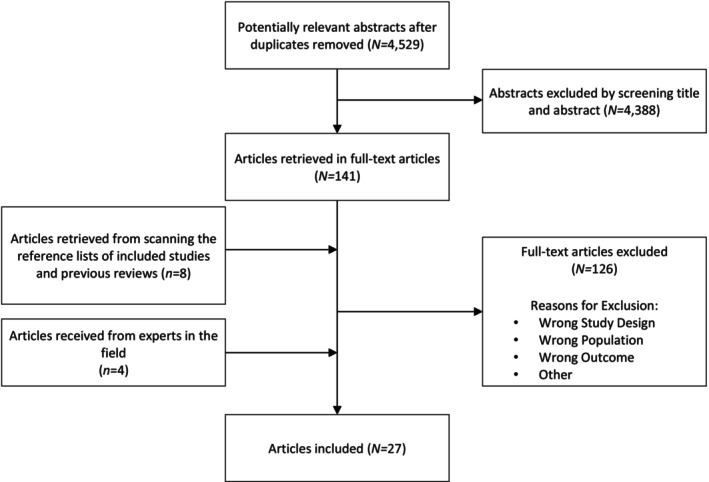
Results: Barriers, facilitators, and other factors reported in ≥2 two studies were considered relevant. Out of 4529 studies, 27 were included (n = 31,905 participants). Physical activity was the most frequently examined behavior (n = 12 studies), followed by smoking (n = 7), diet (n = 7), alcohol (n = 4), sun exposure (n = 4), and health behavior in general (n = 4). Relevant barriers to physical activity were fatigue, lack of motivation, time constraints, and current smoking. Relevant facilitators were perceived health benefits and motivation. Influence of the social environment and poor mental health were associated with more smoking, while increased energy was associated with less smoking. No relevant barriers and facilitators were identified for diet, alcohol consumption, and sun exposure. Barriers to healthy behavior in general were unmet information needs and time constraints whereas lifestyle advice, information, and discussions with a healthcare professional facilitated healthy behavior in general. Concerning other factors, women were more likely to be physically inactive, but less likely to drink alcohol and more likely to comply with sun protection recommendations than men. Higher education was associated with more physical activity, and lower education with more smoking.
Conclusion: This knowledge can be used as a starting point to develop health behavior interventions, inform lifestyle coaches, and increase awareness among healthcare providers regarding which survivors are most at risk of unhealthy behaviors.
Keywords: CAYA cancer survivors; barriers; facilitators; factors; health behaviors; healthy lifestyle; pediatric oncology; systematic review.
© 2024 The Author(s). Cancer Medicine published by John Wiley & Sons Ltd.
Conflict of interest statement
The authors declare that they have no known competing financial interests or personal relationships that could have appeared to influence the work reported in this paper.
Figures
References
-
- National Cancer Institute . Adolescents and Young Adults with Cancer. Accessed 9/6/2023. https://www.cancer.gov/types/aya
