Flavonoid-Rich Foods, Dementia Risk, and Interactions With Genetic Risk, Hypertension, and Depression
- PMID: 39292460
- PMCID: PMC11411383
- DOI: 10.1001/jamanetworkopen.2024.34136
Flavonoid-Rich Foods, Dementia Risk, and Interactions With Genetic Risk, Hypertension, and Depression
Abstract
Importance: A composite score of flavonoid-rich foods (flavodiet) may provide a clear public health message regarding the range of foods with the potential to lower dementia risk.
Objective: To examine associations of flavodiet score and intakes of flavonoid subclasses with dementia risk according to genetic risk and presence of depression and hypertension.
Design, setting, and participants: This prospective, population-based cohort study included dietary data from adults aged 40 to 70 years in the UK Biobank, recruited between 2006 and 2010, with a mean (SD) follow-up of 9.2 (1.5) years. The data analyses were conducted from September 1 to 30, 2023.
Exposure: Flavodiet score adherence and intake of flavonoid subclasses derived from 24-hour computerized dietary assessments.
Main outcome and measures: The main outcome was incident all-cause dementia and interactions with genetic risk, hypertension, and depressive symptoms using multivariable Cox proportional hazards regression models.
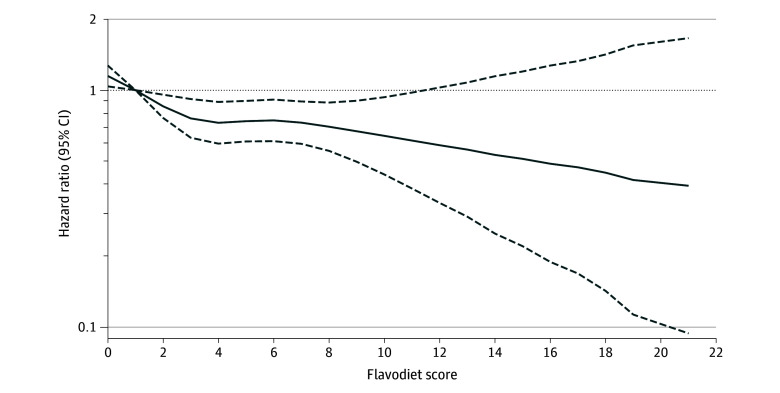
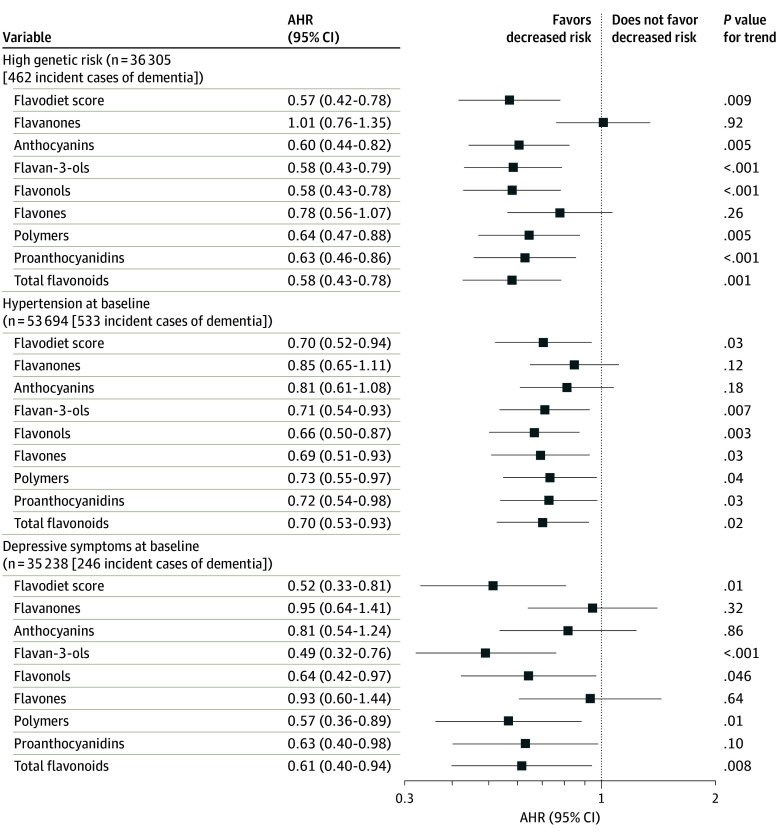
Results: The sample included 121 986 participants (mean [SD] age, 56.1 [7.8] years; 55.6% female; 882 with incident dementia). Comparing the highest with lowest quintile of flavodiet score, consuming 6 additional servings per day of flavonoid-rich foods was associated with a lower risk of dementia among all participants (adjusted hazard ratio [AHR], 0.72; 95% CI, 0.57-0.89), those at high genetic risk (AHR, 0.57; 95% CI, 0.42-0.78), and those with depressive symptoms (AHR, 0.52; 95% CI, 0.33-0.81) after multivariable adjustment. The greatest risk reduction was observed in participants consuming at least 2 of the following per day: 5 servings of tea, 1 serving of red wine, and 0.5 servings of berries, compared with those who did not achieve any of these intakes (AHR, 0.62; 95% CI, 0.46-0.84). Higher intakes of flavonoid subclasses, including anthocyanins, flavan-3-ols, flavonols, and flavones, of which tea, red wine, and berries are the main contributors, supported these findings, showing inverse associations with dementia risk.
Conclusions and relevance: In this cohort study, high adherence to a flavonoid-rich diet score was associated with a lower risk of dementia, with reductions more pronounced in individuals with a high genetic risk, hypertension, and depressive symptoms. These findings suggest that simple dietary changes of increasing intakes of commonly consumed flavonoid-rich foods and drinks may lower dementia risk.
Conflict of interest statement
Figures
References
-
- Prince M, Wimo A, Guerchet M, Ali GC, Wu YT, Prina M. World Alzheimer Report 2015. The Global Impact of Dementia: An Analysis of Prevalence, Incidence, Cost and Trends. Alzheimer’s Disease International; 2015.
Publication types
MeSH terms
Substances
LinkOut - more resources
Full Text Sources
Medical