


Climate change and the global redistribution of biodiversity: substantial variation in empirical support for expected range shifts
- PMID: 39294691
- PMCID: PMC11378804
- DOI: 10.1186/s13750-023-00296-0
Climate change and the global redistribution of biodiversity: substantial variation in empirical support for expected range shifts
Abstract
Background: Among the most widely predicted climate change-related impacts to biodiversity are geographic range shifts, whereby species shift their spatial distribution to track their climate niches. A series of commonly articulated hypotheses have emerged in the scientific literature suggesting species are expected to shift their distributions to higher latitudes, greater elevations, and deeper depths in response to rising temperatures associated with climate change. Yet, many species are not demonstrating range shifts consistent with these expectations. Here, we evaluate the impact of anthropogenic climate change (specifically, changes in temperature and precipitation) on species' ranges, and assess whether expected range shifts are supported by the body of empirical evidence.
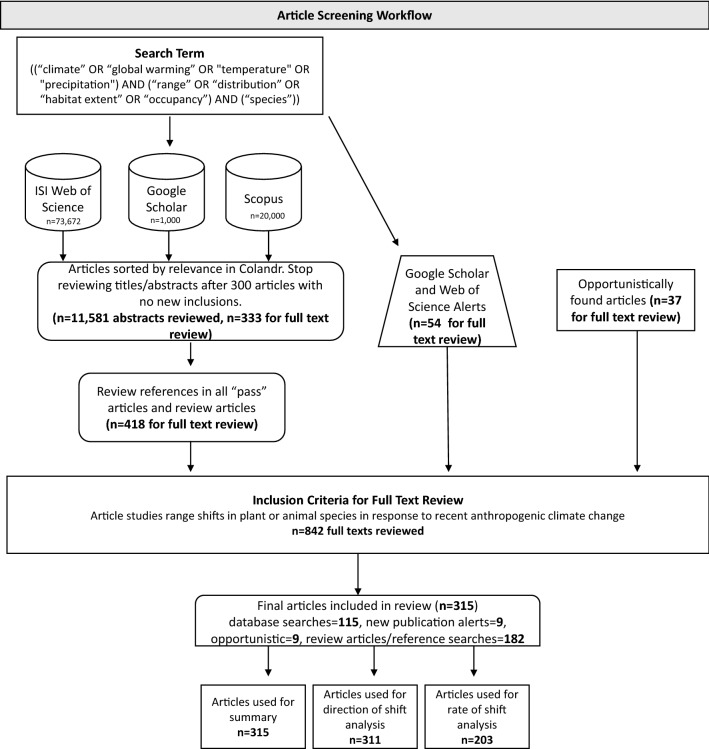
Methods: We conducted a Systematic Review, searching online databases and search engines in English. Studies were screened in a two-stage process (title/abstract review, followed by full-text review) to evaluate whether they met a list of eligibility criteria. Data coding, extraction, and study validity assessment was completed by a team of trained reviewers and each entry was validated by at least one secondary reviewer. We used logistic regression models to assess whether the direction of shift supported common range-shift expectations (i.e., shifts to higher latitudes and elevations, and deeper depths). We also estimated the magnitude of shifts for the subset of available range-shift data expressed in distance per time (i.e., km/decade). We accounted for methodological attributes at the study level as potential sources of variation. This allowed us to answer two questions: (1) are most species shifting in the direction we expect (i.e., each observation is assessed as support/fail to support our expectation); and (2) what is the average speed of range shifts?
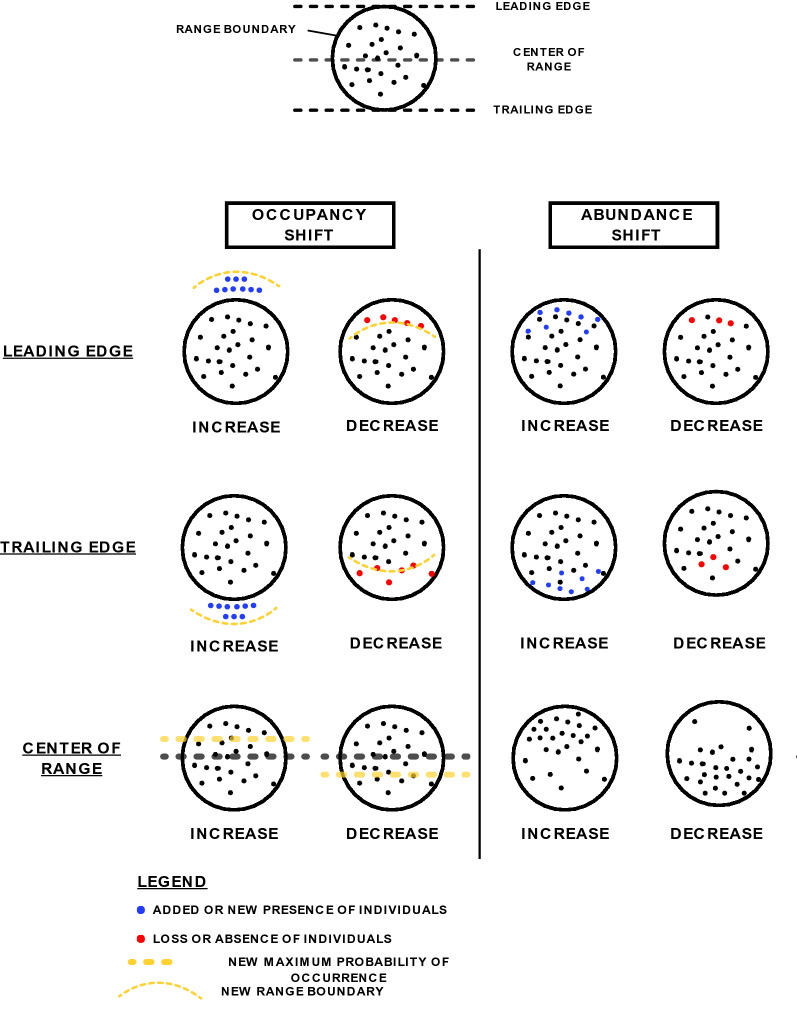
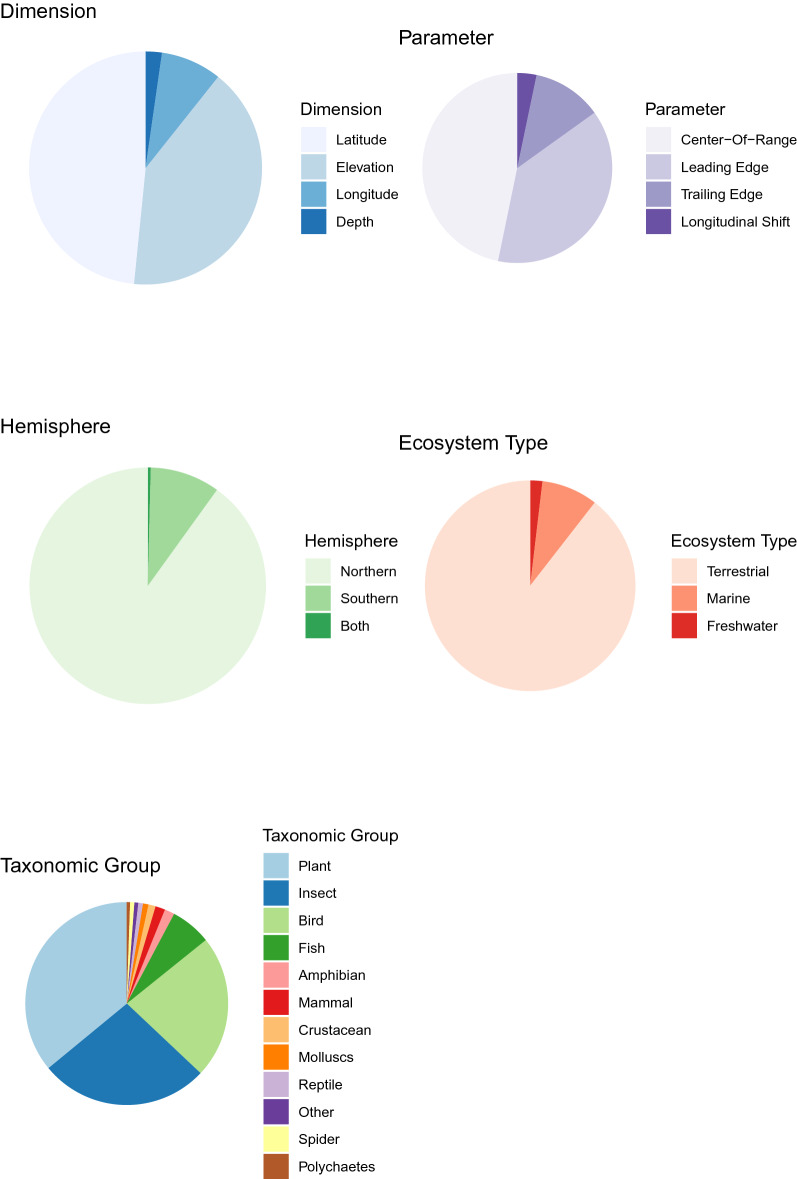
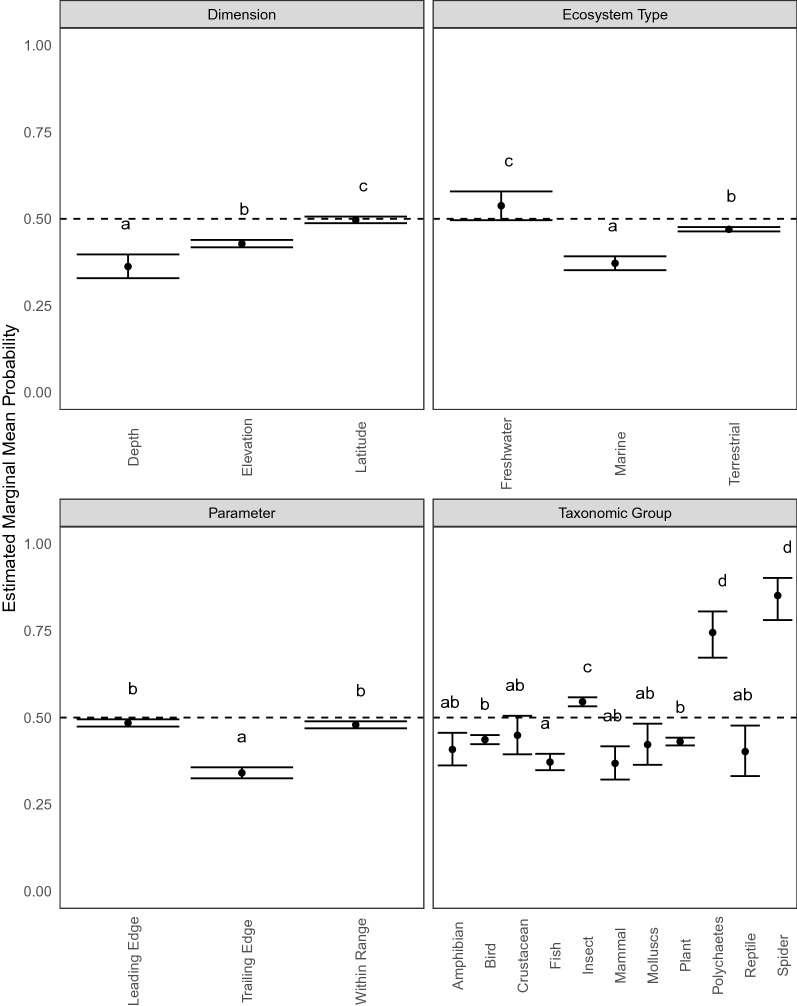
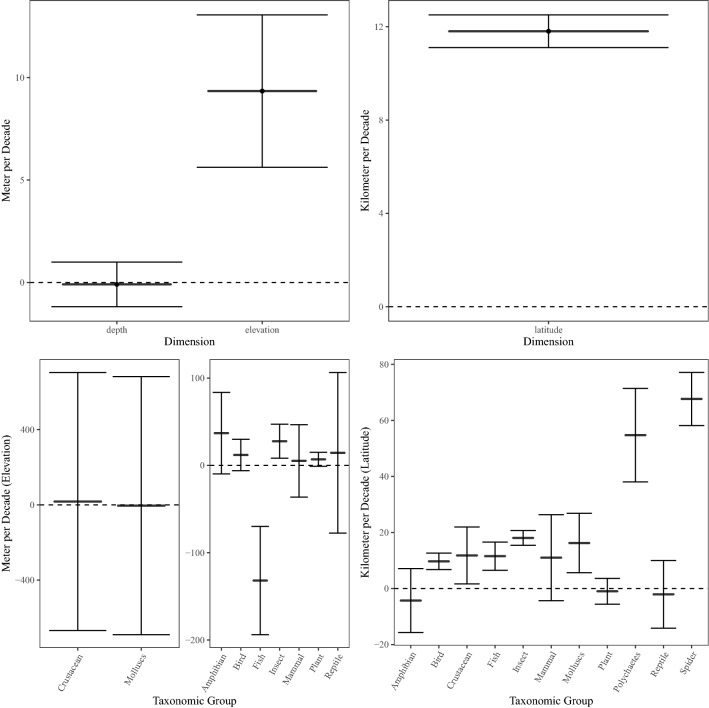
Review findings: We found that less than half of all range-shift observations (46.60%) documented shifts towards higher latitudes, higher elevations, and greater marine depths, demonstrating significant variation in the empirical evidence for general range shift expectations. For the subset of studies looking at range shift rates, we found that species demonstrated significant average shifts towards higher latitudes (average = 11.8 km/dec) and higher elevations (average = 9 m/dec), although we failed to find significant evidence for shifts to greater marine depths. We found that methodological factors in individual range-shift studies had a significant impact on the reported direction and magnitude of shifts. Finally, we identified important variation across dimensions of range shifts (e.g., greater support for latitude and elevation shifts than depth), parameters (e.g., leading edge shifts faster than trailing edge for latitude), and taxonomic groups (e.g., faster latitudinal shifts for insects than plants).
Conclusions: Despite growing evidence that species are shifting their ranges in response to climate change, substantial variation exists in the extent to which definitively empirical observations confirm these expectations. Even though on average, rates of shift show significant movement to higher elevations and latitudes for many taxa, most species are not shifting in expected directions. Variation across dimensions and parameters of range shifts, as well as differences across taxonomic groups and variation driven by methodological factors, should be considered when assessing overall confidence in range-shift hypotheses. In order for managers to effectively plan for species redistribution, we need to better account for and predict which species will shift and by how much. The dataset produced for this analysis can be used for future research to explore additional hypotheses to better understand species range shifts.
Keywords: Depth; Distribution shift; Elevation; Global change; Latitude; Species redistribution; Vulnerability; Warming.
© 2023. This is a U.S. Government work and not under copyright protection in the US; foreign copyright protection may apply.
Conflict of interest statement
Not applicable.
Figures
References
-
- Lenoir J, Gegout JC, Guisan A, Vittoz P, Wohlgemuth T, Zimmermann NE, et al. Going against the flow: potential mechanisms for unexpected downslope range shifts in a warming climate. Ecography. 2010;33:295–303. - DOI
-
- Poloczanska ES, Burrows MT, Brown CJ, Molinos JG, Halpern BS, Hoegh-Guldberg O, et al. Responses of marine organisms to climate change across oceans. Front Mar Sci. 2016;3:1–21. - DOI
Publication types
LinkOut - more resources
Full Text Sources
Research Materials
Miscellaneous