


Existing evidence on the potential of soils constructed from mineral wastes to support biodiversity: a systematic map
- PMID: 39294823
- PMCID: PMC11378810
- DOI: 10.1186/s13750-024-00332-7
Existing evidence on the potential of soils constructed from mineral wastes to support biodiversity: a systematic map
Abstract
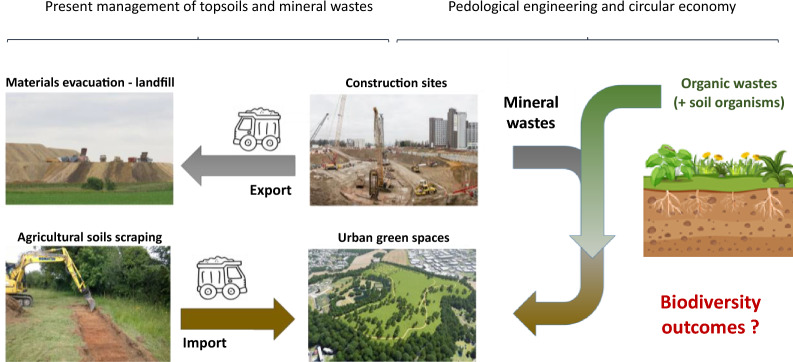
Background: The development of cities and transport infrastructure produces a large volume of mineral waste (e.g. excavated earth material). At the same time, cities are increasingly trying to develop green infrastructures, given the ecosystem services they provide to people, but this comes with considerable economic and environmental costs associated with the transfer of fertile soil from rural areas to cities. In a circular economy approach, the reuse of mineral waste to build fertile soil is a substantial opportunity to reduce the economic and environmental costs of both mineral waste management and green infrastructure development. Soils constructed from these materials (constructed Technosols) must be able to support vegetation growth and become a suitable living environment for soil organisms. This requires ecological engineering to maximise the potential of constructed soils for biodiversity, both from a taxonomic and functional perspective. In this context, we systematically mapped the evidence related to the ability of soils constructed from mineral wastes to support biodiversity.
Methods: We gathered published and grey literature through searches in two publications databases (Scopus and Web of Science Core Collection), one search engine (Google Scholar), nine organisational websites and through a call for literature. Titles, abstracts, and full-texts were successively screened using eligibility criteria. All included studies were described with coded variables and a database was produced. The extent of evidence was assessed and knowledge clusters and gaps were identified.
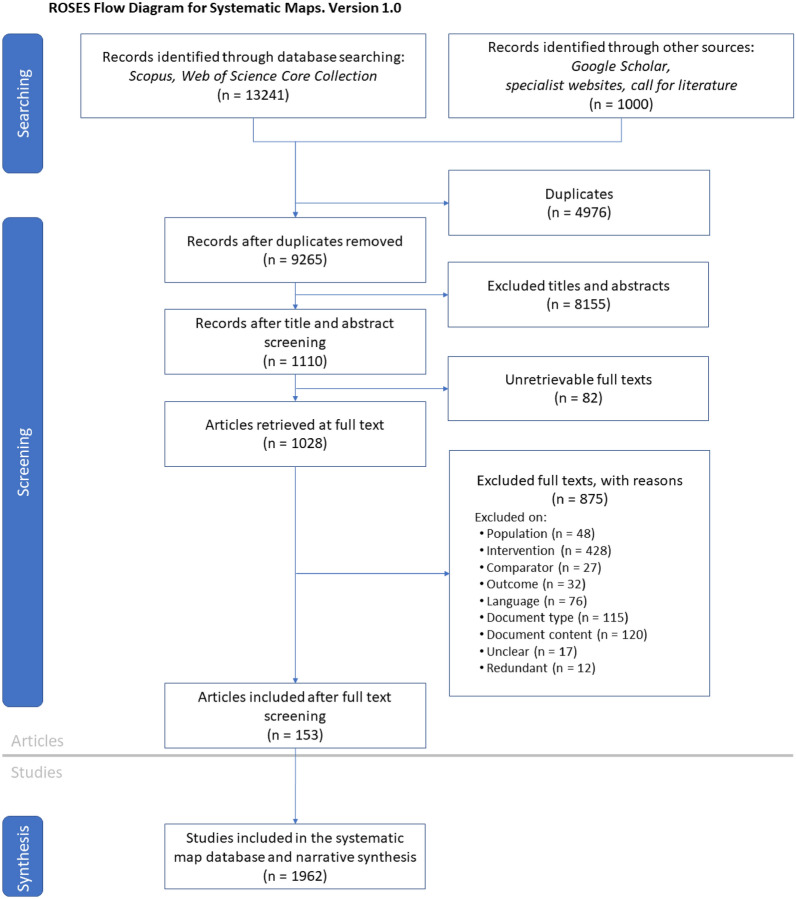
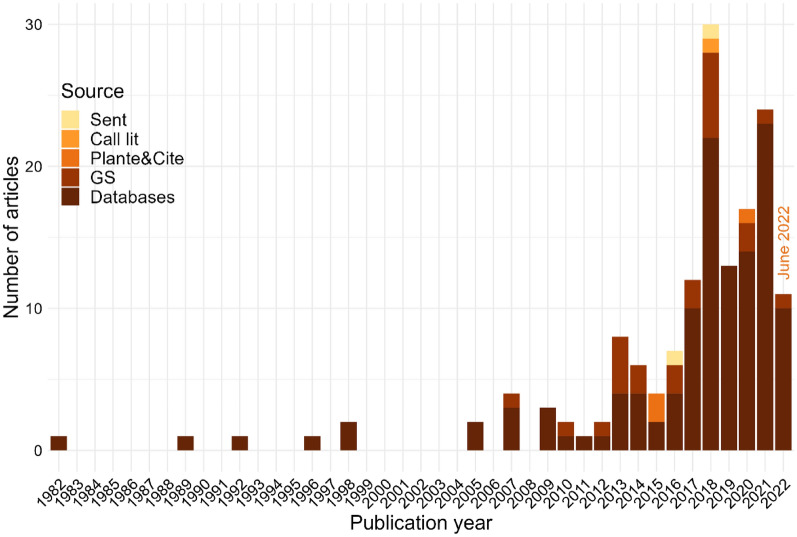
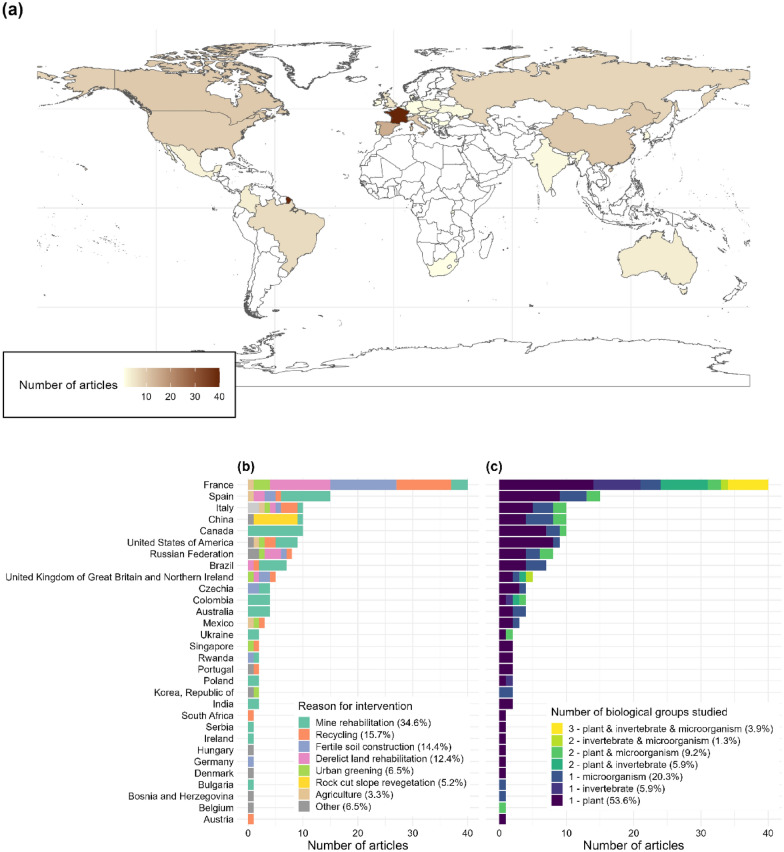
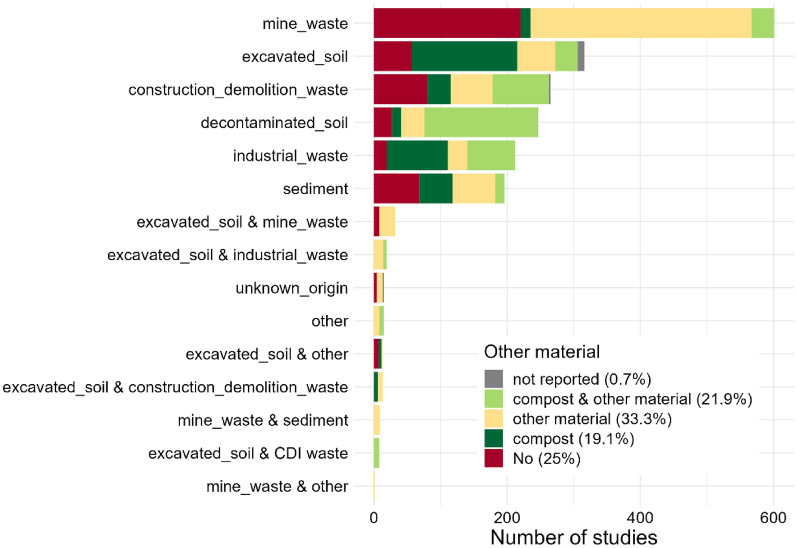
Review findings: The searches yielded 9265 articles, and 153 articles were retained after the screening process. More than half of these articles were from European countries, with France leading the field with 40 articles, followed by Spain (15 articles) and Italy (10 articles). Most of the articles (75%) were produced after 2015. The main reasons for constructing soils from mineral waste were for mine rehabilitation (35%), waste recycling (16%) and experimental purpose (15%). The 153 articles were divided into 1962 studies, a study being a combination of a taxon, an intervention (i.e. soil construction) and a measured outcome. Among these studies, the most studied biological group is plants (69% of studies) and especially herbaceous species (32%), followed by microorganisms (17%) and invertebrates (14%). The most used type of mineral waste is mine waste (31% of studies) followed by excavated soil (16%) and demolition waste (14%). Finally, the most frequently measured outcome is plant growth (42% of studies), followed by organism abundance (16%) and diversity (10%).
Conclusions: Three main knowledge clusters were identified which could be addressed in the future for full synthesis of the results: (1) How well do plants grow in soils constructed from mineral wastes? (2) What is the potential of soils constructed from mineral wastes to support biodiversity? and (3) How do microbial communities develop in soils constructed from mineral wastes? There is a lack of studies investigating several biological groups at the same time: only 6 articles out of 153 investigated the response of both plants, invertebrates and microorganisms to soil construction. More research is therefore needed on the ability to support a diversity of organisms.
Keywords: Anthropogenic soil; Anthroposol; Anthrosol; Artificial soil; Circular economy; Constructed Technosols; Construction and Demolition waste; Pedological engineering; Recycling.
© 2024. The Author(s).
Conflict of interest statement
The authors declare that they have no competing interests.
Figures

References
-
- United Nations. The World’s Cities in 2018 - Data booklet. United Nations; 2018. 31 p. (Statistical Papers - United Nations (Ser. A), Population and Vital Statistics Report).
-
- Bolund P, Hunhammar S. Ecosystem services in urban areas. Ecol Econ. 1999;29(2):293–301.10.1016/S0921-8009(99)00013-0 - DOI
-
- Stockmann U, Minasny B, McBratney AB. How fast does soil grow? Geoderma. 2014;216:48–61.10.1016/j.geoderma.2013.10.007 - DOI
LinkOut - more resources
Full Text Sources
Miscellaneous