


The butyrate-producing and spore-forming bacterial genus Coprococcus as a potential biomarker for neurological disorders
- PMID: 39295905
- PMCID: PMC11406416
- DOI: 10.1017/gmb.2023.14
The butyrate-producing and spore-forming bacterial genus Coprococcus as a potential biomarker for neurological disorders
Abstract
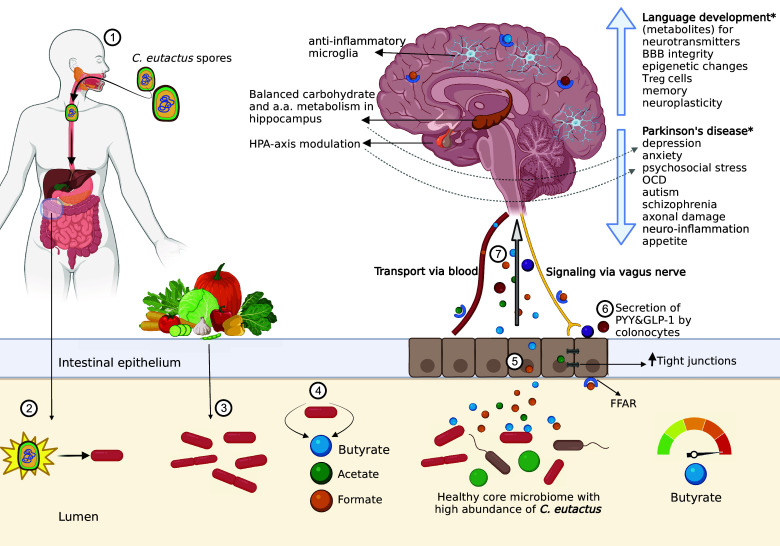
The host-intestinal microbiome interaction has gained much scientific attention in the past two decades, boosted by advances in DNA sequencing and cultivation techniques. An accumulating amount of evidence shows that gut microbes play crucial roles in gut homeostasis, immune system education, and are associated with quality-of-life indicators. Beneficial health factors are associated with the digestion of dietary fibres in the colon and the subsequent production of short-chain fatty acids, including acetate, propionate, and butyrate. Coprococcus is a butyrate-producing genus in the phylum Firmicutes, and its abundance is inversely correlated with several neuropsychological and neurodegenerative disorders. Case-control studies provide strong evidence of decreased abundance of Coprococcus spp. in depressed individuals. The species Coprococcus eutactus has the unique capacity to use two separate pathways for butyrate synthesis and has been found to be depleted in children with delayed language development and adults with Parkinson's disease. The combined literature on Coprococcus and the gut microbiota-brain axis points towards enhanced butyrate production and reduced colonisation of pathogenic clades as factors explaining its association with health effects. The genus Coprococcus is a promising candidate for a mental health biomarker and an interesting lead for novel dietary-based preventive therapies for specific neurological disorders.
Keywords: Coprococcus eutactus; depression; fibre fermentation; gut–brain axis; short-chain fatty acids.
© The Author(s) 2023.
Conflict of interest statement
The authors declare none.
Figures


References
-
- Alessi AM, Gray V, Farquharson FM, Flores-López A, Shaw S, Stead D, Wegmann U, Shearman C, Gasson M, Collie-Duguid ESR, Flint HJ and Louis P (2020) β-Glucan is a major growth substrate for human gut bacteria related to Coprococcus eutactus. Environmental Microbiology 22(6), 2150–2164. https://doi.org/1111/1462-2920.14977 - PubMed
-
- Altemani F, Barrett HL, Gomez-Arango L, Josh P, David McIntyre H, Callaway LK, Morrison M, Tyson GW and Dekker Nitert M (2021) Pregnant women who develop preeclampsia have lower abundance of the butyrate-producer Coprococcus in their gut microbiota. Pregnancy Hypertension 23, 211–219. 10.1016/j.preghy.2021.01.002 - DOI - PubMed
-
- Ascherio A, LeWitt PA, Xu K, Eberly S, Watts A, Matson WR, Marras C, Kieburtz K, Rudolph A, Bogdanov MB, Schwid SR, Tennis M, Tanner CM, Beal MF, Lang AE, Oakes D, Fahn S, Shoulson I and Schwarzschild MA (2009) Urate as a predictor of the rate of clinical decline in Parkinson disease. Archives of Neurology 66(12), 1460–1468. 10.1001/archneurol.2009.247 - DOI - PMC - PubMed
Publication types
LinkOut - more resources
Full Text Sources
Molecular Biology Databases
Miscellaneous