


Diarrhea and cholera surveillance for early warning and preparedness to prevent epidemics among Rohingya Myanmar nationals in Cox's Bazar, Bangladesh
- PMID: 39296070
- PMCID: PMC11409110
- DOI: 10.1016/j.heliyon.2024.e37562
Diarrhea and cholera surveillance for early warning and preparedness to prevent epidemics among Rohingya Myanmar nationals in Cox's Bazar, Bangladesh
Abstract
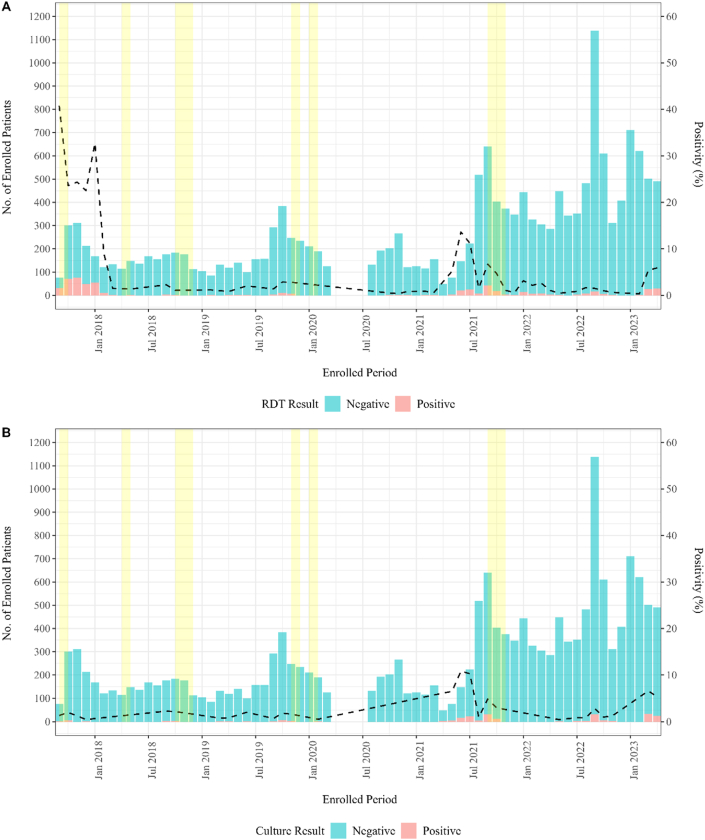
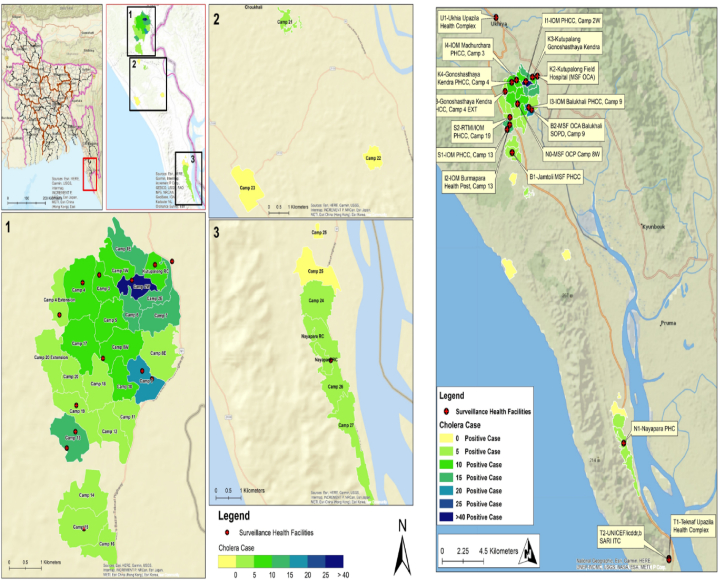
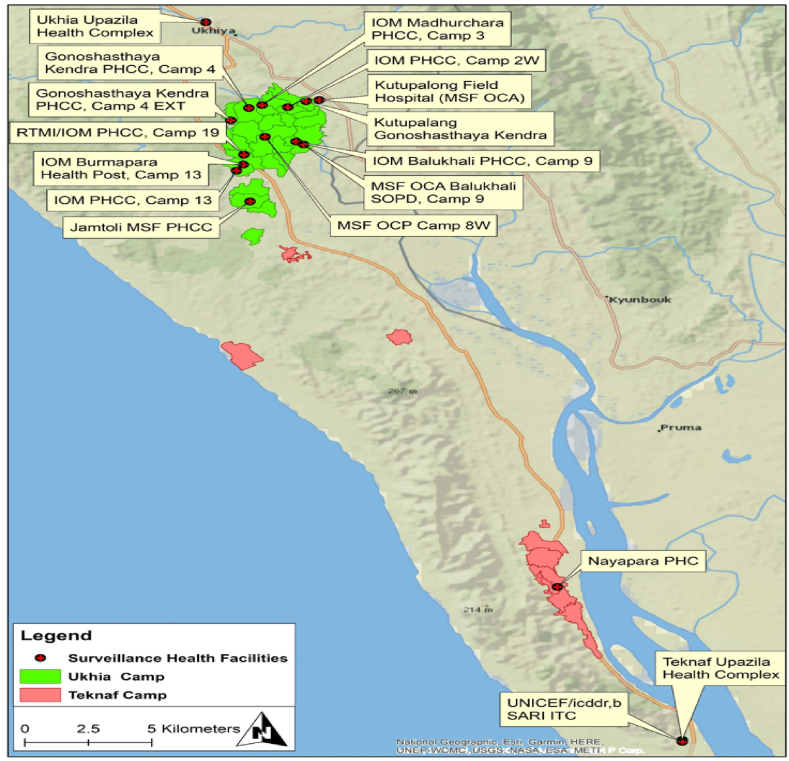
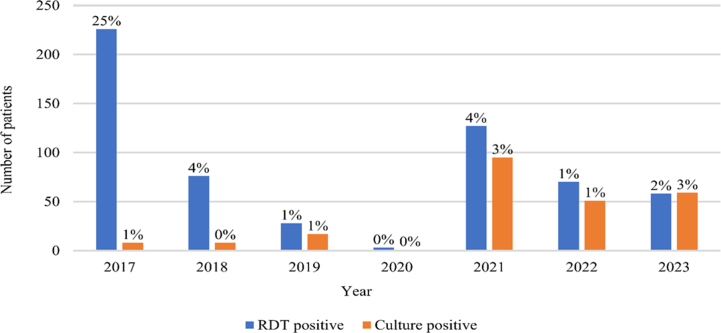
Diarrheal diseases, especially cholera, can be a serious threat to Rohingya refugees in Cox's Bazar due to overcrowding and inadequate hygiene infrastructure. Assessing the risk, cholera surveillance network was established with the aim to identify the outbreak of diarrhea and cholera and help to take appropriate preventive measures including a vaccination campaign. The surveillance network has been ongoing for 6 years (2017-2023) in 17 health facilities. Diarrhea patients from Rohingya Myanmar nationals matched with case definition were enrolled and stool samples were tested by Rapid diagnostic test (RDT) for early cholera detection Multiple Logistic regression models were fitted to examine the associations of risk factors among cholera cases. A total of 17,252 stool samples were collected through surveillance. Among the tested samples, 588 (3.5 %) were detected positive by RDT, and 239 (1.4 %) Vibrio cholerae were isolated by microbiological culture. Between 2021 and 2023, the number of culture-confirmed cases exceeded that in the period from 2017 to 2020. In addition to V. cholerae; high positivity was identified for ETEC (11.8 %) followed by Salmonella (3.9 %) and Shigella (2.7 %). Most of the cholera cases were presented with vomiting, dehydration and loose watery and rice watery nature of stool (p value = <0.001). Major risk factors for cholera were 2-4 years age group (OR = 5.72; 95 % CI, 3.84-8.53.14; P = .001), process of water treatment (OR = 1.54; 95 % CI, 1.01-2.37; P = .046) and hand washing with soap before taking meals (OR = 0.6; 95 % CI, 0.39-0.92; P = .020. This study highlights the epidemiology of cholera among the Rohingya population and underscores the effectiveness of integrating surveillance data with early warning, alert, and response systems (EWARS) system, along with oral cholera vaccine (OCV) campaigns, in preventing major cholera outbreak.
© 2024 The Authors. Published by Elsevier Ltd.
Conflict of interest statement
The authors declare the following financial interests/personal relationships which may be considered as potential competing interests:Dr. Firdausi Qadri reports administrative support and statistical analysis were provided by International Centre for Diarrhoeal Disease Research Bangladesh. If there are other authors, they declare that they have no known competing financial interests or personal relationships that could have appeared to influence the work reported in this paper.
Figures
References
-
- Arcos González P., Cabria Fernández J., Gan R.K., Fernández Camporro Á., Cernuda Martínez J.A. The epidemiological profile of incidence and mortality from epidemics in complex humanitarian emergencies from 1990 to 2022–A scoping review. Trop. Med. Int. Health. 2024;29(5):343–353. - PubMed
-
- Gu X., Watson C., Agrawal U., Whitaker H., Elson W.H., Anand S., et al. Postpandemic sentinel surveillance of respiratory diseases in the context of the world health organization mosaic framework: protocol for a development and evaluation study involving the English primary care network 2023-2024. JMIR Public Health and Surveillance. 2024;10(1) - PMC - PubMed
LinkOut - more resources
Full Text Sources
