


Soluble sugar, organic acid and phenolic composition and flavor evaluation of plum fruits
- PMID: 39296481
- PMCID: PMC11408021
- DOI: 10.1016/j.fochx.2024.101790
Soluble sugar, organic acid and phenolic composition and flavor evaluation of plum fruits
Abstract
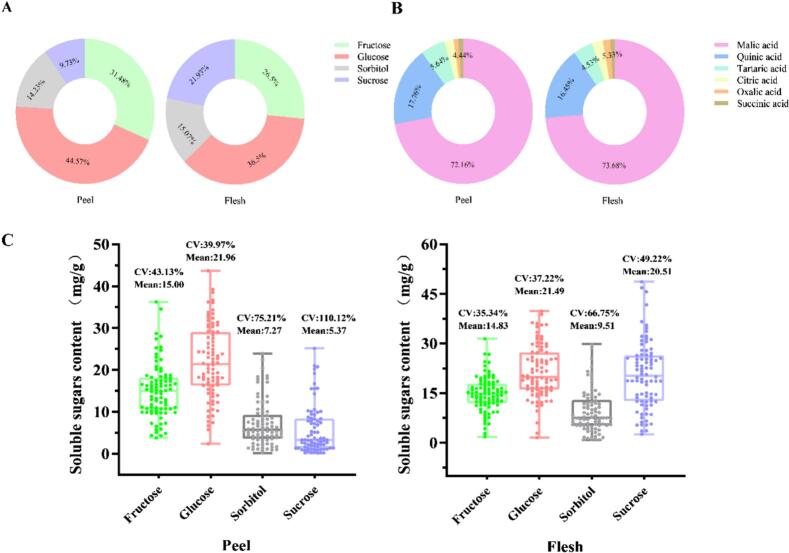
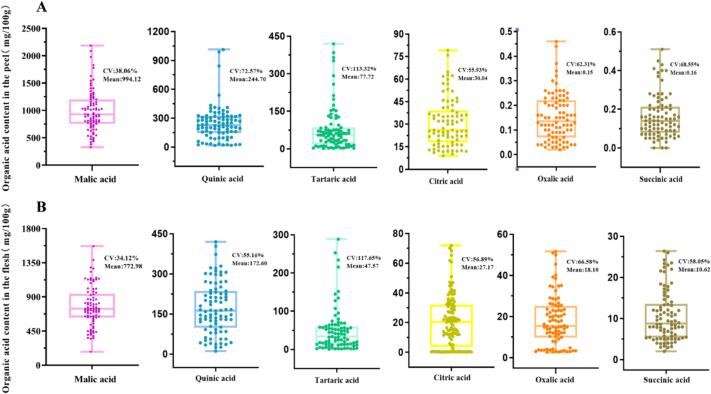
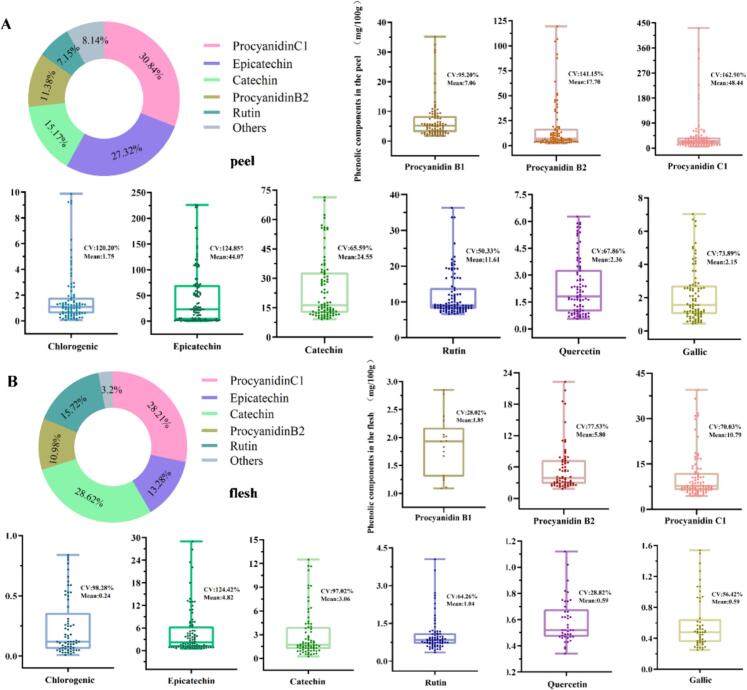
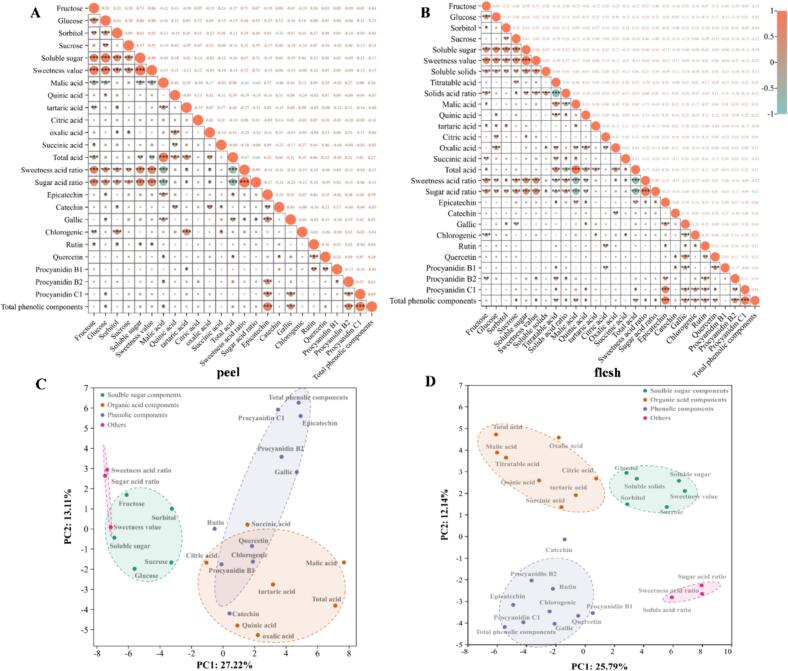
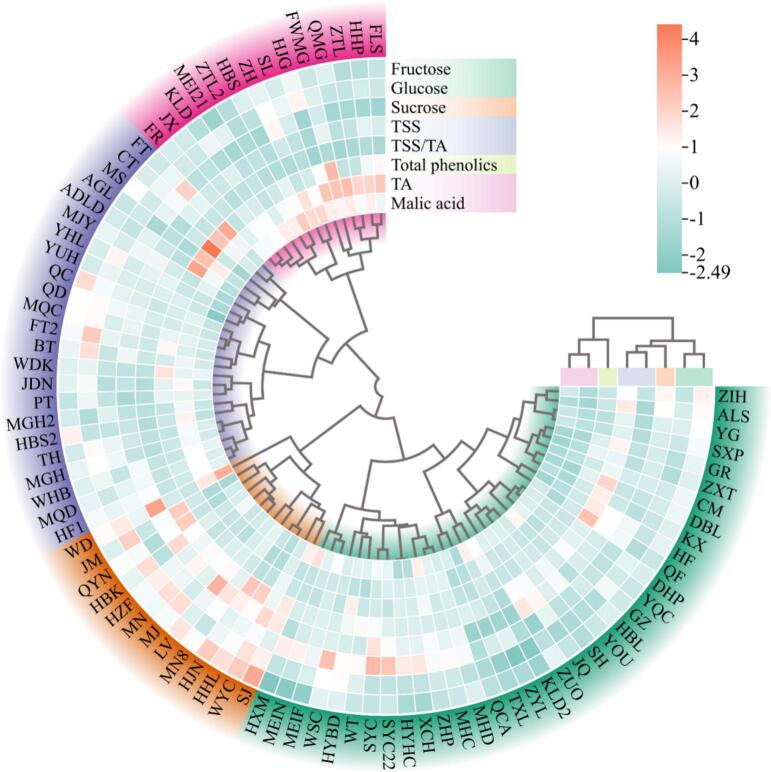
Plums (Prunus salicina and Prunus domestica) are prevalent in southwestern China, and have attracted interest owing to their delectable taste and exceptional nutritional properties. Therefore, this study aimed to investigate the nutritional and flavor properties of plum to improve its nutritional utilization. Specifically, we determined the soluble sugars, organic acids, and phenolic components in 86 accessions using high-performance liquid chromatography. Notably, glucose, fructose, malic, and quinic acids were the predominant sweetness and acidity in plums, with sucrose contributing more to the sweetness of the flesh than the peel. Moreover, The peel contains 5.5 fold more phenolics than flesh, epicatechin, gallic acid, and proanthocyanidins C1 and B2 were the primary sources of astringency. Correlation and principal component analyses showed eight core factors for plum flavor rating, and a specific rating criterion was established. Conclusively, these findings provide information on the integrated flavor evaluation criteria and for enhancing optimal breeding of plums.
Keywords: Astringency; Citric acid (PubChem CID: 311); Epicatechin (PubChem CID: 72276); Fructose (PubChem CID: 5984); Fruit flavor; Gallic acid (PubChem CID: 370); Glucose (PubChem CID: 5793); HPLC; Malic acid (PubChem CID: 525); Plum; Quinic acid (PubChem CID: 6508); Rating criteria; Sensory evaluation; Sorbitol (PubChem CID: 5780); Succinic acid (PubChem CID: 1110); Sucrose (PubChem CID: 5988).
© 2024 The Authors. Published by Elsevier Ltd.
Conflict of interest statement
The authors declare that they have no known competing financial interests or personal relationships that could have influenced the work reported in this paper.
Figures
References
Further-reading
-
- Awual M.R. Mesoporous composite material for efficient lead(II) detection and removal from aqueous media. Journal of Environmental Chemical Engineering. 2019;7(3)
-
- Awual M.R., Hasan M.M., Iqbal J., Islam M.A., Islam A., Khandaker S.…Rahman M.M. Ligand based sustainable composite material for sensitive nickel(II) capturing in aqueous media. Journal of Environmental Chemical Engineering. 2020;8(1)
-
- Salman M.S., Znad H., Hasan M.N., Hasan M.M. Optimization of innovative composite sensor for Pb(II) detection and capturing from water samples. Microchemical Journal. 2021;160
LinkOut - more resources
Full Text Sources
