


Safety and Efficacy of Incentive Spirometer in Covid-19 Pneumonia; a Randomized Clinical Trial
- PMID: 39296521
- PMCID: PMC11408993
- DOI: 10.22037/aaem.v12i1.2244
Safety and Efficacy of Incentive Spirometer in Covid-19 Pneumonia; a Randomized Clinical Trial
Abstract
Introduction: Various treatment protocols have been recommended since the beginning of the COVID-19 pandemic and have gradually evolved. This study aimed to assess the effectiveness and safety of incentive spirometer exercise (ISE) in outcomes of hospitalized patients with moderate-to-severe COVID-19 pneumonia.
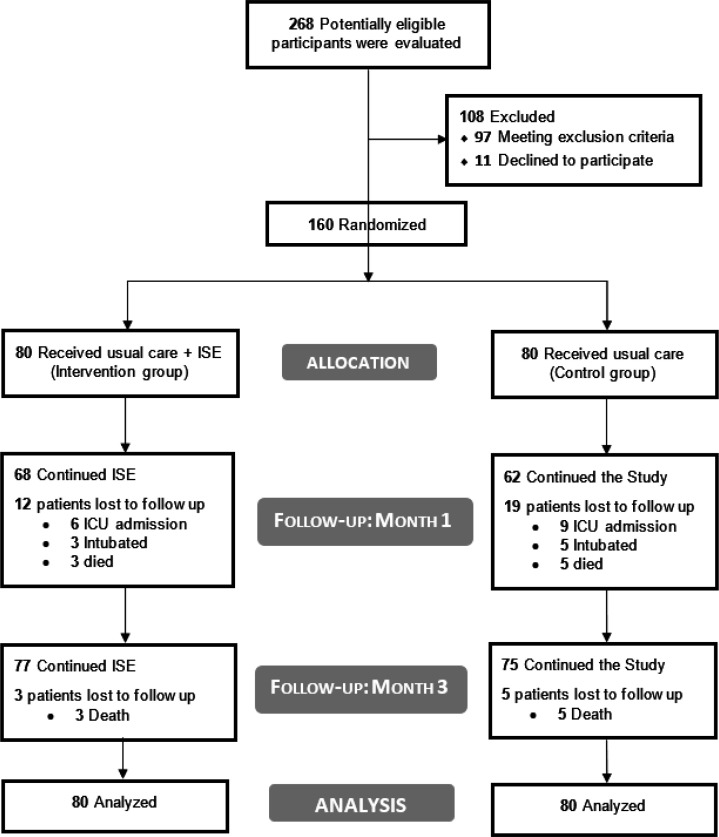
Methods: A 3-month single-blind, two parallel-armed randomized controlled trial was conducted at Imam Hossein Hospital, Tehran, Iran. Participants aged >18 years with documented COVID-19 pneumonia were randomly allocated to 2 groups of IS (ISE in addition to the usual treatment) and control (usual care alone). The IS group was also asked to perform ISE after discharge for three months. The primary outcomes were peripheral O2 saturation (SpO2), VBG parameters (pCO2, PH, HCO3), dyspnea level measured by Modified Borg Scale (MBS), length of hospital stay (LOS), and respiratory rate (RR). Secondary outcomes included mortality rate, intubation rate (IR), and ICU admission rate.
Results: A total of 160 eligible patients were randomly assigned to either the IS (n = 80) or control (n=80) groups. Although there were no significant differences in primary and secondary outcomes between the groups post-intervention, adjusted analysis showed that participants allocated to the IS group had significantly higher SpO2 levels and lower RR, MBS levels, and LOS. Also, the adjusted model analysis showed a marginal statistically significant difference between groups in secondary outcomes, such as IR, the 1-month mortality rate, and the 3-month mortality rate.
Conclusion: It seems that adding the ISE to usual care in the early treatment setting of COVID-19 patients resulted in a relatively significant increase in SpO2 levels, improved respiratory status, and marginally decreased LOS. Additionally, ISE minimally reduced ICU admissions and intubation rates, with no significant impact on in-hospital or long-term mortality in patients with COVID-19 pneumonia.
Conflict of interest statement
The authors declare no conflicts of interest.
References
-
- Jamil S, Mark N, Carlos G, Cruz CSD, Gross JE, Pasnick S. Diagnosis and management of COVID-19 disease. American journal of respiratory and critical care medicine. 2020;201(10):P19–P20. - PubMed
-
- Organization WH. Living guidance for clinical management of COVID-19: living guidance, 23 November 2021. World Health Organization; 2021.
LinkOut - more resources
Full Text Sources