


Magnitude of anemia and associated factors among pregnant women attending antenatal care in governmental health facilities of Shashemene Town, Oromia region, Ethiopia
- PMID: 39296845
- PMCID: PMC11408211
- DOI: 10.3389/fpubh.2024.1409752
Magnitude of anemia and associated factors among pregnant women attending antenatal care in governmental health facilities of Shashemene Town, Oromia region, Ethiopia
Abstract
Introduction: Anemia during pregnancy is a common issue that significantly affects the health of both the mother and her child. Globally, anemia is a major public health concern, affecting both developing and developed countries, with approximately 1.3 billion people affected. Pregnant women are among the most vulnerable to anemia.
Objective: To assess the magnitude and risk factors of anemia among pregnant women attending antenatal care in Shashemene Town, Oromia, Ethiopia.
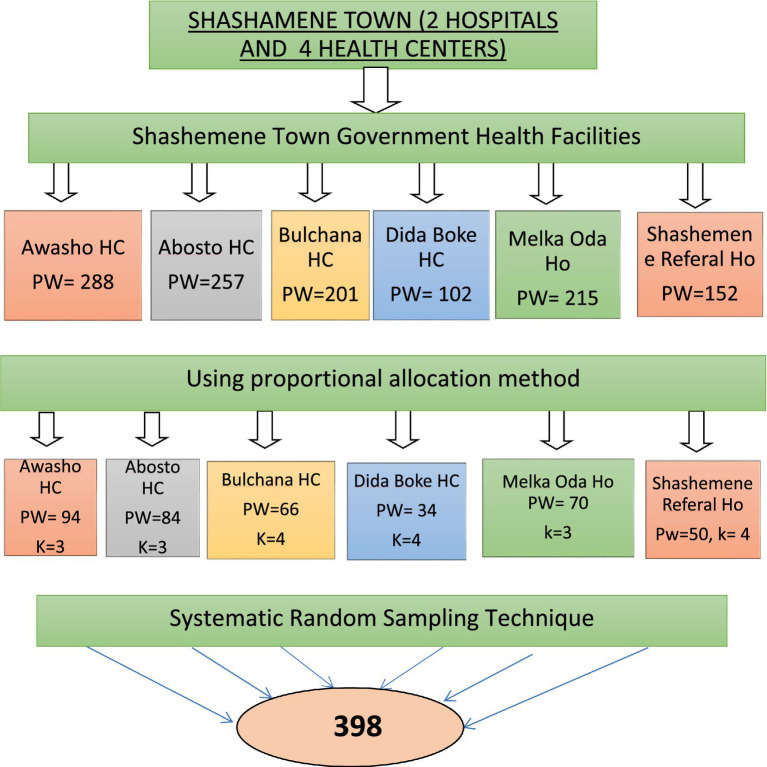
Methods: A facility-based cross-sectional study was conducted among 391 pregnant women in Shashemene Town in April 2022. Data were collected using interviewer-administered questionnaires, along with laboratory examinations of blood and stool samples. The data were entered into EpiData 3.1 and analyzed using the Statistical Package for Social Sciences (SPSS) version 22. Bivariate logistic regression was performed, and variables with a p-value of <0.25 were included in the multivariate logistic regression analysis to identify factors associated with anemia. Adjusted odds ratio (AOR) with 95% CIs were calculated, and a p-value of < 0.05 was considered statistically significant. Finally, the results are presented using narration, descriptive statistics, such as tables, graphs, and charts.
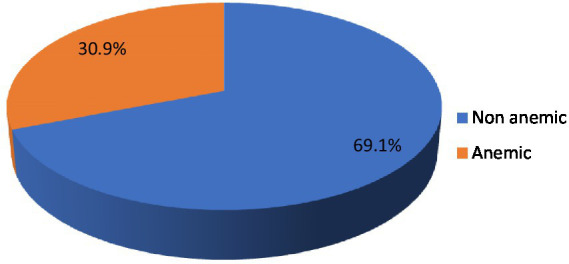
Results: The prevalence of anemia was found to be 30.9% (95% CI: 26.4, 35.4%). Factors significantly associated with a reduced risk of anemia included high dietary diversity (AOR = 0.217, 95% CI: 0.105-0.451), no history of excessive menstrual bleeding (AOR = 0.162, 95% CI 0.076-0.345), age 25-34 years (AOR = 0.391, 95% CI 0.173-0.883), and age ≥ 35 years (AOR = 0.068, 95% CI 0.011-0.444). Conversely, a mild upper arm circumference (MUAC) of <23 cm (AOR = 4.939, 95% CI 2.330-10.469), no use of contraceptives (AOR = 4.935, 95% CI 2.207-11.032), and no iron supplementation use (AOR = 3.588, 95% CI 1.794-7.175) were significantly associated with an increased risk of anemia.
Conclusion: According to the WHO classification, anemia in this study was found to be a moderate public health issue. High dietary diversity, no previous excessive menstrual bleeding, and age were significantly associated with a reduced risk of anemia, whereas a MUAC of <23 cm, no contraceptive use, and no iron supplementation were significantly associated with an increased risk of anemia. Therefore, promoting diverse diets among pregnant women, providing counseling on the benefits of family planning and iron-folic acid supplements, and improving women's education and empowerment are essential.
Keywords: Ethiopia; Shashemene; anemia; hemoglobin; pregnant women.
Copyright © 2024 Nasir, Ayele, Aman and Hussein.
Conflict of interest statement
The authors declare that the research was conducted in the absence of any commercial or financial relationships that could be construed as a potential conflict of interest.
Figures
References
-
- Murphy JF. Haemoglobin concentrations for the diagnosis of anaemia and assessment of severity. Vitamin and mineral nutrition information system. Geneva: World Health Organization; (2011).
-
- De Benoist B, Cogswell M, Egli I, McLean E. Worldwide prevalence of anaemia 1993-2005; WHO global database of anaemia. Geneva: World Health Organization; (2008).
-
- Morsy N, Alhady S. Nutritional status and socioeconomic conditions influencing prevalence of anaemia in pregnant women. Int J Sci Technol Res. (2014) 3:54–60.
MeSH terms
LinkOut - more resources
Full Text Sources
Medical
Miscellaneous
