


Effects of hippotherapy on motor function of children with cerebral palsy: a systematic review study
- PMID: 39300490
- PMCID: PMC11414029
- DOI: 10.1186/s13052-024-01715-9
Effects of hippotherapy on motor function of children with cerebral palsy: a systematic review study
Abstract
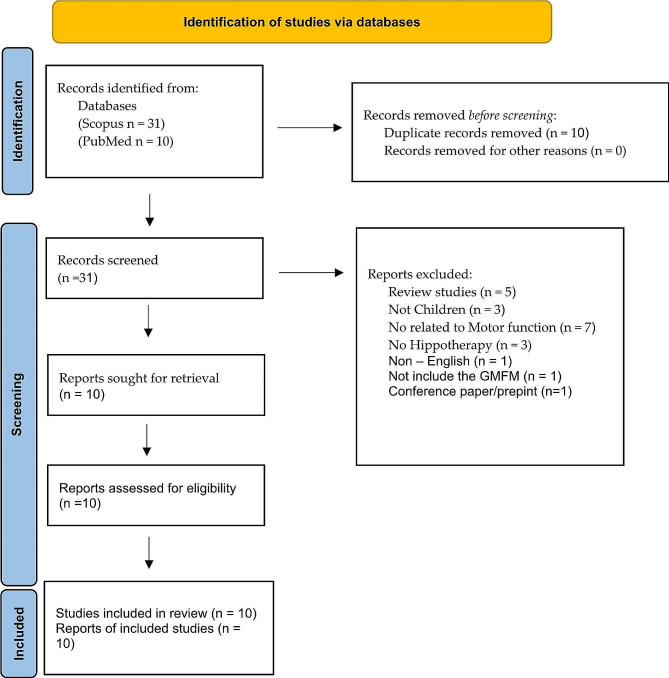
Cerebral palsy includes a spectrum of neurodevelopmental disorders caused by brain damage, leading to impairment of movement, posture, and balance for a lifetime. There are many therapeutic interventions for cerebral palsy. One of them is hippotherapy, an alternative physical therapy. It is a type of equine-assisted activity and therapy where children with cerebral palsy and motor function skills interact with a horse. We aimed to study the effects of hippotherapy, as an alternative therapy, on the motor function of children with cerebral palsy. We performed a review of the latest literature on hippotherapy and cerebral palsy. The criteria we used were specific keywords, publication date, age of the subjects/studied population, and article type. The outcome of our research resulted in ten relevant studies. The findings demonstrate improvements in various aspects of motor function - more specifically in gross motor function skills, balance, coordination, gait parameters, and muscle strength. Two of ten studies used the Horse-Riding Simulator with significant improvements in postural control in sitting, motor function, and hip abduction range of motion. Hippotherapy can improve motor function skills of children between 2 and 14 years of age with cerebral palsy, affecting their well-being and overall quality of life. It can have a positive effect either as a standalone treatment or as a part of other traditional therapies. Extended research is needed to assess whether hippotherapy may present significant long-term changes in motor skills in children with cerebral palsy.
Keywords: Alternative physical therapy; Cerebral palsy; Children; Effectiveness; Hippotherapy; Horse-riding simulator; Motor skills; Systematic review.
© 2024. The Author(s).
Conflict of interest statement
No competing interests.
The authors declare no conflict of interest.
Figures
References
-
- Wimalasundera N, Stevenson VL. Cerebral palsy. Practical Neurology. Volume 16. BMJ Publishing Group; 2016. pp. 184–94. - PubMed
-
- Vitrikas K, Dalton H, Breish D. Cerebral palsy: an overview. Am Fam Physician. 2020;101(4):213–20. - PubMed
-
- Karlsson P, Orlandi S, Zhao H, McEwan A. Brain–computer interface as a potential access method for communication in non-verbal children with cerebral palsy: a state-of-the-art review. Wearable/Personal Monit Devices Present Future. 2022;61–85.
Publication types
MeSH terms
LinkOut - more resources
Full Text Sources
Medical
