


How far can we go? A 20-year meta-analysis of dental implant survival rates
- PMID: 39305362
- PMCID: PMC11416373
- DOI: 10.1007/s00784-024-05929-3
How far can we go? A 20-year meta-analysis of dental implant survival rates
Abstract
Objective: This meta-analysis aims to investigate the long-term survival rates of dental implants over a 20-year period, providing a practical guide for clinicians while identifying potential areas for future research.
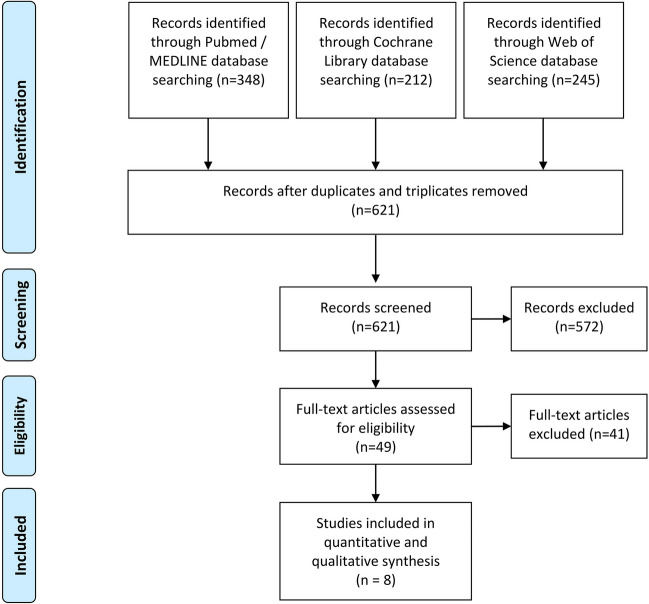
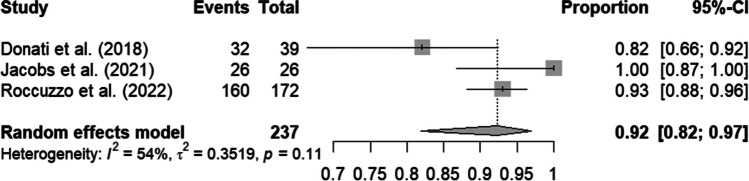
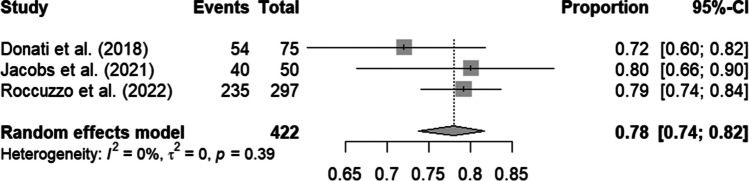
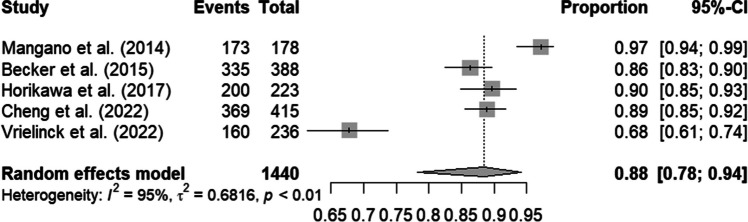
Materials and methods: Data were sourced from recent publications, focusing exclusively on screw-shaped titanium implants with a rough surface. Both retrospective and prospective studies were included to ensure an adequate sample size. A systematic electronic literature search was conducted in the databases: MEDLINE (PubMed), Cochrane, and Web of Science. The risk of bias for all studies was analyzed using a tool by Hoy et al. RESULTS: Three prospective studies (n = 237 implants) revealed a mean implant survival rate of 92% (95% CI: 82% to 97%), decreasing to 78% (95% CI: 74%-82%) after imputation (n = 422 implants). A total of five retrospective studies (n = 1440 implants) showed a survival rate of 88% (95% CI: 78%-94%). Implant failure causes were multifactorial.
Conclusion: This review consolidates 20-year dental implant survival data, reflecting a remarkable 4 out of 5 implants success rate. It emphasizes the need for long-term follow-up care, addressing multifactorial implant failure. Prioritizing quality standards is crucial to prevent overestimating treatment effectiveness due to potential statistical errors. While dental implantology boasts reliable therapies, there is still room for improvement, and additional high-quality studies are needed, particularly to evaluate implant success.
Clinical relevance: Never before have the implant survival over 20 years been systematically analyzed in a meta-analysis. Although a long-term survival can be expected, follow-up is essential and shouldn't end after insertion or even after 10 years.
Keywords: Dental implants; Meta-analysis; Oral surgery; Prospective studies; Retrospective studies; Survival rate; Treatment outcome.
© 2024. The Author(s).
Conflict of interest statement
The authors declare no competing interests.
Figures
References
-
- Gupta R, Gupta N, Weber, DDS KK (2023) Dental implants. In: StatPearls [Internet]. StatPearls Publishing, Treasure island (FL). Available from: https://www.ncbi.nlm.nih.gov/books/NBK470448/ - PubMed
-
- Hjalmarsson L, Gheisarifar M, Jemt T (2016) A systematic review of survival of single implants as presented in longitudinal studies with a follow-up of at least 10 years. Eur J Oral Implantol 9(Suppl 1):S155–S162 - PubMed
Publication types
MeSH terms
Substances
LinkOut - more resources
Full Text Sources
