Review
. 2024 Sep 23;9(1):237.
doi: 10.1038/s41392-024-01946-6.

A systematic framework for understanding the microbiome in human health and disease: from basic principles to clinical translation

Affiliations
Review

A systematic framework for understanding the microbiome in human health and disease: from basic principles to clinical translation

Ziqi Ma et al. Signal Transduct Target Ther. .

Abstract

The human microbiome is a complex and dynamic system that plays important roles in human health and disease. However, there remain limitations and theoretical gaps in our current understanding of the intricate relationship between microbes and humans. In this narrative review, we integrate the knowledge and insights from various fields, including anatomy, physiology, immunology, histology, genetics, and evolution, to propose a systematic framework. It introduces key concepts such as the 'innate and adaptive genomes', which enhance genetic and evolutionary comprehension of the human genome. The 'germ-free syndrome' challenges the traditional 'microbes as pathogens' view, advocating for the necessity of microbes for health. The 'slave tissue' concept underscores the symbiotic intricacies between human tissues and their microbial counterparts, highlighting the dynamic health implications of microbial interactions. 'Acquired microbial immunity' positions the microbiome as an adjunct to human immune systems, providing a rationale for probiotic therapies and prudent antibiotic use. The 'homeostatic reprogramming hypothesis' integrates the microbiome into the internal environment theory, potentially explaining the change in homeostatic indicators post-industrialization. The 'cell-microbe co-ecology model' elucidates the symbiotic regulation affecting cellular balance, while the 'meta-host model' broadens the host definition to include symbiotic microbes. The 'health-illness conversion model' encapsulates the innate and adaptive genomes' interplay and dysbiosis patterns. The aim here is to provide a more focused and coherent understanding of microbiome and highlight future research avenues that could lead to a more effective and efficient healthcare system.


Conflict of interest statement

The authors declare no competing interests.

Figures
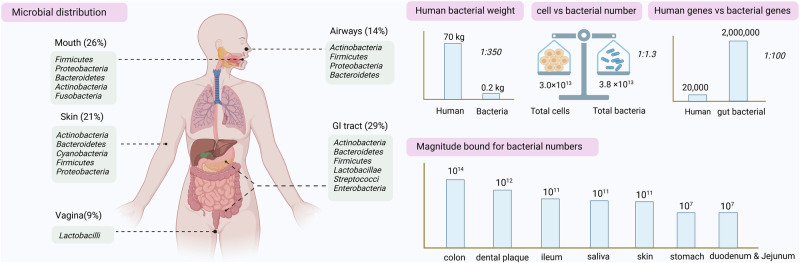
Fig. 1
Fig. 1
Human microbial-related characteristics. The distribution data of the microbiome were obtained from the Human Microbiome Project,, supplemented by modified data from Ron Sender et al.,
Fig. 2
Fig. 2
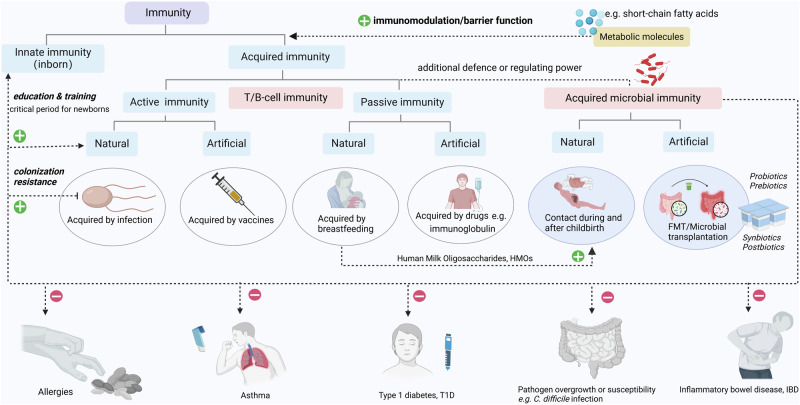
Acquired microbial immunity. The human immune consists of innate and acquired immunity, which is mainly carried out by T and B cells. The main strategies of adaptive immunity are active and passive immunization. In active immunity, natural immunity can be acquired by direct infection with the pathogen, while vaccination with the antigen is the artificial way. Passive immunization is mainly achieved by natural means, such as breastfeeding, or artificial means, such as immunoglobulin injections. Commensal microbiota described here can provide another form of acquired defence and regulating power against pathogens (commensal microbiota immunity). Correspondingly, maternal human milk oligosaccharides (HMOs), acquired through maternal reproductive transmission and exposure, can enhance the colonization of beneficial microbes under natural conditions. Under artificial conditions, fecal microbiota transplantation (FMT), probiotics, prebiotics, synbiotics, and postbiotics can be used to acquire this immunity. Commensal microbiota immunity strengthens cellular barriers and regulates immune cells through metabolites such as short-chain fatty acids. They train and educate the immune system as a competitor while providing colonization resistance against foreign and established pathogenic microbes. The decline of commensal microbiota immunity increases the risk of skin and food allergies, asthma, type 1 diabetes (T1D), pathogenic overgrowth (such as Clostridium difficile),,– and susceptibility to inflammatory bowel disease (IBD),– and other potential diseases,
Fig. 3
Fig. 3
The meaning of adaptive genome. Human sperm and egg form the innate human genome. Microbes, through various selections, become the adaptive genome. Adaptive genomes may adapt to host selection and regulation, the dynamics of established microbial communities (which may promote, inhibit or remain neutral), exposure to different diets and drugs, and fluctuations in the external environment. DASH: Dietary Approaches to Stop Hypertension
Fig. 4
Fig. 4
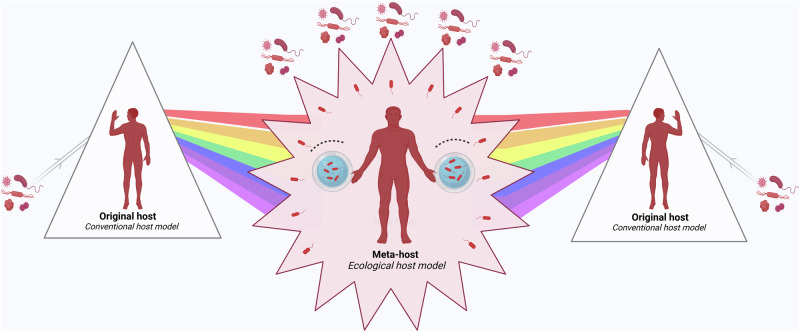
Original host (conventional host model) and Meta-host (ecological host model). The meta-host is used to describe conventional host that exhibit marked differences in colonization, susceptibility and pathogenicity to microorganisms following microbial accession. This phenomenon is the result of the dynamic integration of the adaptive genome with the innate genome and corresponds to the human ecological perspective
Fig. 5
Fig. 5
Slave tissue hypothesis. Microbial tissue is the additional fundamental tissue of the human body, a slave tissue alongside nervous, epithelial, connective and muscular tissues., The maternal microbiota exerts a regulatory influence on fetal growth and development and can partially transfer seed microbiota to the newborn through microbial exposure. Microbes that colonize in body site (including but not limited to the gastrointestinal tract, respiratory tract, reproductive tract, skin and urinary tract) play a vital role in digestion, immunity, neural regulation and metabolic crosstalk throughout human growth and ageing, and ultimately participate in the degradation of the body upon death.,,, The human microbiota has undergone co-speciation, co-evolution, co-adaptation, and co-diversification with humans over a long period of time. Throughout the life cycle, factors such as mode of delivery, genetics, gender, diet, medication, environment and behavior (e.g. exercise) can potentially contribute to differential microbial tissue formation
Fig. 6
Fig. 6
The conceptual model of homeostatic reprogramming mediated by commensal microbes. a The concept of ‘Homeostatic reprogramming’ is used to describe a phenomenon in which the adaptive genome (commensal microbiota) coordinates with the innate genome (human cell/tissues) to deviate the scope and regulation outcome from the original trajectory including body temperature, uric acid levels, glucose level, blood pressure, etc. The interplay between human life stages - from youth to old age - and microbial development - from increasing to decreasing diversity - overall results in different regulatory forces. b The conceptual model of cell-microbe co-ecology and co-homeostasis. Plasma, tissue fluid and lymphatic fluid form the internal environment of the human body’s cell life. This internal environment is regulated by the neural, immune, and metabolic systems to maintain a dynamic homeostasis of physical and chemical properties such as temperature, pH, and osmotic pressure. The internal factors of cell differentiation, proliferation, ageing, damage, and apoptosis can affect this homeostasis. Human tissues are involved in shaping a physico-chemical and nutritional environment where external microorganisms can colonize, replicate, experience loss and die. On the one hand, human cells, and microorganisms in the digestive tract work together to metabolize nutrients from food. Microbes not only affect nutrient absorption, but also produce metabolites, vitamins, and potential “dark matter”, which can enter the internal environment and affect its homeostasis. The imbalance of the internal environment also leads directly to the disruption of the microenvironment they form. The diversity, relative abundance, and products of beneficial, harmful, and neutral microorganisms (composition) are important indicators for assessing the environmental balance. On the other hand, microorganisms also participate in shaping the microenvironment by providing a barrier to respond to external environmental changes. This overall change regulates the susceptibility of the internal environment to external perturbations, acting another regulatory force for homeostasis
Fig. 7
Fig. 7
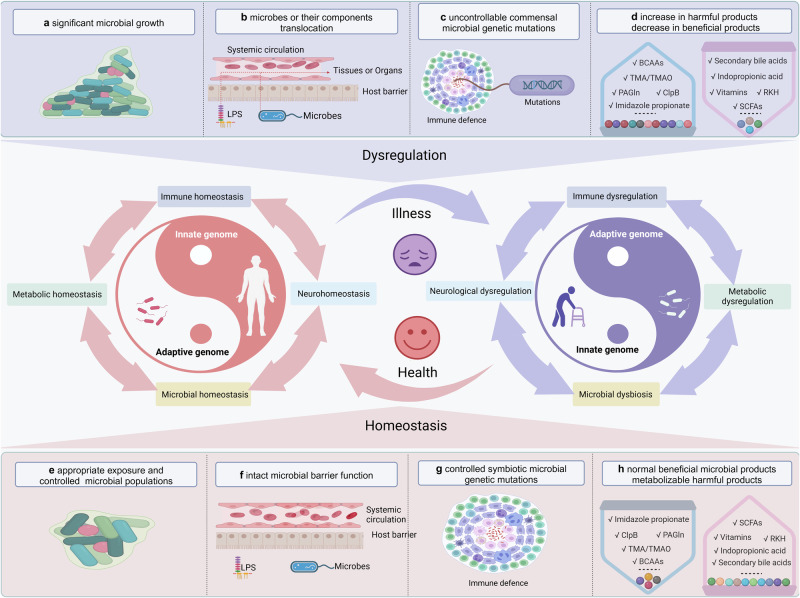
The model of the interplay between the human innate and adaptive genome in health and disease transformation. The human innate and adaptive genomes form a holistic functional phenotype but are also in constant competition. The regulation of the nervous, immune, metabolic, and commensal microbiota constitutes the four major features and regulatory forces of human health and disease states. These forces interact with each other, and microbial dysbiosis can lead to the disruption of other forces and vice versa. The innate genome requires (a) the necessary exposure to commensal microbiota and a controllable microbial community, (b) an intact microbial barrier, (c) the ability to resist damage from microbial genetic mutations, and (d) the ability to utilize beneficial products of the adaptive genome and metabolize harmful ones to maintain a healthy steady state (with the innate genome in the dominant position). Conversely, (e) inadequate exposure to appropriate microbiota (which can lead to germ-free syndrome in extreme cases) or microbial overgrowth, (f) microbes or their components (e.g. LPS) entering the circulation through an incomplete barrier and causing harm to other tissues and organs, (g) microbial genetic mutations causing additional damage, and (h) a decrease in beneficial microbial products and an increase in harmful ones can lead humans towards disease progression (with the adaptive genome dominant). LPS Lipopolysaccharides, TMA Trimethylamine, TMAO Trimethylamine N-oxide, PAGln Phenylacetylglutamine, ClpB a melanocyte-stimulating hormone (α-MSH) analogue, BCAAs Branched-chain amino acids, SCFAs Short-chain fatty acids, RKH Arginyl-lysyl-histidine
Fig. 8
Fig. 8
A systematic framework for understanding human microbes and the history of the development of some of these concepts. The systematic framework consists of eight fundamental concepts/models: “innate genome and adaptive genome”, “slave tissue”, “acquired microbial immunity”, “cell-microbe co-ecology and co-homeostasis model”, “meta-host model”, “health and illness transformation model” and “germ-free syndrome”

References

    1. Nurk, S. et al. The complete sequence of a human genome. Science376, 44–53 (2022). - PMC - PubMed
    1. Vollger, M. R. et al. Segmental duplications and their variation in a complete human genome. Science376, eabj6965 (2022). - PMC - PubMed
    1. Hoyt, S. J. et al. From telomere to telomere: the transcriptional and epigenetic state of human repeat elements. Science376, eabk3112 (2022). - PMC - PubMed
    1. Gershman, A. et al. Epigenetic patterns in a complete human genome. Science376, eabj5089 (2022). - PMC - PubMed
    1. Altemose, N. et al. Complete genomic and epigenetic maps of human centromeres. Science376, eabl4178 (2022). - PMC - PubMed

Publication types

LinkOut - more resources