


A Modern Collaborative Behavior Analytic Approach to Incidental Naming
- PMID: 39309234
- PMCID: PMC11411027
- DOI: 10.1007/s40614-024-00399-0
A Modern Collaborative Behavior Analytic Approach to Incidental Naming
Abstract
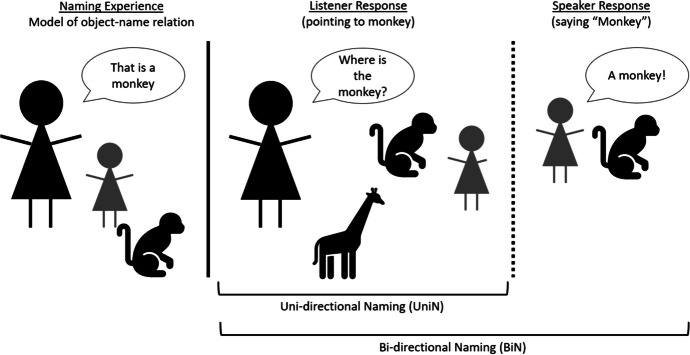
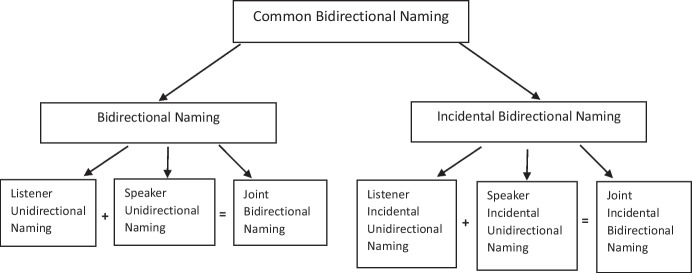
An important distinction has been drawn within the behavior-analytic literature between two types of naming. Naming that is reinforced is referred to as bidirectional naming, and naming that is not reinforced is referred to as incidental bidirectional naming. According to verbal behavior development theory children who demonstrate incidental naming have developed a verbal behavioral cusp, and often learn new language more rapidly as a result. A growing body of research has assessed incidental naming using what is described as an incidental naming experience, in which novel stimuli are presented and named by a researcher but with no direct differential reinforcement for subsequent naming responses by the participant. According to relational frame theory, such studies on incidental naming have typically involved presenting contextual cues that likely serve to establish the name relations between an object and its name. As such, contextual cues may play a critical role in the emergence of incidental naming responses, but there are no published studies that have systematically tested the potential role of contextual cues in relation to incidental naming. The current article provides a narrative review of the incidental naming literature, highlighting variables that remain to be explored in future research.
Keywords: Contextual cues; Incidental bidirectional naming; Relational frame theory; Verbal behavior development.
© The Author(s) 2024.
Figures
References
-
- Akhtar, N. (2005). The robustness of learning through overhearing. Developmental Science,8(2), 199–209. 10.1111/j.1467-7687.2005.00406 - PubMed
-
- Barnes-Holmes, D., & Barnes-Holmes, Y. (2000). Explaining complex behavior: Two perspectives on the concept of generalized operant classes. The Psychological Record,50, 251–265.
-
- Barnes-Holmes, D., & Harte, C. (2022). Relational frame theory 20 years on: The Odysseus voyage and beyond. Journal of the Experimental Analysis of Behavior,117(2), 240–266. - PubMed
Publication types
LinkOut - more resources
Full Text Sources
Research Materials