


Comparative study on the incidence of non-COVID-19 viral pneumonia before and after the COVID-19 pandemic: A retrospective analysis based on respiratory non-COVID viral nucleic acid results
- PMID: 39310063
- PMCID: PMC11411423
- DOI: 10.1016/j.jointm.2024.02.005
Comparative study on the incidence of non-COVID-19 viral pneumonia before and after the COVID-19 pandemic: A retrospective analysis based on respiratory non-COVID viral nucleic acid results
Abstract
Background: The impact of the coronavirus disease 2019 (COVID-19) pandemic on the etiology of non-COVID-19 viral pneumonia remains to be identified. We investigated the evolution of non-COVID-19 viral pneumonia in hospitalized patients before and after the COVID-19 pandemic.
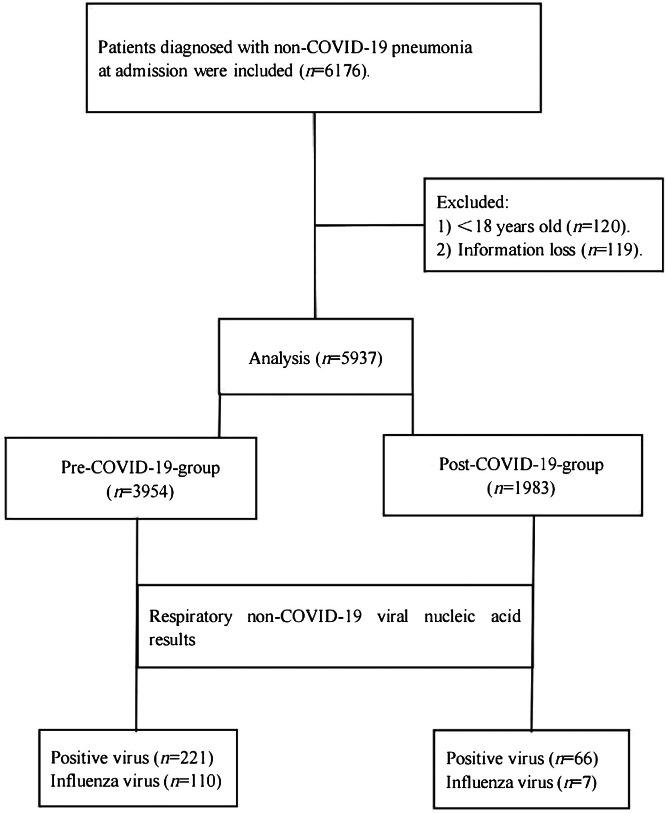
Methods: This is a single-center retrospective study. Patients who came to West China Hospital of Sichuan University diagnosed with non-COVID-19 viral pneumonia from January 1, 2016 to December 31, 2021, were included and divided into pre- and post-COVID-19 groups according to the date of the COVID-19 outbreak in China. The results of 13 viral nucleic acid tests were compared between the two groups.
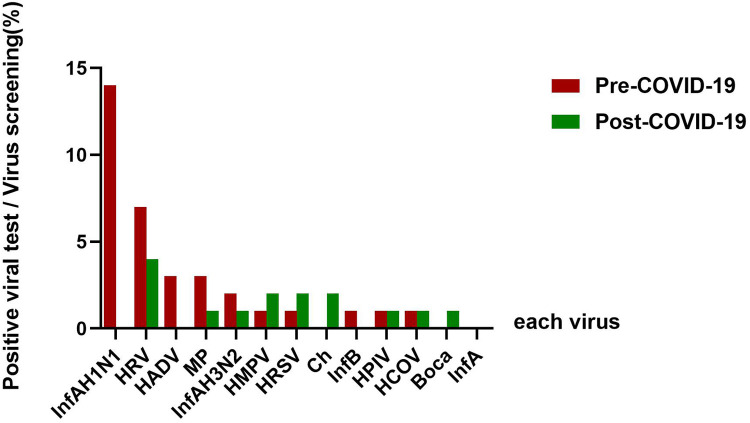
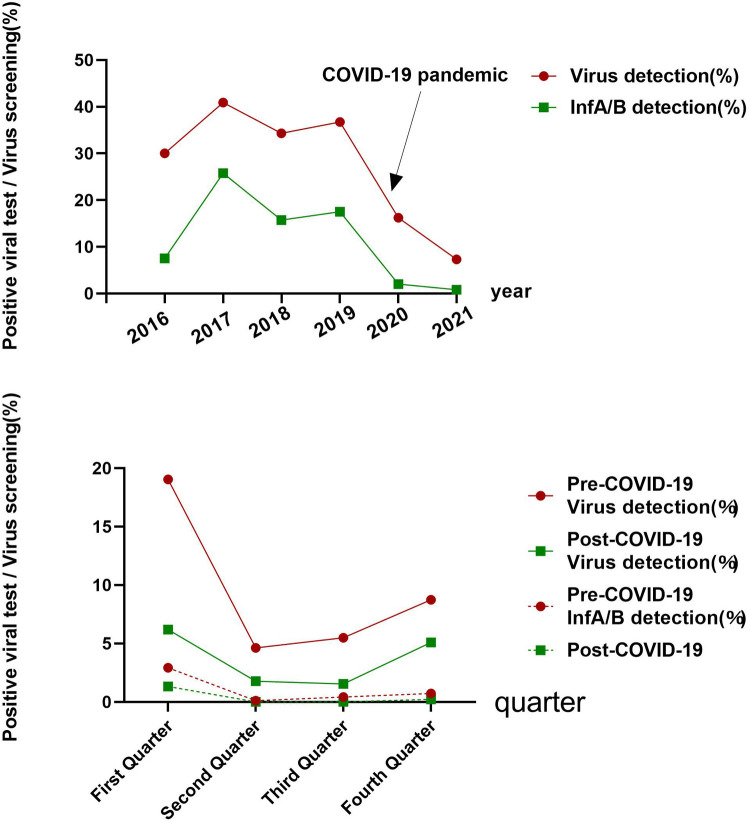
Results: A total of 5937 patients (3954 in the pre-COVID-19 group and 1983 in the post-COVID-19 group) were analyzed. Compared with the pre-COVID-19 group, the proportion of patients tested for respiratory non-COVID-19 viral nucleic acid was significantly increased in the post-COVID-19 group (14.78% vs. 22.79%, P <0.05). However, the non-COVID-19 virus-positive rates decreased from 37.9% to 14.6% after the COVID-19 outbreak (P < 0.001). Notably, non-COVID-19 viral pneumonia caused by the influenza A virus H1N1 (InfAH1N1) (2009) dropped to 0% after the pandemic. The top three viruses were InfAH1N1 (2009) (13.9%), human rhinovirus (7.4%), and human adenovirus (3.4%) in the pre-COVID-19 group, and human rhinovirus (3.8%), human respiratory syncytial virus (2.0%), human parainfluenza virus (1.1%) and InfAH3N2 (1.1%) in the post-COVID-19 group.
Conclusions: The proportion of non-COVID-19 viral pneumonia decreased significantly after the COVID-19 outbreak, among which InfAH1N1 (2009) pneumonia decreased the most dramatically.
Keywords: COVID-19; Influenza virus, H1N1; Virus nucleic acid.
© 2024 The Authors.
Figures
References
-
- Varela F.H., Scotta M.C., Polese-Bonatto M., Sartor I.T.S., Ferreira C.F., Fernandes I.R., et al. Absence of detection of RSV and influenza during the COVID-19 pandemic in a Brazilian cohort: likely role of lower transmission in the community. J Glob Health. 2021;11:05007. doi: 10.7189/jogh.11.05007. - DOI - PMC - PubMed
LinkOut - more resources
Full Text Sources
