


Network Analysis of Pain Catastrophizing, Self-Efficacy, and Kinesiophobia Among Patients After Total Knee Arthroplasty: A Cross-Sectional Study
- PMID: 39310086
- PMCID: PMC11414755
- DOI: 10.2147/PPA.S452773
Network Analysis of Pain Catastrophizing, Self-Efficacy, and Kinesiophobia Among Patients After Total Knee Arthroplasty: A Cross-Sectional Study
Abstract
Background: Kinesiophobia is common in patients after total knee arthroplasty and is an important risk factor for post-operative recovery outcomes. Little is known about the complex intercorrelations between different components of pain catastrophizing, self-efficacy, and kinesiophobia. This study aimed to identify the central components of kinesiophobia and to explore the interconnectedness between components of pain catastrophizing, self-efficacy, and kinesiophobia.
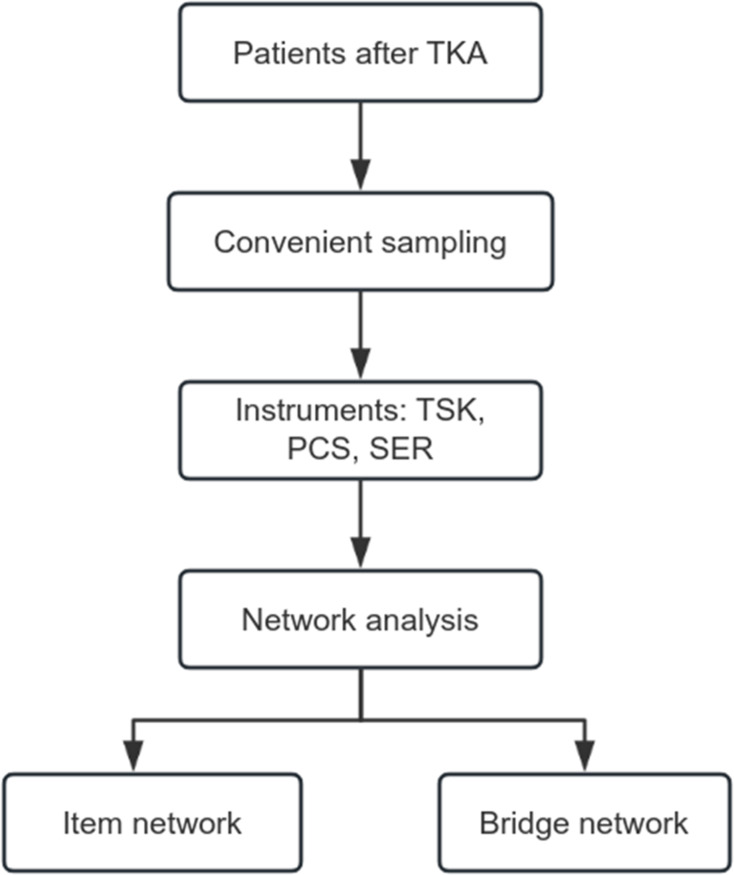
Methods: A total of 216 patients after total knee arthroplasty were recruited in this study. Pain Catastrophizing Scale, Self-efficacy of Rehabilitation Outcome Scale and Tampa Scale for Kinesiophobia were used to assess pain catastrophizing, self-efficacy and kinesiophobia. R software was used to visualize the networks and analyze the centrality of the networks. The index "strength" and "bridge expected influence" were employed to identify the central components and the bridge components of the networks.
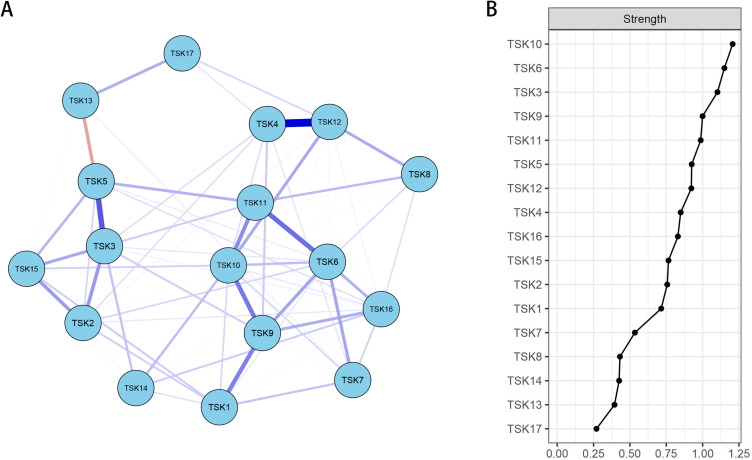
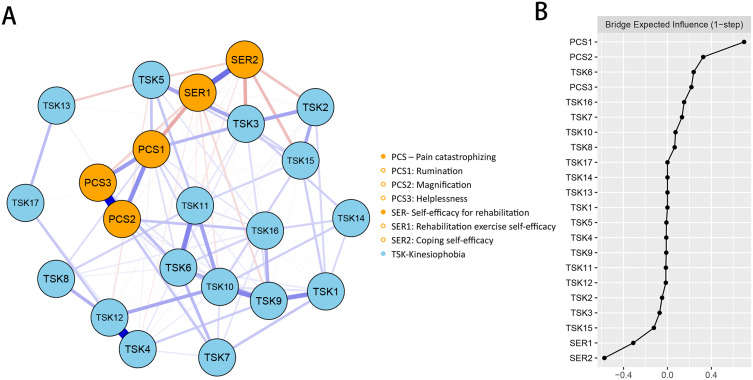
Results: In the item network of kinesiophobia, three items ("Simply being careful that I do not make any unnecessary movements is the safest thing I can do to prevent my pain from worsening", "My accident has put my body at risk for the rest of my life", and "My body is telling me I have something dangerously wrong") had the highest strength centrality. In the pain catastrophizing/self-efficacy-kinesiophobia network, rumination had the highest positive bridge expected influence, while coping self-efficacy had the highest negative value.
Conclusion: The three central components of kinesiophobia identified in this study, as well as two bridge variables (rumination and coping self-efficacy), could be promising and effective targets for prevention and intervention of kinesiophobia.
Keywords: kinesiophobia; network analysis; pain catastrophizing; self-efficacy; total knee arthroplasty.
© 2024 Zhou et al.
Conflict of interest statement
The authors have no relevant competing interests to disclose in this work.
Figures
References
-
- World Health Organization. Osteoarthritis; Available from: https://www.who.int/news-room/fact-sheets/detail/osteoarthritis.Accessed June 7 2024.
-
- Bian YY, Cheng KY, Chang X, Weng XS. Reports and analysis of amount of Hip and knee arthroplasty in China from 2011 to 2019. Chin J Orthop. 2020;40(21):1453–1460. doi: 10.3760/cma.j.cn121113-20200320-00177 - DOI
-
- Bakaa N. Exercise adherence post total knee arthroplasty. McMaster Univ. 2020.
LinkOut - more resources
Full Text Sources
