Functional Neural Networks in Human Brain Organoids
- PMID: 39314749
- PMCID: PMC11418062
- DOI: 10.34133/bmef.0065
Functional Neural Networks in Human Brain Organoids
Abstract
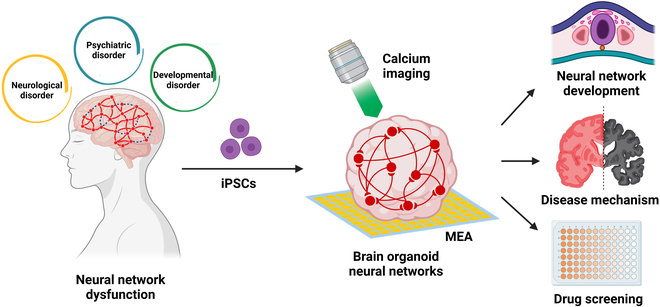
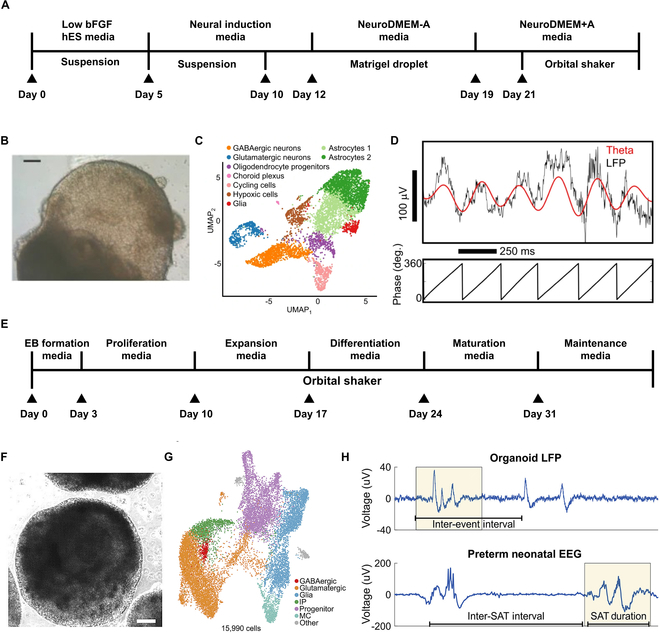
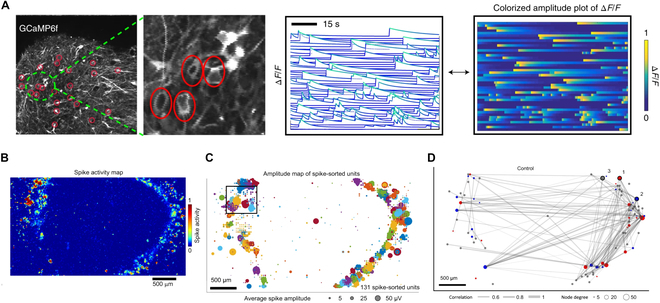
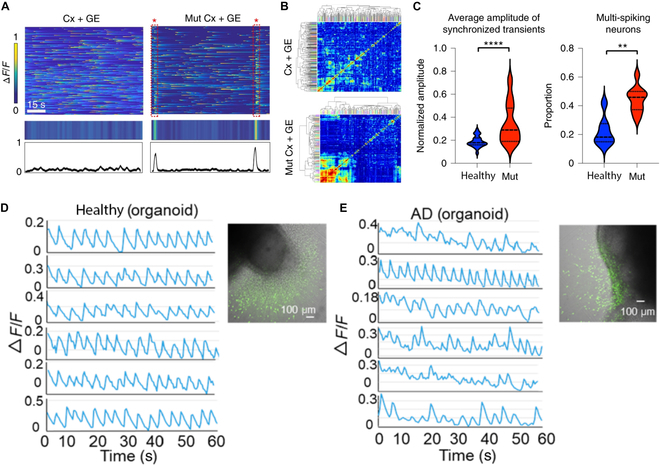
Human brain organoids are 3-dimensional brain-like tissues derived from human pluripotent stem cells and hold promising potential for modeling neurological, psychiatric, and developmental disorders. While the molecular and cellular aspects of human brain organoids have been intensively studied, their functional properties such as organoid neural networks (ONNs) are largely understudied. Here, we summarize recent research advances in understanding, characterization, and application of functional ONNs in human brain organoids. We first discuss the formation of ONNs and follow up with characterization strategies including microelectrode array (MEA) technology and calcium imaging. Moreover, we highlight recent studies utilizing ONNs to investigate neurological diseases such as Rett syndrome and Alzheimer's disease. Finally, we provide our perspectives on the future challenges and opportunities for using ONNs in basic research and translational applications.
Copyright © 2024 Longjun Gu et al.
Conflict of interest statement
Competing interests: The authors declare that they have no competing interests.
Figures
References
-
- Bressler SL, Menon V. Large-scale brain networks in cognition: Emerging methods and principles. Trends Cogn Sci. 2010;14(6):277–290. - PubMed
-
- Neves G, Cooke SF, TVP Bliss. Synaptic plasticity, memory, and the hippocampus: A neural network approach to causality. Nat Rev Neurosci. 2008;9(1):65–75. - PubMed
Publication types
LinkOut - more resources
Full Text Sources