This is a preprint.
A Systematic Review of the Etiology and Neurobiology of Intermittent Explosive Disorder
- PMID: 39314952
- PMCID: PMC11419216
- DOI: 10.1101/2024.09.12.24313573
A Systematic Review of the Etiology and Neurobiology of Intermittent Explosive Disorder
Update in
-
A systematic review of the etiology and neurobiology of intermittent explosive disorder.Psychiatry Res. 2025 May;347:116410. doi: 10.1016/j.psychres.2025.116410. Epub 2025 Feb 22. Psychiatry Res. 2025. PMID: 40023093
Abstract
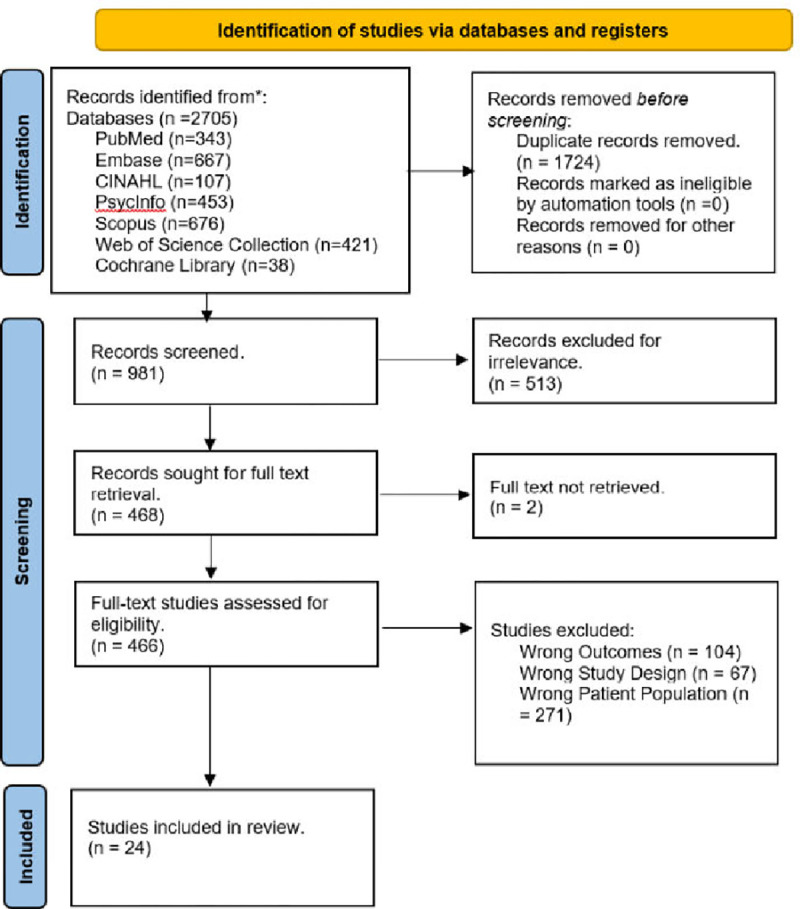
Intermittent Explosive Disorder (IED) is characterized by repeated inability to control aggressive impulses. Although the etiology and neurobiology of impulsive anger and impulse control disorders have been reviewed, no systematic review on these aspects has been published for IED specifically. We conducted a systematic search in seven electronic databases for publications about IED, screened by two authors, and retained twenty-four studies for the review. Our findings highlight a multifactorial etiology and neurobiology of IED, emphasizing the role of the amygdala and orbitofrontal cortex in emotional regulation and impulse control, and supporting interventions that target serotonergic signaling. Research also shows that childhood trauma and adverse family environment may significantly contribute to the development of IED. Yet, genetic studies focusing on IED were largely lacking, despite many examining the genetics underlying aggression as a general trait or other related disorders. Future research using consistently defined IED as a phenotype is required to better understand the etiology and underlying mechanisms and assist in informing the development of more effective interventions for IED.
Keywords: Aggression; Amygdala; Childhood Trauma; Family Environment; Hypothalamus; Impulsive Aggression; Intermittent Explosive Disorder; Orbitofrontal Cortex; Serotonin; Socioeconomic Status.
Conflict of interest statement
Declaration of Interest SVF received income, potential income, travel expenses continuing education support and/or research support from Aardvark, Aardwolf, AIMH, Akili, Atentiv, Axsome, Genomind, Ironshore, Johnson & Johnson/Kenvue, Kanjo, KemPharm/Corium, Noven, Otsuka, Sky Therapeutics, Sandoz, Supernus, Tris, and Vallon. With his institution, he has US patent US20130217707 A1 for the use of sodium-hydrogen exchange inhibitors in the treatment of ADHD. He also receives royalties from books published by Guilford Press: Straight Talk about Your Child’s Mental Health, Oxford University Press: Schizophrenia: The Facts and Elsevier: ADHD: Non-Pharmacologic Interventions. He is Program Director of www.ADHDEvidence.org and www.ADHDinAdults.com. Dr. Faraone’s research is supported by the European Union’s Horizon 2020 research and innovation programme under grant agreement 965381; NIH/NIMH grants U01AR076092-01A1, R0MH116037, 5R01AG064955-02, 1R21MH126494-01, 1R01NS128535-01, R01MH131685-01, 1R01MH130899-01A1, Corium Pharmaceuticals, Tris Pharmaceuticals and Supernus Pharmaceutical Company. JP, SE, AU, JS, and YZJ have no disclosures to report.
Figures
References
-
- Alvarez-Alonso M. J., Morales-Munoz I., Castano-Leon A. M., Lagares A., Rubio G., & Jurado-Barba R. (2016). Single Case Study: Neuropsychological Functioning in a Patient Diagnosed with Intermittent Explosive Disorder Pre and Post Neurosurgery. Span J Psychol, 19, E21. 10.1017/sjp.2016.22 - DOI - PubMed
-
- Association, A. P. (1952). Diagnostic and statistical manual of mental disorders (1st ed.). American Psychiatric Association. 10.1176/appi.books.9780890420331.dsm-i - DOI
-
- Association, A. P. (1968). Diagnostic and statistical manual of mental disorders (2nd ed.). American Psychiatric Association.
-
- Association, A. P. (1980). Diagnostic and statistical manual of mental disorders (3rd ed.). American Psychiatric Association.
-
- Association, A. P. (2000). Diagnostic and statistical manual of mental disorders (4th, text rev. ed.). American Psychiatric Association.
Publication types
Grants and funding
LinkOut - more resources
Full Text Sources