


Seroprevalence of SARS-CoV-2 infection in pediatric patients in a tertiary care hospital setting
- PMID: 39316628
- PMCID: PMC11421809
- DOI: 10.1371/journal.pone.0310860
Seroprevalence of SARS-CoV-2 infection in pediatric patients in a tertiary care hospital setting
Abstract
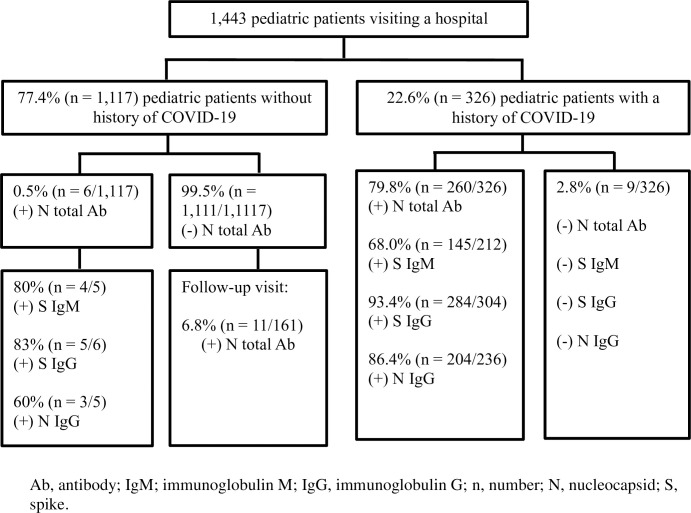
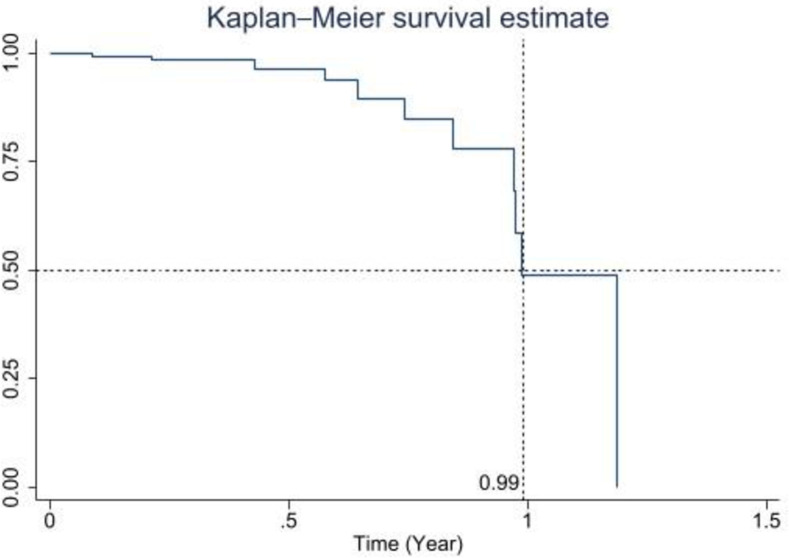
Globally, cases of children's coronavirus disease 2019 (COVID-19) have been reported since the pandemic started. Most children have an asymptomatic or mild infection. Therefore, the incidence rate of COVID-19 in children might have been underestimated. This study aimed to determine (1) the seroprevalence (and seroconversion rates) of COVID-19, including associated risk factors, in pediatric patients visiting hospitals; and (2) the immunological responses to COVID-19. This was a prospective, cross-sectional study. Patients aged 0-18 years who visited the hospital from September 2020 to February 2022 were included. Demographic, clinical, and laboratory data were reviewed. A total of 1,443 pediatric patients were enrolled. Of these, 323 (22.6%) had a history of COVID-19. In the pre-Delta period, the seroprevalence increased from 4.1% to 70.6% in all included patients and from 0.5% to 10% in patients without a known history of COVID-19 compared with the Delta-Omicron period. The seroconversion rate was 6.8% (19 per 100 person-years) in pediatric patients with COVID-19. Risk factors for COVID-19 seropositivity were respiratory symptoms, being in an outpatient department setting, and infection during the Delta-Omicron period. Exposure to household members with confirmed COVID-19 was a risk factor for seropositivity and seroconversion. Infection during the Delta-Omicron period and testing conducted >2 weeks after the onset of symptoms was associated with spike immunoglobulin (Ig) M and spike and nucleocapsid IgG, respectively. High nucleocapsid IgG levels were associated with pneumonia in pediatric patients with COVID-19. Pediatric patients exposed to household members with COVID-19 and respiratory symptoms should be tested for COVID-19. Nucleocapsid IgG can be used as a surrogate marker to identify patients who may have experienced pneumonia from COVID-19 and as a screening tool for the COVID-19 outbreak, regardless of COVID-19 vaccination status.
Copyright: © 2024 Pattanakitsakul et al. This is an open access article distributed under the terms of the Creative Commons Attribution License, which permits unrestricted use, distribution, and reproduction in any medium, provided the original author and source are credited.
Conflict of interest statement
The authors have declared that no competing interests exist.
Figures
References
-
- COVID-19 Treatment Guidelines Panel. Coronavirus Disease 2019 (COVID-19) Treatment Guidelines. National Institutes of Health [Available from: https://pubmed.ncbi.nlm.nih.gov/34003615/. - PubMed
-
- WHO. WHO COVID-19 dashboard. WHO Health Emergencies Programme. [Available from: https://data.who.int/dashboards/covid19/cases?n=c.
MeSH terms
Substances
LinkOut - more resources
Full Text Sources
Medical
Miscellaneous
