


Comparative effect of different types of physical exercise and intensity levels on low birth weight: A systematic review and network meta-analysis
- PMID: 39320857
- PMCID: PMC11425745
- DOI: 10.1177/17455057241276253
Comparative effect of different types of physical exercise and intensity levels on low birth weight: A systematic review and network meta-analysis
Abstract
Background: Low birth weight (LBW) has been established as a major determinant of neonatal mortality and morbidity. However, there is no evidence of the effectiveness of different types of physical exercise (PE) at different intensities during pregnancy to prevent LBW.
Objectives: To compare the effectiveness of different types of PE at different levels of intensity in pregnant women to prevent LBW.
Design: A systematic review and network meta-analysis was performed according to the guidelines of the Preferred Reporting Items for Systematic Review and Meta-Analysis Protocols for Network Meta-Analysis extension statement.
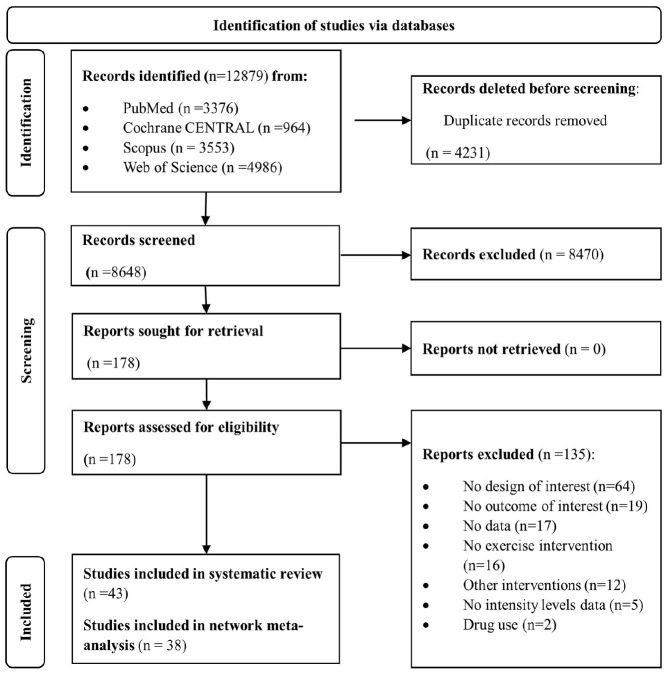
Data sources and methods: We searched the PubMed, Cochrane Central Register of Controlled Trials, Scopus, and Web of Science databases from inception to November 2023. We included randomized controlled trials (RCTs). A random effects method was used to calculate the pooled mean difference (MD). The effect of each intervention was calculated using a network meta-analysis with a frequentist perspective.
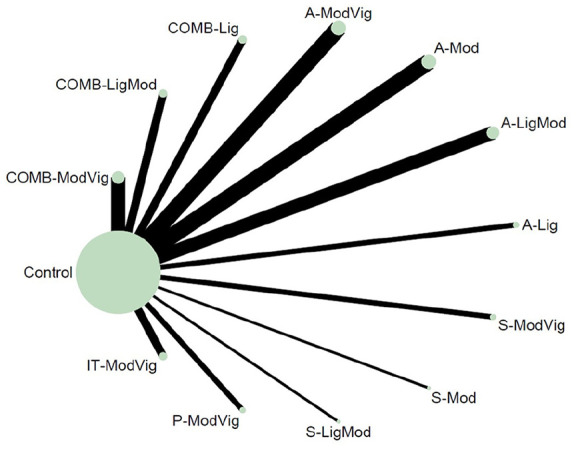
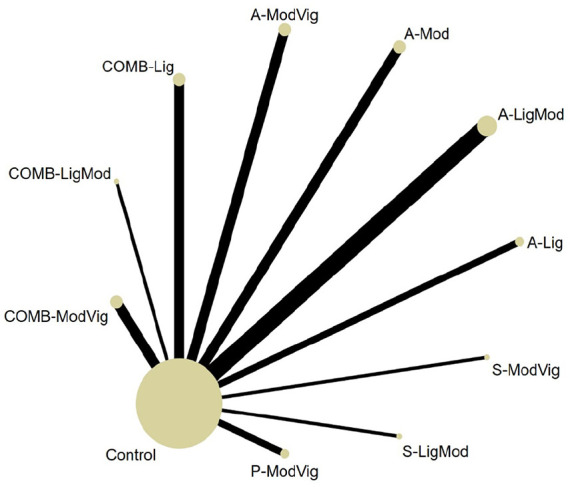
Results: Forty-three RCTs were included in the systematic review, and 38 RCTs were included in the network meta-analysis. In the general population, although no significant results, the MDs for light-moderate strength, moderate-vigorous strength, and moderate-vigorous Pilates exercises were favorable for preventing LBW. Furthermore, moderate-vigorous strength exercise was effective to prevent LBW, reporting significant MD compared to control groups in the healthy population (310.00, 95% confidence interval: 78.40, 541.60; I2 = 81.3%).
Conclusion: Strength exercises at a moderate-vigorous intensity could be a potential strategy for the prevention of LBW in the healthy population. However, our findings should be interpreted with caution because the overall risk of bias was between "some concerns" and "high," and the overall certainty of the evidence was low.
Registration: PROSPERO CRD42023401770.
Keywords: infant; low birth weight; newborn; physical activity; physical fitness; pregnancy.
Conflict of interest statement
The authors declared no potential conflicts of interest with respect to the research, authorship, and/or publication of this article.
Figures
References
-
- Ward WP. Birth weight as an indicator of human welfare. In: Komlos J, Kelly IR. (eds.) The Oxford handbook of economics and human biology. Oxford: Oxford University Press, 2016, pp. 1–46.
-
- World Health Organization. Global nutrition targets 2025: low birth weight policy brief. Geneva: World Health Organization, 2014.
-
- Siqueira FM, Cota LOM, Costa JE, et al. Intrauterine growth restriction, low birth weight, and preterm birth: adverse pregnancy outcomes and their association with maternal periodontitis. J Periodontol 2007; 78: 2266–2276. - PubMed
Publication types
MeSH terms
LinkOut - more resources
Full Text Sources
Medical
Research Materials
Miscellaneous
