


Unraveling the mysteries of early embryonic arrest: genetic factors and molecular mechanisms
- PMID: 39325344
- PMCID: PMC11706821
- DOI: 10.1007/s10815-024-03259-7
Unraveling the mysteries of early embryonic arrest: genetic factors and molecular mechanisms
Abstract
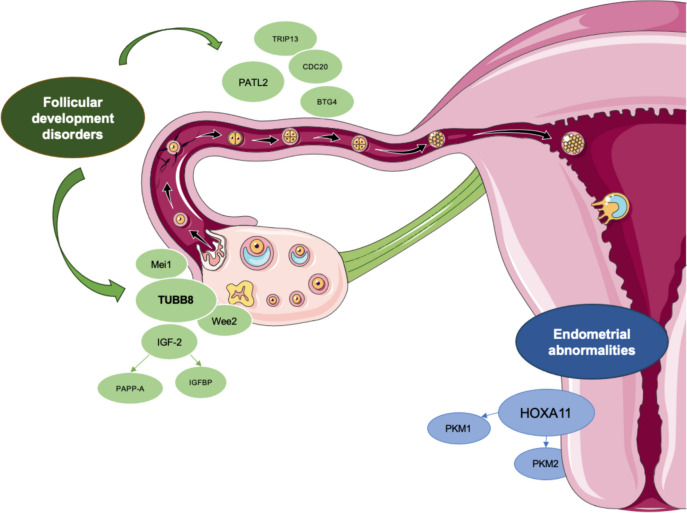
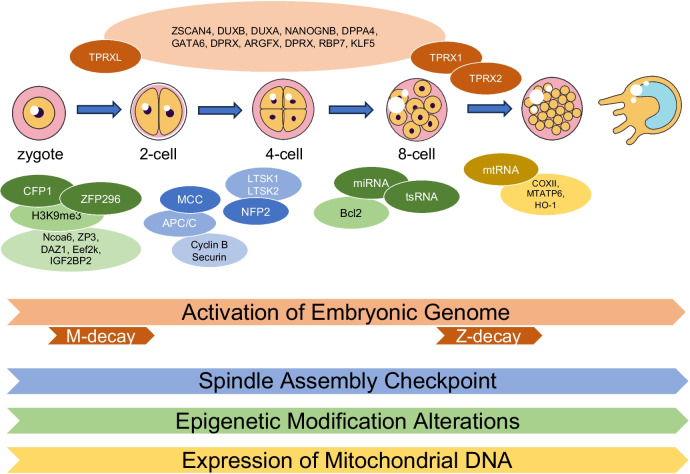
Early embryonic arrest (EEA) is a critical impediment in assisted reproductive technology (ART), affecting 40% of infertile patients by halting the development of early embryos from the zygote to blastocyst stage, resulting in a lack of viable embryos for successful pregnancy. Despite its prevalence, the molecular mechanism underlying EEA remains elusive. This review synthesizes the latest research on the genetic and molecular factors contributing to EEA, with a focus on maternal, paternal, and embryonic factors. Maternal factors such as irregularities in follicular development and endometrial environment, along with mutations in genes like NLRP5, PADI6, KPNA7, IGF2, and TUBB8, have been implicated in EEA. Specifically, PATL2 mutations are hypothesized to disrupt the maternal-zygotic transition, impairing embryo development. Paternal contributions to EEA are linked to chromosomal variations, epigenetic modifications, and mutations in genes such as CFAP69, ACTL7A, and M1AP, which interfere with sperm development and lead to infertility. Aneuploidy may disrupt spindle assembly checkpoints and pathways including Wnt, MAPK, and Hippo signaling, thereby contributing to EEA. Additionally, key genes involved in embryonic genome activation-such as ZSCAN4, DUXB, DUXA, NANOGNB, DPPA4, GATA6, ARGFX, RBP7, and KLF5-alongside functional disruptions in epigenetic modifications, mitochondrial DNA, and small non-coding RNAs, play critical roles in the onset of EEA. This review provides a comprehensive understanding of the genetic and molecular underpinnings of EEA, offering a theoretical foundation for the diagnosis and potential therapeutic strategies aimed at improving pregnancy outcomes.
Keywords: Early embryonic arrest; Embryonic genome activation; Epigenetics; Mitochondrial DNA; Small non-coding RNA.
© 2024. The Author(s), under exclusive licence to Springer Science+Business Media, LLC, part of Springer Nature.
Conflict of interest statement
Declarations. Competing interests: The authors declare no competing interests.
Figures
References
-
- Inhorn MC, Patrizio P. Infertility around the globe: new thinking on gender, reproductive technologies and global movements in the 21st century. Hum Reprod Update. 2015;21:411–26. - PubMed
Publication types
MeSH terms
Grants and funding
LinkOut - more resources
Full Text Sources
Miscellaneous
