


Development and Evaluation of the Biological Activities of a Plain Mucoadhesive Hydrogel as a Potential Vehicle for Oral Mucosal Drug Delivery
- PMID: 39330176
- PMCID: PMC11431386
- DOI: 10.3390/gels10090574
Development and Evaluation of the Biological Activities of a Plain Mucoadhesive Hydrogel as a Potential Vehicle for Oral Mucosal Drug Delivery
Abstract
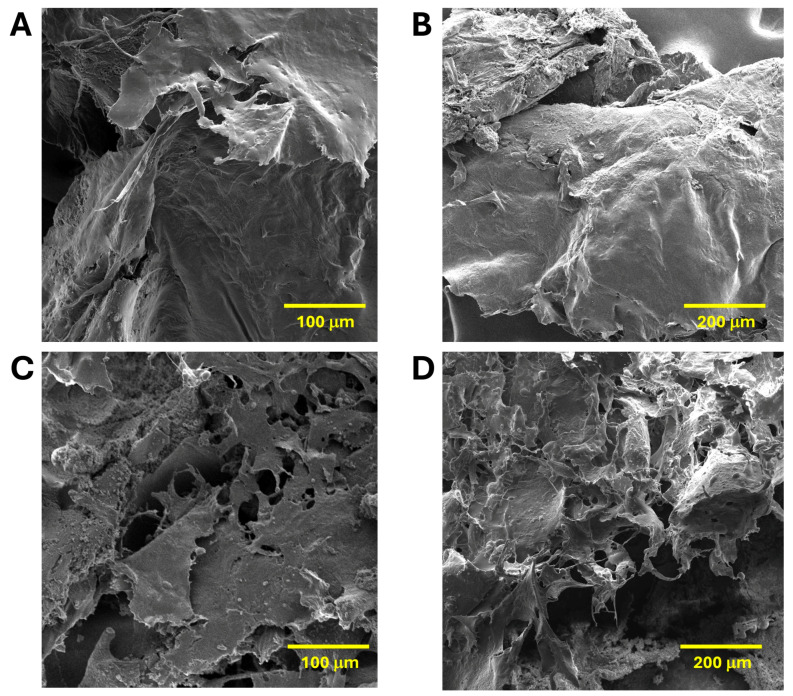
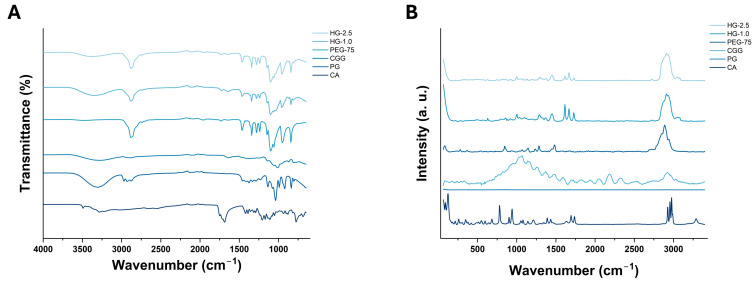
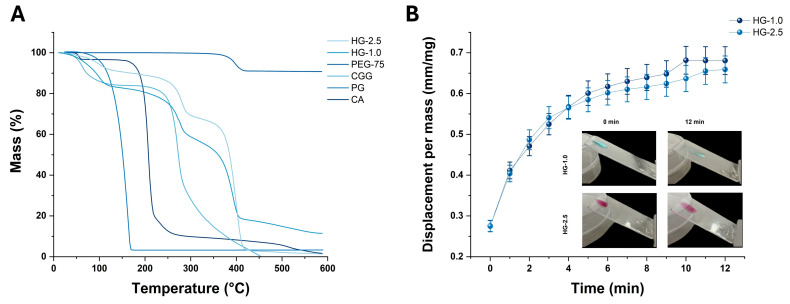
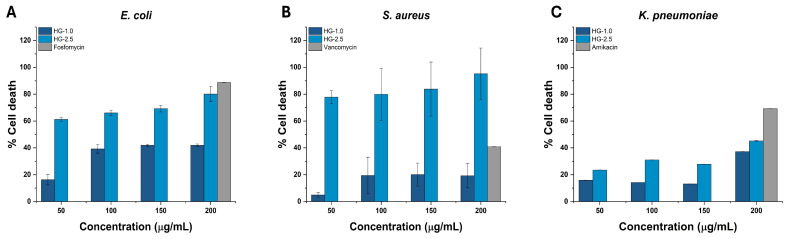
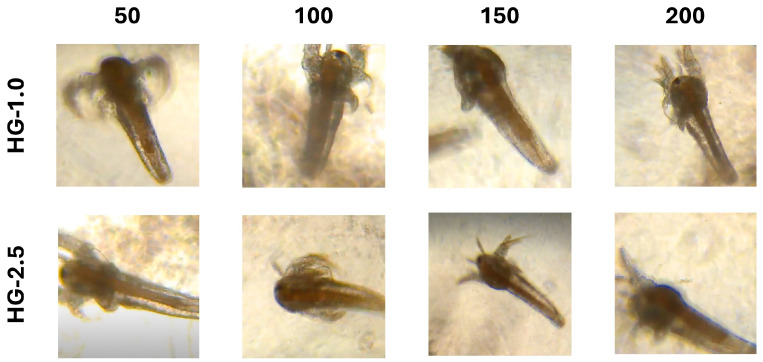
This study aimed to develop HGs based on cationic guar gum (CGG), polyethylene glycol (PEG), propylene glycol (PG), and citric acid (CA) using a 2k factorial experimental design to optimize their properties. HGs were characterized through FTIR and Raman spectroscopy, scanning electron microscopy (SEM), and thermogravimetric analysis (TGA). The biological activities of HGs were determined by evaluating their mucoadhesive capacity and antibacterial activity in vitro, whereas their toxicity was analyzed using Artemia salina nauplii as an in vivo model. Results revealed that HGs were successfully optimized for their viscosity, pH, and sensory properties, and it was observed that varying concentrations of PEG-75 did not influence them. Through SEM analyses, it was noted that increased levels of PEG-75 resulted in HGs with distinct porosity and textures, whereas FTIR and Raman spectroscopy exhibited representative peaks of the raw materials used during the synthesis process. TGA studies indicated the thermal stability of HGs, as they presented degradation patterns at 100 and 300 °C. The synthesized HGs exhibited similar mucoadhesion kinetic profiles, demonstrating a displacement factor at an equilibrium of 0.57 mm/mg at 5 min. The antibacterial activity of HGs was appraised as poor against Gram-positive and Gram-negative bacteria due to their MIC90 values (>500 μg/mL). Regarding A. salina, treatment with HGs neither decreased their viability nor induced morphological changes. The obtained results suggest the suitability of CGG/PEG HGs for oral mucosa drug delivery and expand the knowledge about their mucoadhesive capacity, antibacterial potential, and in vivo biocompatibility.
Keywords: biological activities; cationic guar gum; factorial regression analysis; hydrogels; oral mucosa.
Conflict of interest statement
The authors declare no conflicts of interest.
Figures
References
-
- Azhamuthu T., Kathiresan S., Senkuttuvan I., Abulkalam Asath N.A., Ravichandran P. Usnic Acid Attenuates 7,12-Dimethylbenz[a] Anthracene (DMBA) Induced Oral Carcinogenesis through Inhibiting Oxidative Stress, Inflammation, and Cell Proliferation in Male Golden Syrian Hamster Model. J. Biochem. Mol. Toxicol. 2024;38:e23553. doi: 10.1002/jbt.23553. - DOI - PubMed
-
- Surboyo M.D.C., Mansur D., Kuntari W.L., Syahnia S.J.M.R., Iskandar B., Arundina I., Liu T.-W., Lee C.-K., Ernawati D.S. The Hydroxypropyl Methylcellulose-Sorbitol Thin Film Containing a Coconut Shell of Liquid Smoke for Treating Oral Ulcer. JCIS Open. 2024;15:100119. doi: 10.1016/j.jciso.2024.100119. - DOI
LinkOut - more resources
Full Text Sources
Molecular Biology Databases
