


The Role of the N-Terminal Domain of Thrombomodulin and the Potential of Recombinant Human Thrombomodulin as a Therapeutic Intervention for Shiga Toxin-Induced Hemolytic-Uremic Syndrome
- PMID: 39330867
- PMCID: PMC11435709
- DOI: 10.3390/toxins16090409
The Role of the N-Terminal Domain of Thrombomodulin and the Potential of Recombinant Human Thrombomodulin as a Therapeutic Intervention for Shiga Toxin-Induced Hemolytic-Uremic Syndrome
Abstract
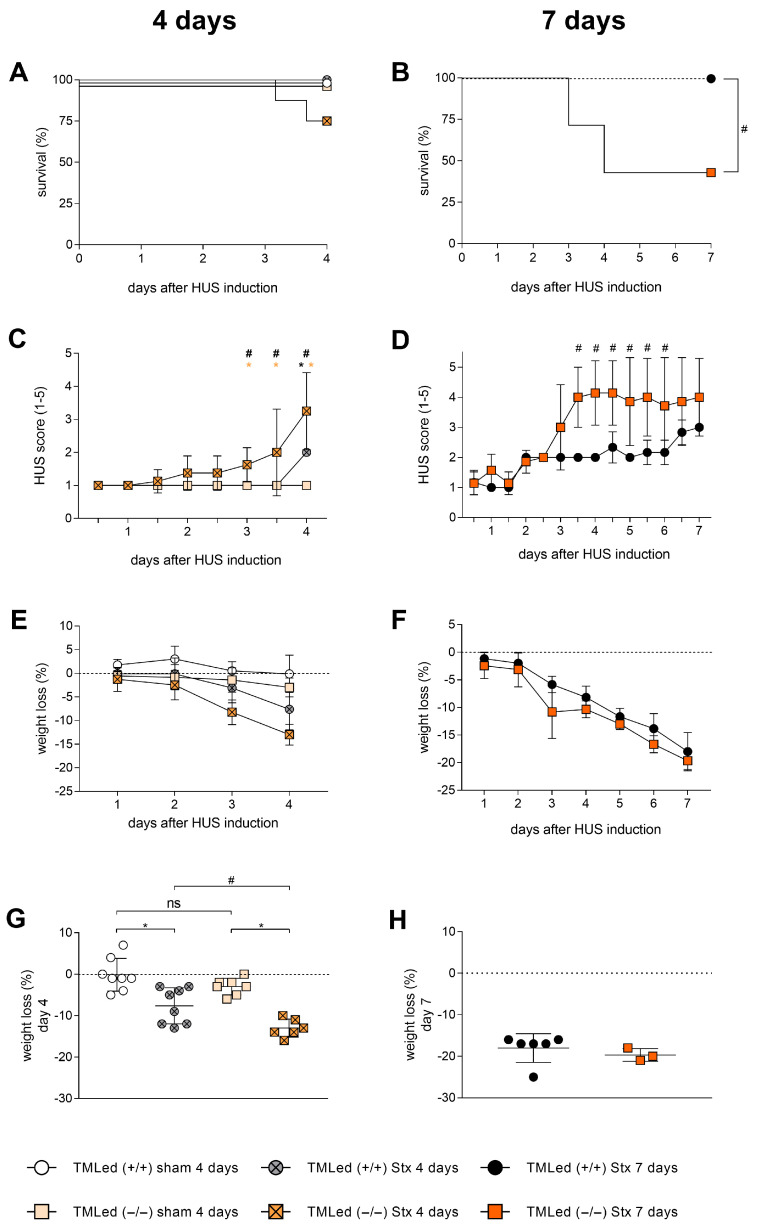
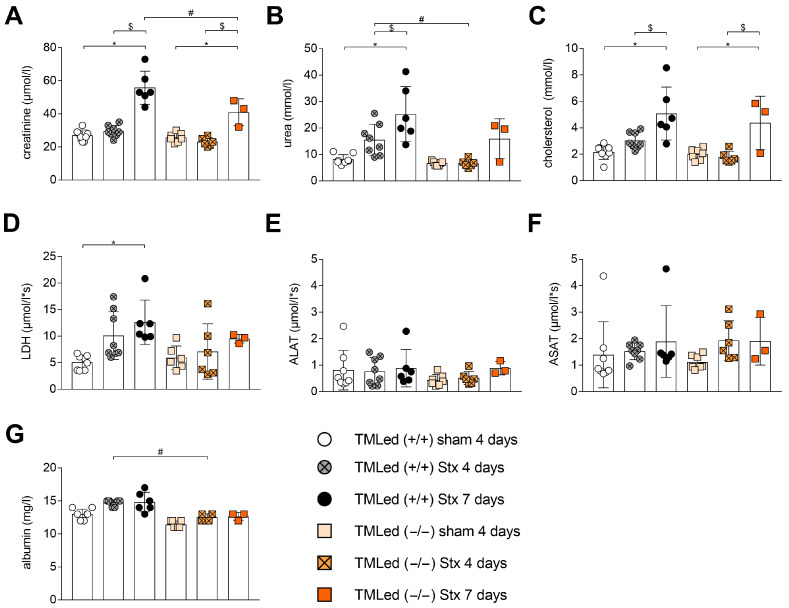
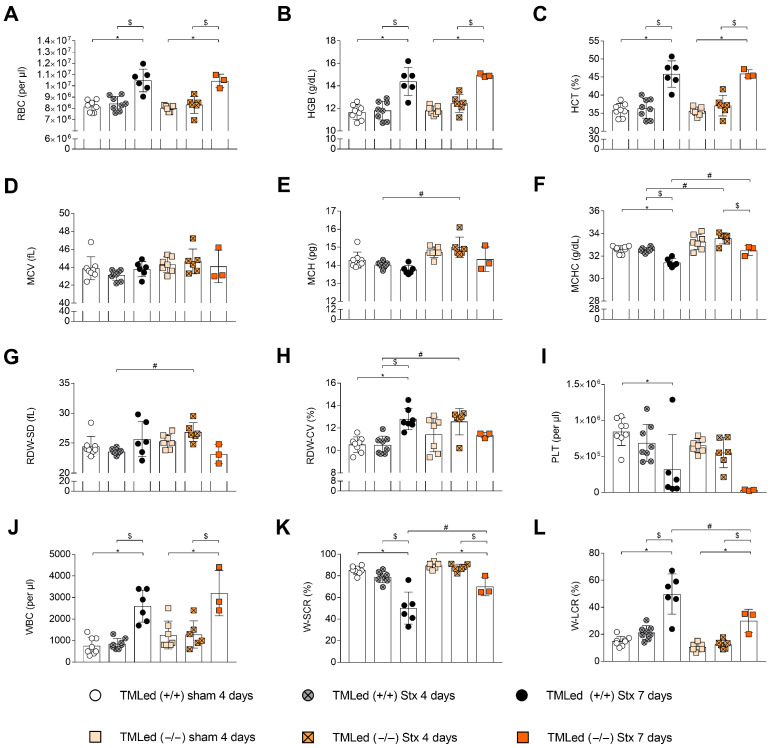
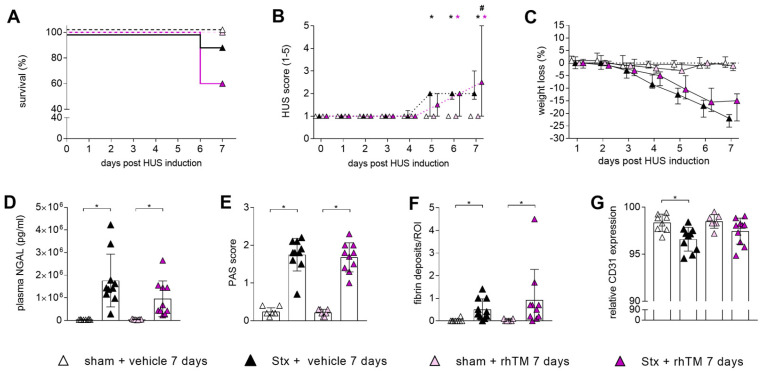
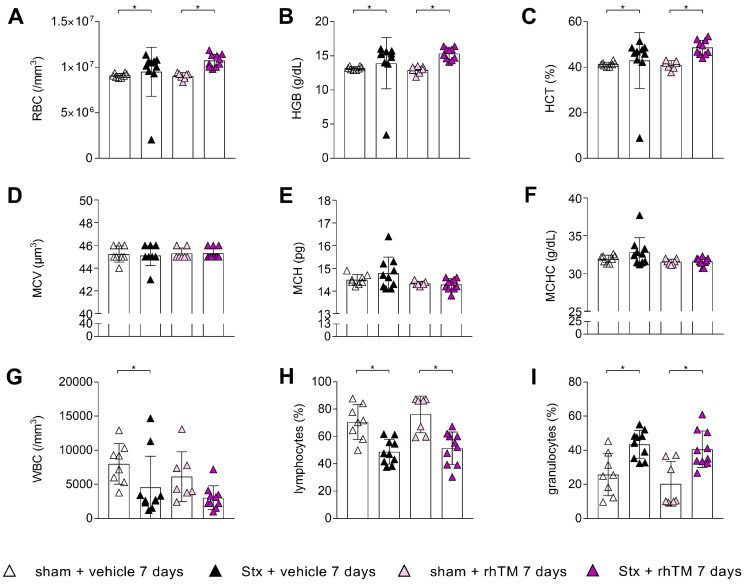
Hemolytic-uremic syndrome (HUS) is a rare complication of an infection with Shiga toxin (Stx)-producing Escherichia coli (STEC-HUS), characterized by severe acute kidney injury, thrombocytopenia and microangiopathic hemolytic anemia, and specific therapy is still lacking. Thrombomodulin (TM) is a multi-domain transmembrane endothelial cell protein and its N-terminal domain has been implicated in the pathophysiology of some cases of HUS. Indeed, the administration of recombinant human TM (rhTM) may have efficacy in HUS. We used a Stx-based murine model of HUS to characterize the role of the N-terminal domain of TM. We show that mice lacking that domain (TMLed (-/-)) are more sensitive to Stx, with enhanced HUS progression seen at 4 days and increased mortality at 7 days post-HUS induction. In spite of these changes, renal function was less affected in surviving Stx-challenged TMLed (-/-) mice compared to their wild-type counterparts TMLed (+/+) at 7 days. Contrary to few clinical case reports from Japan, the administration of rhTM (0.06 mg/kg) to wild-type mice (C57BL/6J) with HUS did not protect against disease progression. This overall promising, but also contradictory body of evidence, requires further systematic preclinical and clinical investigations to clarify the role of TM in HUS as a potential therapeutic strategy.
Keywords: Shiga toxin; experimental HUS model; hemolytic-uremic syndrome; kidney injury; recombinant human thrombomodulin; thrombomodulin.
Conflict of interest statement
The authors declare no conflicts of interest.
Figures
References
-
- Ståhl A.-L., Arvidsson I., Johansson K.E., Chromek M., Rebetz J., Loos S., Kristoffersson A.-C., Békássy Z.D., Mörgelin M., Karpman D. A novel mechanism of bacterial toxin transfer within host blood cell-derived microvesicles. PLoS Pathog. 2015;11:e1004619. doi: 10.1371/journal.ppat.1004619. - DOI - PMC - PubMed
Publication types
MeSH terms
Substances
Grants and funding
- CO912/2-1/German Research Foundation Research Unit FOR1738
- 316213987/German Research Foundation, Collaborative Research Centre PolyTarget 1278-2021, subproject A02
- 03Z22JN12/Federal Ministry of Education and Research
- 03COV07/Federal Ministry of Education and Research, ICROVID
- CanVECTOR/Canadian Institutes for Health Research
LinkOut - more resources
Full Text Sources
