


E-Cyanoacrylamides and 5-Imino Pyrrolones against Trypanosoma cruzi: Activity and Induced Mechanisms of Cell Death
- PMID: 39330880
- PMCID: PMC11436024
- DOI: 10.3390/tropicalmed9090191
E-Cyanoacrylamides and 5-Imino Pyrrolones against Trypanosoma cruzi: Activity and Induced Mechanisms of Cell Death
Abstract
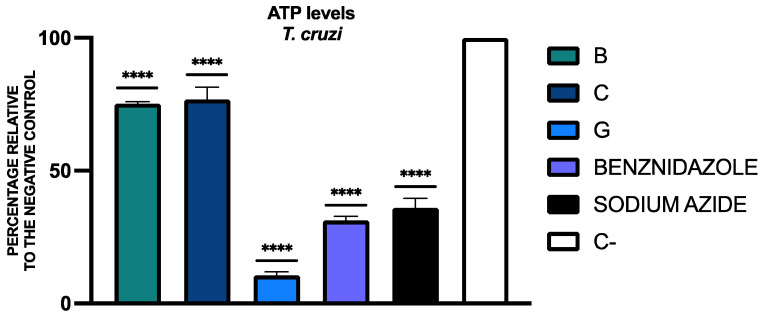
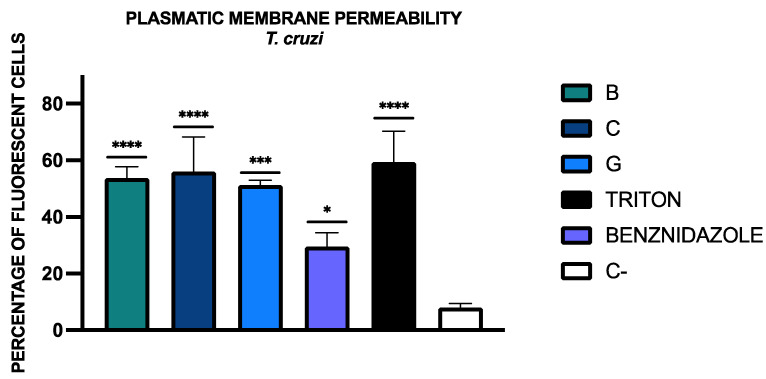
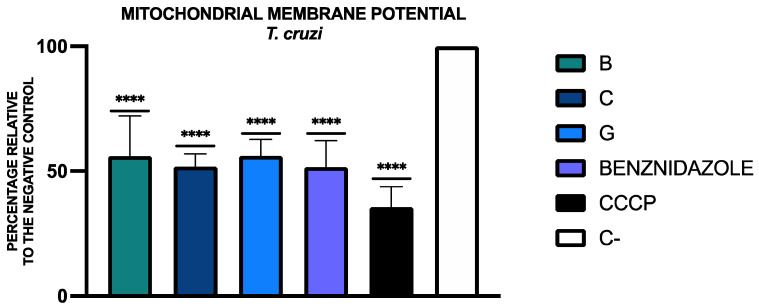
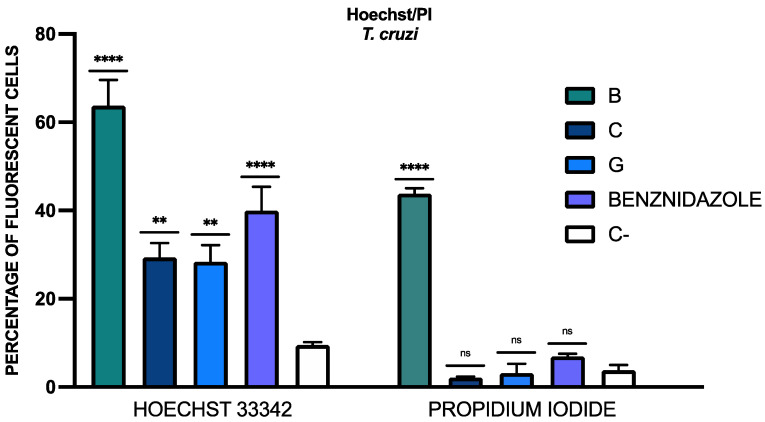
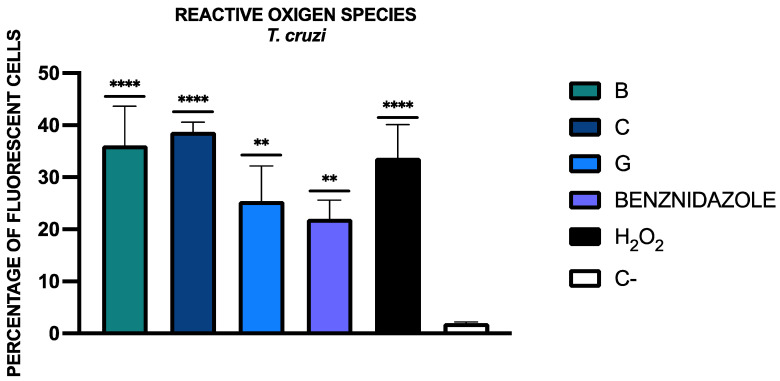
Chagas disease is caused by a protozoan parasite called Trypanosoma cruzi. The infection produces a first clinical phase, commonly asymptomatic or showing non-specific symptoms, and a second chronic phase characterized by cardiac and digestive dysfunctions in some individuals with the disease. This disease affects 7 million people and has been categorized by the World Health Organisation as a neglected tropical disease. In addition, the drugs used to combat it were developed in the 1970s and present major toxicity problems and limited efficacy in the chronicity of the disease. This has led to research into new active compounds that are effective against the disease, with studies on cyanoderivatives showing promising activity. In this work, eight active E-cyanoacrylamides/5-imino pyrrolones were studied. Compounds B and F showed excellent activity, while compounds C and G stood out for their lower cytotoxicity. After correlating the activity and cytotoxicity of the compounds, it was observed that compounds B, C, and G obtained the most favourable results. Various cell death studies were carried out with these compounds, and it was determined that all of them produced programmed cell death, with compound B standing out as being at a late stage in the process.
Keywords: ADME; Chagas; Trypanosoma cruzi; chemoterapy; cyanoacrilamides; iminopirrolones; programmed cell death.
Conflict of interest statement
The authors declare no conflicts of interest.
Figures
Similar articles
-
Mammea type coumarins isolated from Calophyllum brasiliense induced apoptotic cell death of Trypanosoma cruzi through mitochondrial dysfunction, ROS production and cell cycle alterations.Bioorg Chem. 2020 Jul;100:103894. doi: 10.1016/j.bioorg.2020.103894. Epub 2020 May 1. Bioorg Chem. 2020. PMID: 32388434
-
Design and synthesis of new 1,2,3-triazoles derived from eugenol and analogues with in vitro and in vivo activity against Trypanosoma cruzi.Eur J Med Chem. 2023 Oct 5;258:115622. doi: 10.1016/j.ejmech.2023.115622. Epub 2023 Jul 11. Eur J Med Chem. 2023. PMID: 37441850
-
Natural sesquiterpene lactones induce programmed cell death in Trypanosoma cruzi: a new therapeutic target?Phytomedicine. 2014 Sep 25;21(11):1411-8. doi: 10.1016/j.phymed.2014.06.005. Epub 2014 Jul 8. Phytomedicine. 2014. PMID: 25022207
-
Review on Experimental Treatment Strategies Against Trypanosoma cruzi.J Exp Pharmacol. 2021 Mar 31;13:409-432. doi: 10.2147/JEP.S267378. eCollection 2021. J Exp Pharmacol. 2021. PMID: 33833592 Free PMC article. Review.
-
Repositioning of HIV Aspartyl Peptidase Inhibitors for Combating the Neglected Human Pathogen Trypanosoma cruzi.Curr Med Chem. 2019;26(36):6590-6613. doi: 10.2174/0929867326666190610152934. Curr Med Chem. 2019. PMID: 31187704 Review.
References
-
- World Health Organization (WHO) First WHO Report on Neglected Tropical Diseases: Working to Overcome the Global Impact of Neglected Tropical Diseases. WHO; Geneva, Switzerland: 2010.
Grants and funding
LinkOut - more resources
Full Text Sources
