


Anticoagulation strategies in patients with coexisting traumatic intracranial hematomas and cerebral venous sinus thrombosis: an observational cohort study
- PMID: 39331162
- PMCID: PMC11436407
- DOI: 10.1007/s00701-024-06287-5
Anticoagulation strategies in patients with coexisting traumatic intracranial hematomas and cerebral venous sinus thrombosis: an observational cohort study
Abstract
Purpose: Post-traumatic cerebral venous sinus thrombosis (ptCVT) is a rare but serious complication of traumatic brain injury (TBI). Managing ptCVT is challenging due to the concurrent risk of traumatic intracranial hematoma (ICH) expansion. Limited data exists on the safety and efficacy of anticoagulation therapy (ACT) in these cases.
Methods: This single-center observational cohort study included adult TBI patients with concurrent ICH and ptCVT. Low-molecular-weight heparin (LMWH) or heparin infusion was used to treat all ptCVTs based on institutional protocols. The outcomes of interest were hemorrhagic and thrombotic complications.
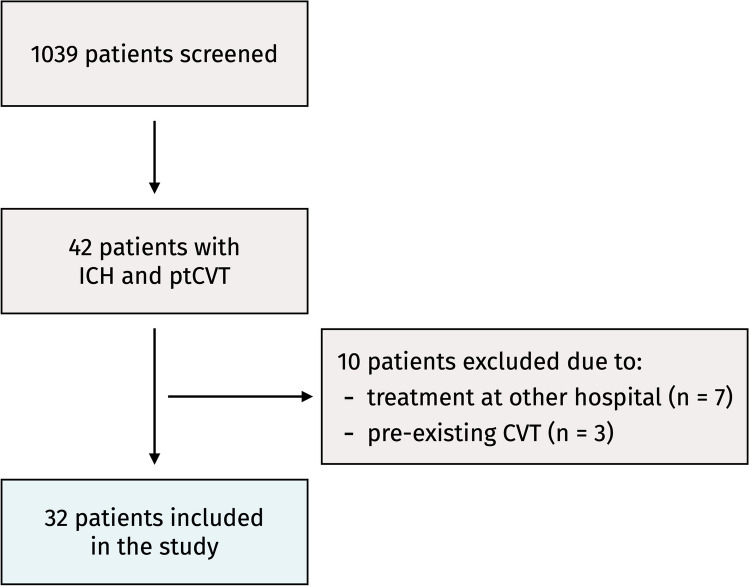
Results: Out of 1,039 TBI-patients admitted between 2006 and 2020, 32 met the inclusion criteria. The median time from injury to ptCVT diagnosis was 24 h. ACT was initiated at a median of 9 h after ptCVT diagnosis. Patients were administered either heparin infusion (n = 8) or LMWH at dosages ranging from 28 to 72% of the therapeutic level (n = 24). There were no hemorrhagic complications, even in patients receiving LMWH at ≥ 50% of the therapeutic dose. Thrombotic complications occurred in 3 patients (9.4%) - two cases of thrombus progression and one venous infarct. The patients who developed thrombotic complications differed from those who did not by having a 17-h delay in ACT initiation after diagnosis or by receiving an initial LMWH dose at 28% of the therapeutic level.
Conclusion: LMWH at approximately 50% of the therapeutic level was effective for managing ptCVT associated with TBI in our retrospective dataset, with no risk of hematoma expansion. Prospective trials are warranted to confirm these results.
Keywords: Anticoagulation; Cerebral venous sinus thrombosis; Dural sinus thrombosis; Intracranial hematoma; Traumatic brain injury.
© 2024. The Author(s).
Conflict of interest statement
The authors declare no competing interests.
References
-
- Afshari FT, Yakoub KM, Zisakis A, Thomas A, Ughratdar I, Sturman S et al (2018) Traumatic dural venous sinus thrombosis; a challenge in management of head injury patients. J Clin Neurosci 1(57):169–173 - PubMed
-
- Bokhari R, You E, Bakhaidar M, Bajunaid K, Lasry O, Zeiler FA et al (2020) Dural venous sinus thrombosis in patients presenting with blunt traumatic brain injuries and skull fractures: A systematic review and meta-analysis. World Neurosurg 1(142):495-505.e3 - PubMed
-
- Delgado Almandoz JE, Kelly HR, Schaefer PW, Lev MH, Gonzalez RG, Romero JM (2010) Prevalence of traumatic dural venous sinus thrombosis in high-risk acute blunt head trauma patients evaluated with multidetector CT venography. Radiology 255(2):570–7 - PubMed
-
- Delgado Almandoz JE, Kelly HR, Schaefer PW, Lev MH, Gonzalez RG, Romero JM (2010) Prevalence of traumatic dural venous sinus thrombosis in high-risk acute blunt head trauma patients evaluated with multidetector CT venography. Radiology 255(2):570–577 - PubMed
Publication types
MeSH terms
Substances
Grants and funding
LinkOut - more resources
Full Text Sources
Medical
Miscellaneous
