


Adult patients with severe respiratory syncytial virus infections in the emergency department
- PMID: 39331940
- PMCID: PMC11441945
- DOI: 10.1097/MD.0000000000039265
Adult patients with severe respiratory syncytial virus infections in the emergency department
Abstract
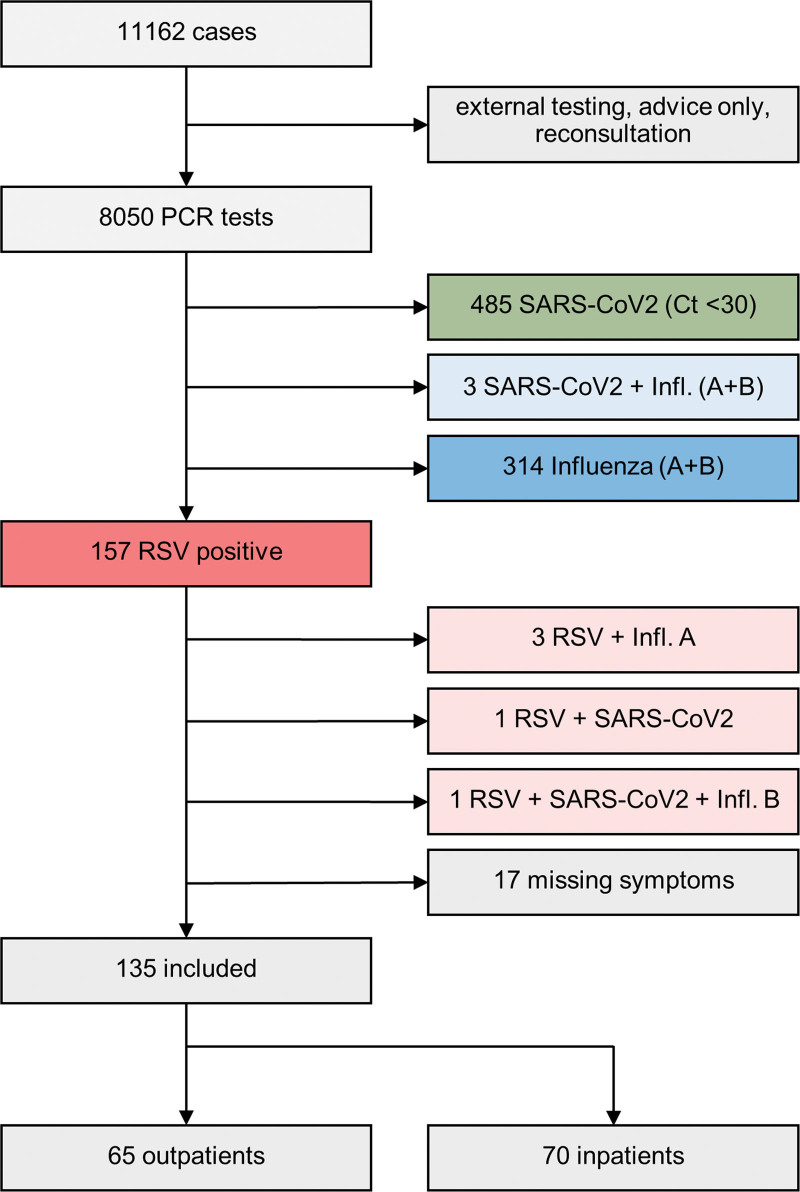
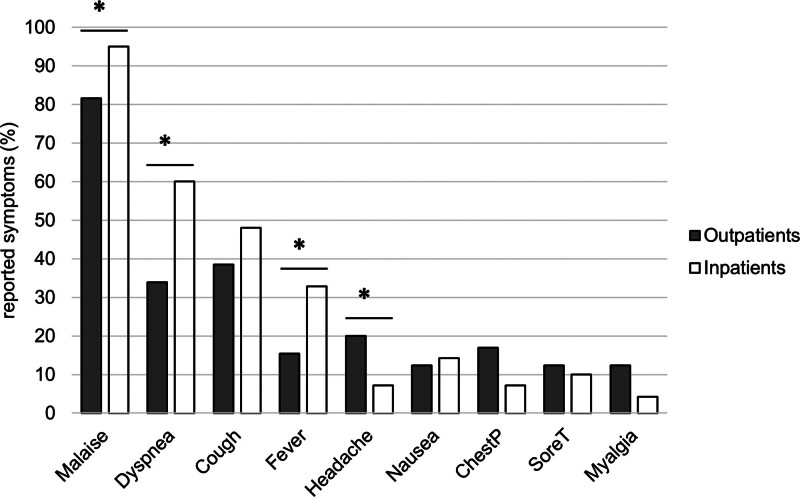
Respiratory syncytial virus (RSV) is a seasonal virus known to cause significant morbidity in pediatric patients; however, morbidity in adult patients has not been well investigated. We aimed to characterize adult patients with RSV infection in the emergency department (ED) and their clinical course. During the winter term 2022/23, all adult ED patients were screened for RSV, severe acute respiratory syndrome coronavirus type 2, and influenza infection using point-of-care polymerase chain reaction tests. All symptomatic RSV+ patients were further characterized based on their clinical presentation and course. A group comparison between RSV+ inpatients and RSV+ outpatients was conducted. The potential risk factors for inpatient treatment were evaluated using univariate and multivariate analyses. Of the 135 symptomatic RSV+ patients, 51.9% (70/135) were inpatients. Their length of stay were 9.4 (±10.4) days. Inpatients had a significantly higher mean age, lower oxygen saturation, higher leukocyte count, and higher C-reactive protein levels than outpatients. Among the preconditions, pulmonary diseases, tumors, and immunosuppression were significantly more frequent in the inpatient group. Thirty percent (21/70) of the inpatients required ICU treatment, 11% (8/70) required mechanical ventilation, and 9% (6/70) died. Malaise (P = .021, odds ratio 8.390) and detection of pulmonary infiltrations (P < .001, odds ratio 12.563) were the only independent predictors of inpatient treatment in the multivariate analysis. Our data show that RSV is a medically relevant pathogen among adult ED patients, often requiring inpatient treatment. In particular, elderly patients with some medical preconditions seem to be more prone to a severe course of infection requiring inpatient treatment. Lower respiratory tract involvement, proven by pulmonary infiltrates, seems to be crucial for a more severe disease course.
Copyright © 2024 the Author(s). Published by Wolters Kluwer Health, Inc.
Conflict of interest statement
The authors have no conflicts of interest to disclose.
Figures
References
-
- Kimberlin DW, Barnett ED, Lynfield R, Sawyer MH. Respiratory syncytial virus. In: Red Book: 2021–2024 Report of the Committee on Infectious Diseases. Itasca, IL: American Academy of Pediatrics; 2021:628.
-
- Nam HH, Ison MG. Respiratory syncytial virus infection in adults. BMJ. 2019;366:l5021. - PubMed
Publication types
MeSH terms
LinkOut - more resources
Full Text Sources
Medical
Research Materials
