


A context-dependent model of resilient functioning after childhood maltreatment-the case for flexible biobehavioral synchrony
- PMID: 39333480
- PMCID: PMC11436866
- DOI: 10.1038/s41398-024-03092-7
A context-dependent model of resilient functioning after childhood maltreatment-the case for flexible biobehavioral synchrony
Abstract
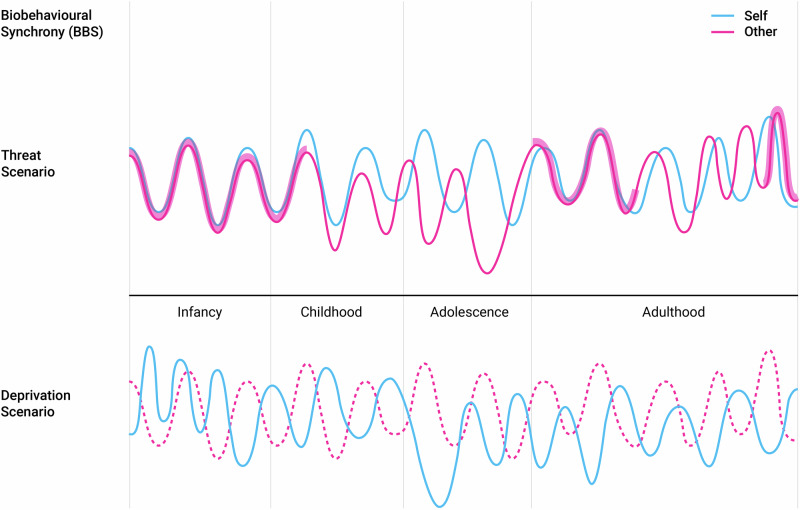
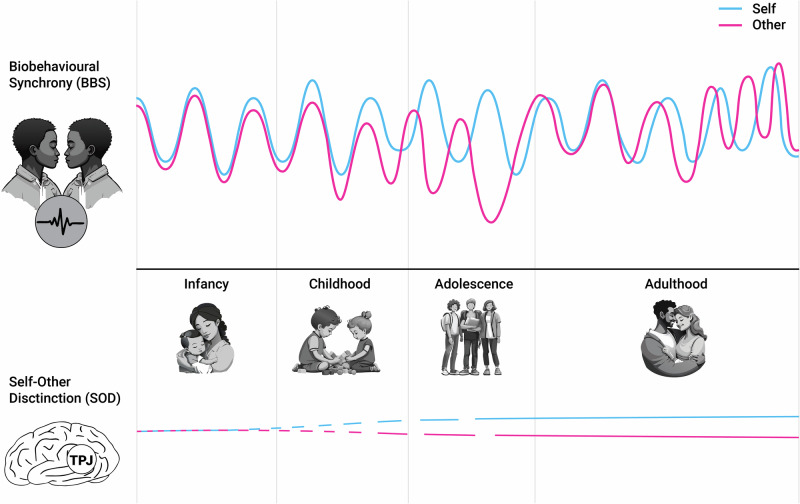
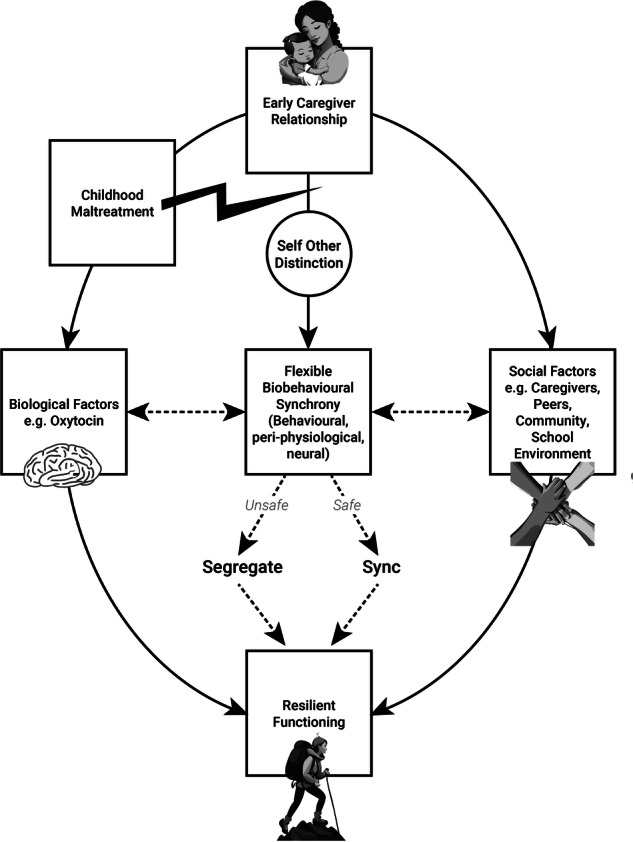
Many children who experience childhood adversity, whether in the form of threat or deprivation, develop adaptive competencies that lead to resilient functioning. Still, research has not succeeded in accurately predicting the level of resilient functioning by any kind of biomarkers, likely because it has sidelined the flexibility inherent in a construct that is situationally and developmentally variable. Whilst recent research acknowledges the importance of redefining resilience in order to reflect its dynamic nature after adversity, evidence for specific behaviors that are developmentally adaptive and dynamic throughout the lifespan is limited. We here propose a model in which resilient functioning is crucially dependent on the individual's capability to flexibly synchronize with and segregate from another's cognitive-affective, behavioral, and physiological states, known as 'biobehavioral synchrony'. Such an adaptive interpersonal skill is rooted in (a) the early caregiving experience and its regulatory effects on an individual's physiological stress reactivity, as well as (b) the development of self-other distinction which can be affected by childhood maltreatment. Bridging the gap between accounts of flexible resilient functioning and the latest thinking in biobehavioral synchrony, we will review behavioral and neurobiological evidence that threat and deprivation in childhood interfere with the development of dynamic, context-sensitive boundaries between self and other, mediated by the (right) tempo-parietal junction (a central neural hub for interpersonal synchronization), which puts the individual at risk for affective fusion or cut-off from others' arousal states. Our proposed model charts a path for investigating the differential effects of maltreatment experiences and mechanisms for intergenerational transmission of non-sensitive caregiving. We conclude with metrics, data analysis methods, and strategies to facilitate flexible biobehavioral synchrony.
© 2024. The Author(s).
Conflict of interest statement
The authors declare no competing interests.
Figures
References
-
- WHO. Child maltreatment. Word Health Organ. 2022. https://www.who.int/news-room/fact-sheets/detail/child-maltreatment.
Publication types
MeSH terms
LinkOut - more resources
Full Text Sources
Medical
Miscellaneous
