. 2024 Sep 27;19(1):355.
doi: 10.1186/s13023-024-03311-w.

Factors influencing survival in sphingosine phosphate lyase insufficiency syndrome: a retrospective cross-sectional natural history study of 76 patients

Affiliations

Factors influencing survival in sphingosine phosphate lyase insufficiency syndrome: a retrospective cross-sectional natural history study of 76 patients

Nancy Keller et al. Orphanet J Rare Dis. .

Abstract

Background: Sphingosine-1-phosphate lyase insufficiency syndrome (SPLIS) is a recently recognized inborn error of metabolism associated with steroid-resistant nephrotic syndrome as well as adrenal insufficiency and immunological, neurological, and skin manifestations. SPLIS is caused by inactivating mutations in SGPL1, encoding the pyridoxal 5'phosphate-dependent enzyme sphingosine-1-phosphate lyase, which catalyzes the final step of sphingolipid metabolism. Some SPLIS patients have undergone kidney transplantation, and others have been treated with vitamin B6 supplementation. In addition, targeted therapies including gene therapy are in preclinical development. In anticipation of clinical trials, it will be essential to characterize the full spectrum and natural history of SPLIS. We performed a retrospective analysis of 76 patients in whom the diagnosis of SPLIS was established in a proband with at least one suggestive finding and biallelic SGPL1 variants identified by molecular genetic testing. The main objective of the study was to identify factors influencing survival in SPLIS subjects.

Results: Overall survival at last report was 50%. Major influences on survival included: (1) age and organ involvement at first presentation; (2) receiving a kidney transplant, and (3) SGPL1 genotype. Among 48 SPLIS patients with nephropathy who had not received a kidney transplant, two clinical subgroups were distinguished. Of children diagnosed with SPLIS nephropathy before age one (n = 30), less than 30% were alive 2 years after diagnosis, and 17% were living at last report. Among those diagnosed at or after age one (n = 18), ~ 70% were alive 2 years after diagnosis, and 72% were living at time of last report. SPLIS patients homozygous for the SPL R222Q variant survived longer compared to patients with other genotypes. Kidney transplantation significantly extended survival outcomes.

Conclusion: Our results demonstrate that SPLIS is a phenotypically heterogeneous condition. We find that patients diagnosed with SPLIS nephropathy in the first year of life and patients presenting with prenatal findings represent two high-risk subgroups, whereas patients harboring the R222Q SGPL1 variant fare better than the rest. Time to progression from onset of proteinuria to end stage kidney disease varies from less than one month to five years, and kidney transplantation may be lifesaving.

Keywords: SGPL1; Adrenal insufficiency; Gene therapy; Inborn error of metabolism; Kidney transplantation; Nephrotic syndrome; Pyridoxal 5′-phosphate; SPLIS; Vitamin B6.


Conflict of interest statement

J.D.S. is an author on patent International Application Serial No. PCT/US2021/018613, “Adeno-Associated Viral (Aav)-Mediated SGPL1 Gene Therapy for Treatment of Sphingosine-1-Phosphate Lyase Insufficiency Syndrome (SPLIS)” published on 08/26/2021 and assigned publication number WO 2021/168140. All other authors declare no conflicts of interest.

Figures

Fig. 1
Fig. 1
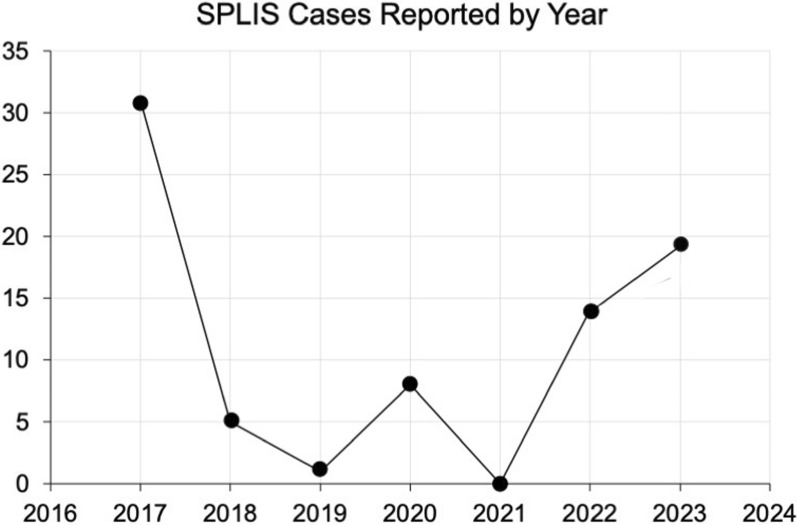
SPLIS cases reported by year. Number of cases reported each year starting with the initial two reports linking biallelic genetic variants of SGPL1 with a syndrome characterized by steroid-resistant nephrotic syndrome and primary adrenal insufficiency by Lovric et al. [23] and Prasad et al. [24]. Cases in 2023 include the 14 new cases in this study not previously reported
Fig. 2
Fig. 2
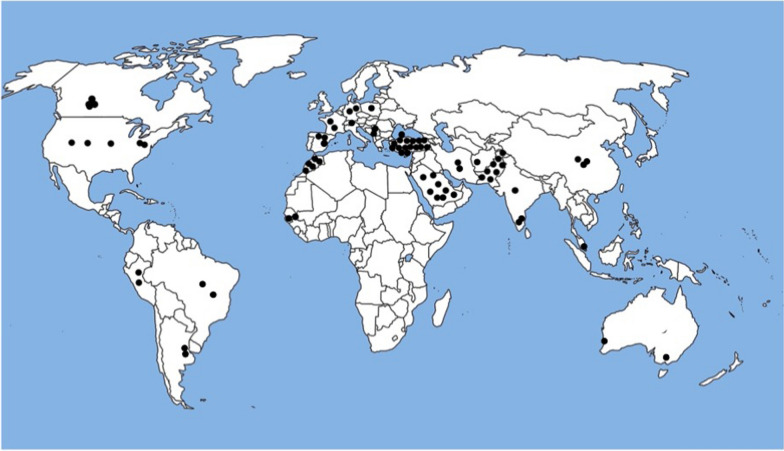
Geographic distribution of SPLIS cases/ancestries in this study. Each black dot represents an individual SPLIS case within the country designated; marked locations are not specific for city or region
Fig. 3
Fig. 3
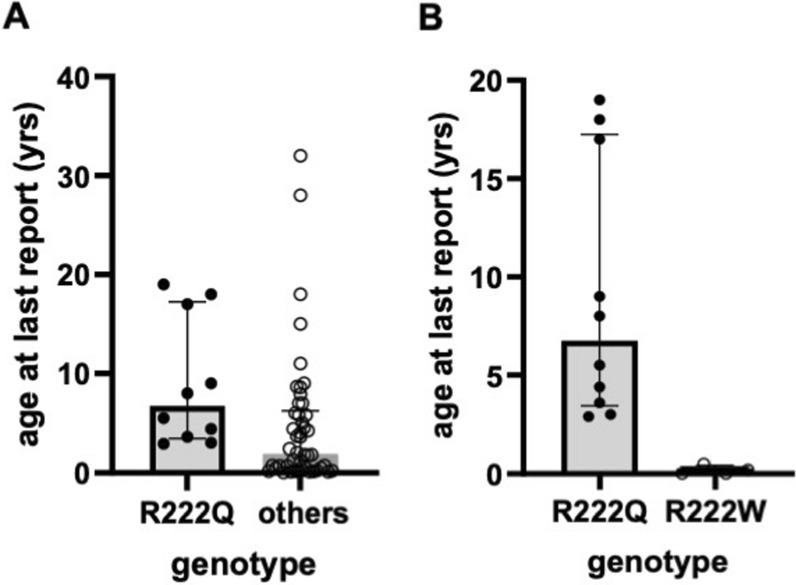
Longevity of R222Q patients compared to other variants. There were 13 patients homozygous for the R222Q variant: three were not included in the analysis because they were transplanted. Thus, there were 10 R222Q patients in the analysis. The patients with other genotypes numbered 49, excluding transplants. There were four R222W patients. A The median age at last report was significantly greater in the R222Q group: 6.8 years (IQR = 13.8) vs. all others 1.7 (IQR = 5.6) (p = 0.004, Mann–Whitney with Bonferroni correction). B The R222Q group also had greater survival compared to the R222W group, for whom the median age at last report was 0.1 years (IQR = 0.4). The p value of R222Q vs. R222W was 0.004 (Mann Whitney with Bonferroni correction)
Fig. 4
Fig. 4
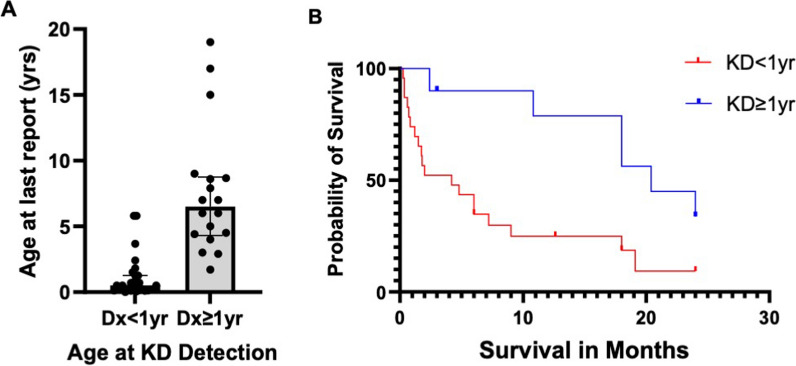
Survival outcomes in two subgroups of SPLIS patients. A Age at last report as a measure of survival was compared in the group of patients diagnosed with kidney disease in infancy (< 1 year) compared to those who presented with kidney disease beyond infancy (≥ 1 year). The data include patients whose first sign of SPLIS was not KD, but they do not include patients who received a kidney transplant. Thirty patients meeting these inclusion and exclusion criteria were diagnosed before age 1; 18 patients were diagnosed at or after their first birthday. The median (IQR) age at last report for the Dx < 1 group was 0.4 (0.8); the median (IQR) for the Dx ≥ 1 was 6.5 (4.6). The difference between medians was statistically significant, p < 0.0001). B Probability of survival of these same two groups of patients during two years of study. The median survival is 3.0 months for the infant group and 20.4 months for the older group of patients. The difference in the survival curves is significant (p = 0.0019; log-rank (Mantel–Cox test)
Fig. 5
Fig. 5
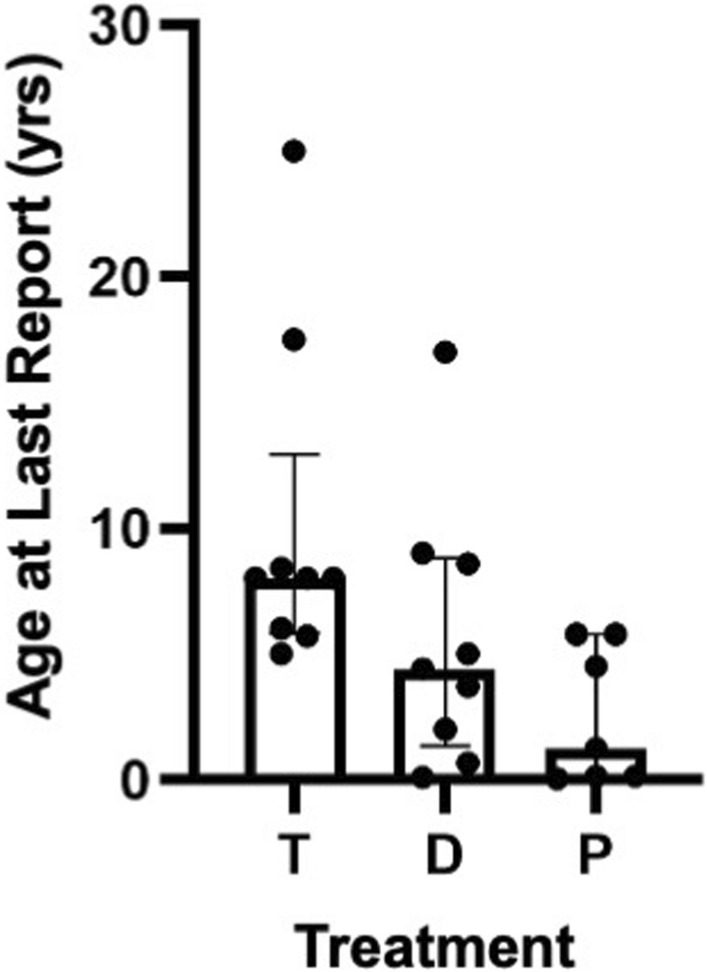
Impact of treatment on survival in SPLIS patients with nephropathy. Treatment of SPLIS patients varied: 9 received a kidney transplant (T); 9 only received dialysis (D); 7 only received palliative care (P). It should be noted that one of the patients receiving a transplant also received pyridoxine therapy. Outcomes with dialysis were not significantly better than palliative care (p > 0.05). In contrast, transplanted patients were older at time of last report than those receiving palliative treatment (p = 0.004); Mann Whitney with Bonferroni correction. Median among transplanted cases was 8 years (IQR 7); dialysis 4.4 years (IQR 7.4); palliative care 1.3 years (5.6). Statistically no significant difference was found in age at last report between T and D cases (p > 0.05), although survival trended higher in the T cases compared to D cases
Fig. 6
Fig. 6
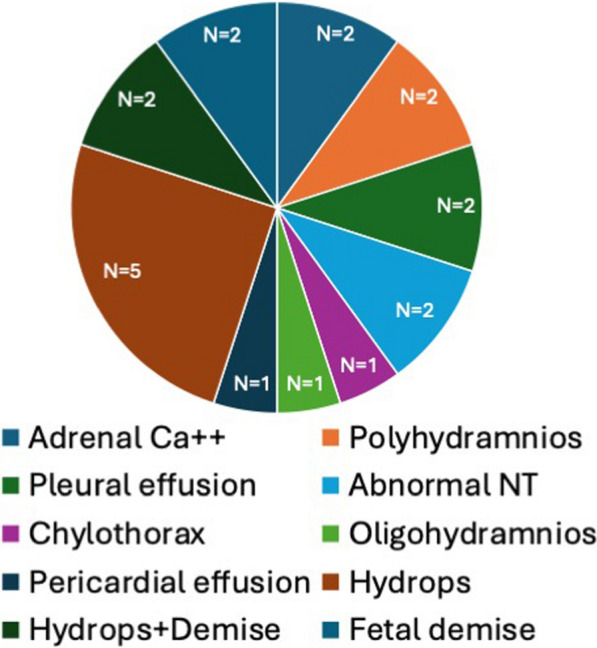
Prenatal findings in SPLIS. The figure depicts the type and relative proportion of prenatal findings among all prenatal findings in SPLIS patients for whom the data were available. Ca++, calcification; NT, nuchal translucency

References

    1. Weaver KN, Sullivan B, Hildebrandt F, et al. Sphingosine phosphate lyase insufficiency syndrome. In: Adam MP, Ardinger HH, Pagon RA, et al., eds. GeneReviews. Seattle (WA), 2020. - PubMed
    1. Choi YJ, Saba JD. Sphingosine phosphate lyase insufficiency syndrome (SPLIS): a novel inborn error of sphingolipid metabolism. Adv Biol Regul. 2019;71:128–40. 10.1016/j.jbior.2018.09.004. - PMC - PubMed
    1. Pournasiri Z, Madani A, Nazarpack F, et al. Sphingosine phosphate lyase insufficiency syndrome: a systematic review. World J Pediatr. 2022. 10.1007/s12519-022-00615-4. - PubMed
    1. Tastemel Ozturk T, Canpolat N, Saygili S, et al. A rare cause of nephrotic syndrome-sphingosine-1-phosphate lyase (SGPL1) deficiency: 6 cases and a review of the literature. Pediatr Nephrol. 2023;38(3):711–9. 10.1007/s00467-022-05656-5. - PubMed
    1. Yang S, He Y, Zhou J, Yuan H, Qiu L. Steroid-resistant nephrotic syndrome associated with certain SGPL1 variants in a family: Case report and literature review. Front Pediatr. 2023;11:1079758. 10.3389/fped.2023.1079758. - PMC - PubMed