


Genome-wide association analysis of treatment resistant schizophrenia for variant discovery and polygenic assessment
- PMID: 39334510
- PMCID: PMC11438281
- DOI: 10.1186/s40246-024-00673-x
Genome-wide association analysis of treatment resistant schizophrenia for variant discovery and polygenic assessment
Abstract
Background: Treatment resistant schizophrenia (TRS) is broadly defined as inadequate response to adequate treatment and is associated with a substantial increase in disease burden. Clozapine is the only approved treatment for TRS, showing superior clinical effect on overall symptomatology compared to other drugs, and is the prototype of atypical antipsychotics. Risperidone, another atypical antipsychotic with a more distinctive dopamine 2 antagonism, is commonly used in treatment of schizophrenia. Here, we conducted a genome-wide association study on patients treated with clozapine (TRS) vs. risperidone (non-TRS) and investigated whether single variants and/or polygenic risk score for schizophrenia are associated with TRS status. We hypothesized that patients who are treated with clozapine and risperidone might exhibit distinct neurobiological phenotypes that match pharmacological profiles of these drugs and can be explained by genetic differences. The study population (n = 1286) was recruited from a routine therapeutic drug monitoring (TDM) service between 2005 and 2022. History of a detectable serum concentration of clozapine and risperidone (without TDM history of clozapine) defined the TRS (n = 478) and non-TRS (n = 808) group, respectively.
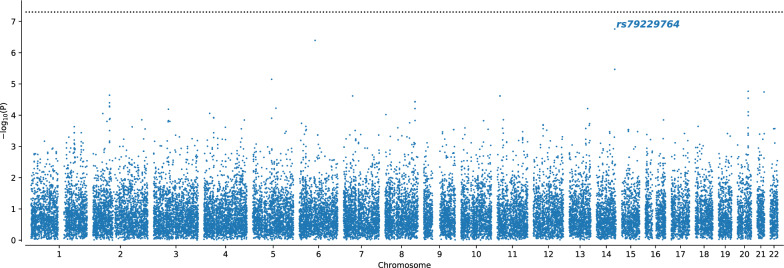
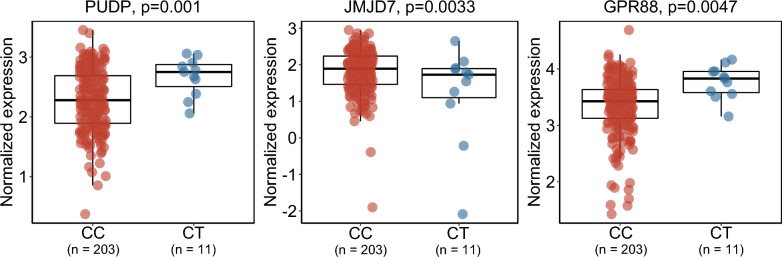
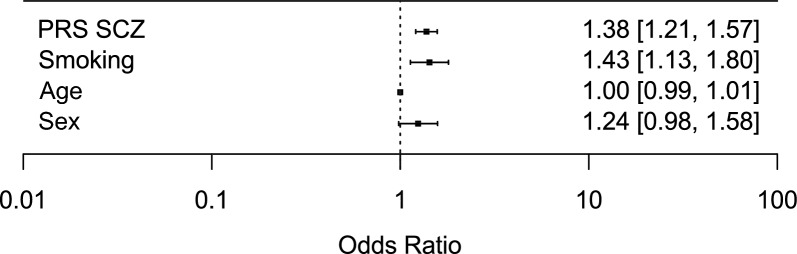
Results: We identified a suggestive association between TRS and a common variant within the LINC00523 gene with a significance just below the genome-wide threshold (rs79229764 C > T, OR = 4.89; p = 1.8 × 10⁻⁷). Polygenic risk score for schizophrenia was significantly associated with TRS (OR = 1.4, p = 2.1 × 10⁻⁶). In a large post-mortem brain sample from schizophrenia donors (n = 214; CommonMind Consortium), gene expression analysis indicated that the rs79229764 variant allele might be involved in the regulation of GPR88 and PUDP, which plays a role in striatal neurotransmission and intellectual disability, respectively.
Conclusions: We report a suggestive genetic association at the rs79229764 locus with TRS and show that genetic liability for schizophrenia is positively associated with TRS. These results suggest a candidate locus for future follow-up studies to elucidate the molecular underpinnings of TRS. Our findings further demonstrate the value of both single variant and polygenic association analyses for TRS prediction.
© 2024. The Author(s).
Conflict of interest statement
OAA is consultant to Cortechs.ai and Precision Health AS and received speaker’s honoraria from Lundbeck, Sunovion, Janssen and Otsuka. EM received speaker’s honoraria from Lundbeck and Otsuka. The other authors have no competing interests to declare that are relevant to the content of this article.
Figures
References
-
- Huhn M, Nikolakopoulou A, Schneider-Thoma J, Krause M, Samara M, Peter N, et al. Comparative efficacy and tolerability of 32 oral antipsychotics for the acute treatment of adults with multi-episode schizophrenia: a systematic review and network meta-analysis. The Lancet. 2019;394:939–51. 10.1016/S0140-6736(19)31135-3. - DOI - PMC - PubMed
-
- Pardiñas AF, Smart SE, Willcocks IR, Holmans PA, Dennison CA, Lynham AJ, et al. Interaction testing and polygenic risk scoring to estimate the association of common genetic variants with treatment resistance in schizophrenia. JAMA Psychiat. 2022;79:260–9. 10.1001/jamapsychiatry.2021.3799. - DOI - PMC - PubMed
Publication types
MeSH terms
Substances
Grants and funding
LinkOut - more resources
Full Text Sources
