


Application of CoLD-CoP to Detecting Competitively and Cooperatively Binding Ligands
- PMID: 39334902
- PMCID: PMC11430148
- DOI: 10.3390/biom14091136
Application of CoLD-CoP to Detecting Competitively and Cooperatively Binding Ligands
Abstract
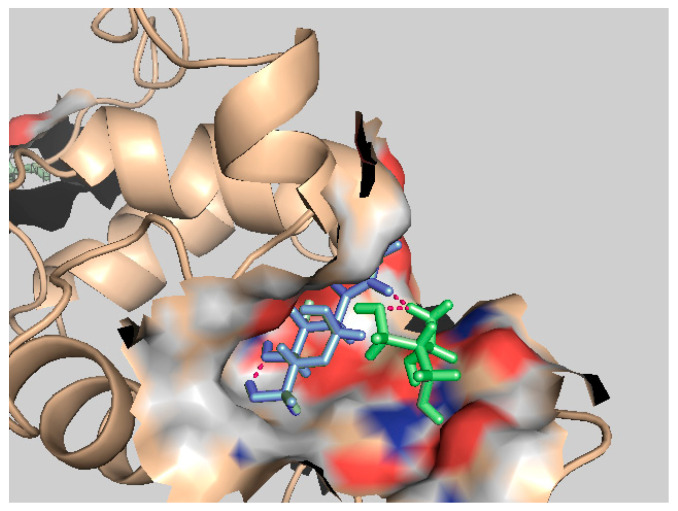
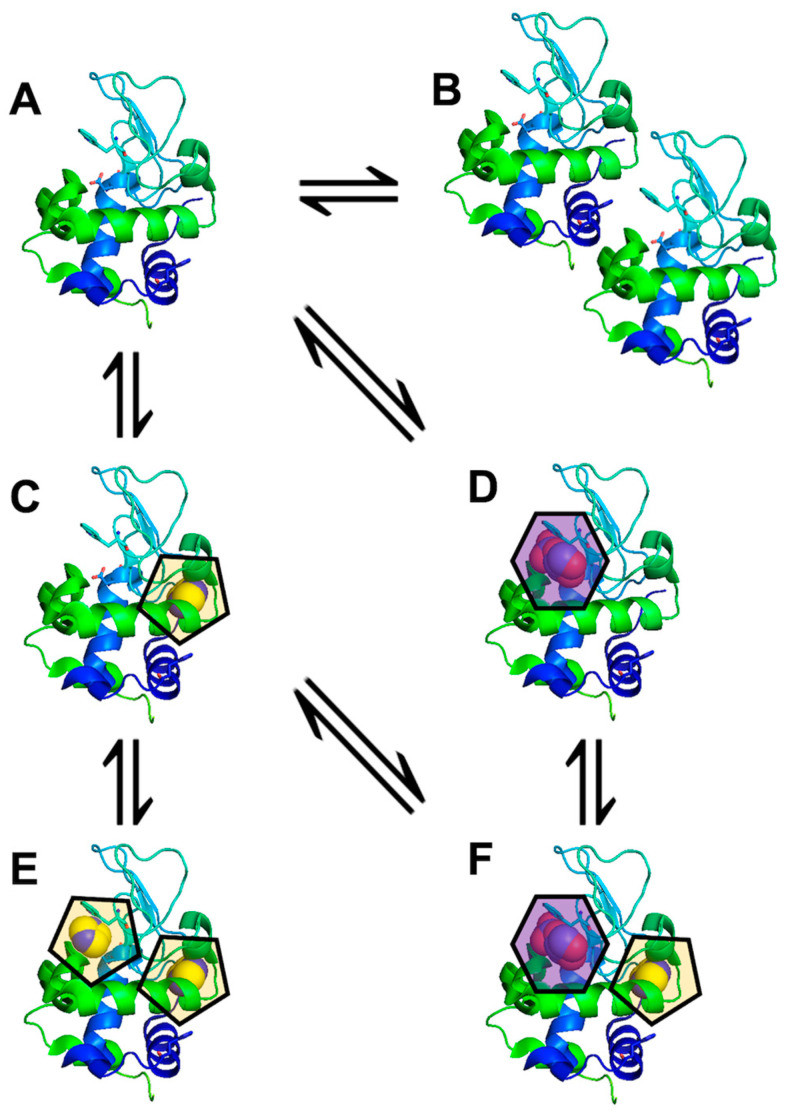
NMR utilization in fragment-based drug discovery requires techniques to detect weakly binding fragments and to subsequently identify cooperatively binding fragments. Such cooperatively binding fragments can then be optimized or linked in order to develop viable drug candidates. Similarly, ligands or substrates that bind macromolecules (including enzymes) in competition with the endogenous ligand or substrate are valuable probes of macromolecular chemistry and function. The lengthy and costly process of identifying competitive or cooperative binding can be streamlined by coupling computational biochemistry and spectroscopy tools. The Clustering of Ligand Diffusion Coefficient Pairs (CoLD-CoP) method, previously developed by Snyder and co-workers, detects weakly binding ligands by analyzing pairs of diffusion spectra, obtained in the absence and the presence of a protein. We extended the CoLD-CoP method to analyze spectra pairs (each in the presence of a protein) with or without a critical ligand, to detect both competitive and cooperative binding.
Keywords: cooperative/competitive ligand binding; diffusion spectroscopy (DOSY); fragment-based drug discovery (FBDD); nuclear magnetic resonance (NMR).
Conflict of interest statement
The authors declare no conflicts of interest.
Figures



References
-
- Austin D., Hayford T. Research and Development in the Pharmaceutical Industry. Congressional Budget Office; Washington, DC, USA: 2021.
MeSH terms
Substances
LinkOut - more resources
Full Text Sources
