


Graphene-Oxide Peptide-Containing Materials for Biomedical Applications
- PMID: 39337659
- PMCID: PMC11432502
- DOI: 10.3390/ijms251810174
Graphene-Oxide Peptide-Containing Materials for Biomedical Applications
Abstract
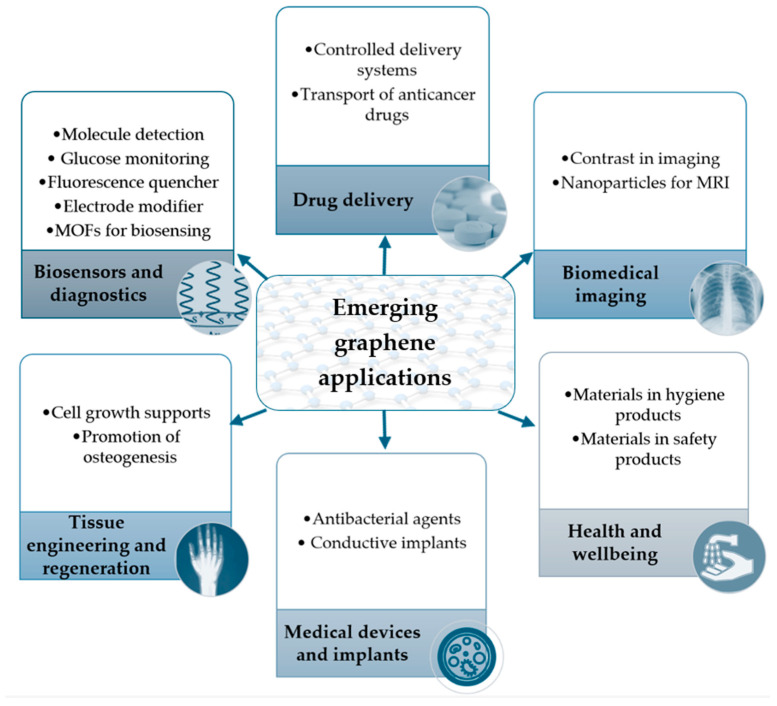
This review explores the application of graphene-based materials (GBMs) in biomedicine, focusing on graphene oxide (GO) and its interactions with peptides and proteins. GO, a versatile nanomaterial with oxygen-containing functional groups, holds significant potential for biomedical applications but faces challenges related to toxicity and environmental impact. Peptides and proteins can be functionalized on GO surfaces through various methods, including non-covalent interactions such as π-π stacking, electrostatic forces, hydrophobic interactions, hydrogen bonding, and van der Waals forces, as well as covalent bonding through reactions involving amide bond formation, esterification, thiol chemistry, and click chemistry. These approaches enhance GO's functionality in several key areas: biosensing for sensitive biomarker detection, theranostic imaging that integrates diagnostics and therapy for real-time treatment monitoring, and targeted cancer therapy where GO can deliver drugs directly to tumor sites while being tracked by imaging techniques like MRI and photoacoustic imaging. Additionally, GO-based scaffolds are advancing tissue engineering and aiding tissues' bone, muscle, and nerve tissue regeneration, while their antimicrobial properties are improving infection-resistant medical devices. Despite its potential, addressing challenges related to stability and scalability is essential to fully harness the benefits of GBMs in healthcare.
Keywords: antibacterial; applications; biomedicine; cancer; graphene; graphene oxide; peptides; proteins.
Conflict of interest statement
The authors declare no conflicts of interest.
Figures



References
-
- Kumar R., Singh D.P., Muñoz R., Amami M., Singh R.K., Singh S., Kumar V. Graphene-based materials for biotechnological and biomedical applications: Drug delivery, bioimaging and biosensing. Mater. Today Chem. 2023;33:101750. doi: 10.1016/j.mtchem.2023.101750. - DOI
-
- Singh D. Graphene-tethered peptide nanosheets—A facile approach for cargo molecules in cancer. Nano-Struct. Nano-Objects. 2024;37:101115. doi: 10.1016/j.nanoso.2024.101115. - DOI
Publication types
MeSH terms
Substances
Grants and funding
LinkOut - more resources
Full Text Sources
Research Materials
Miscellaneous
