


Oral Care in Head and Neck Radiotherapy: Proposal for an Oral Hygiene Protocol
- PMID: 39338267
- PMCID: PMC11433007
- DOI: 10.3390/jpm14091013
Oral Care in Head and Neck Radiotherapy: Proposal for an Oral Hygiene Protocol
Abstract
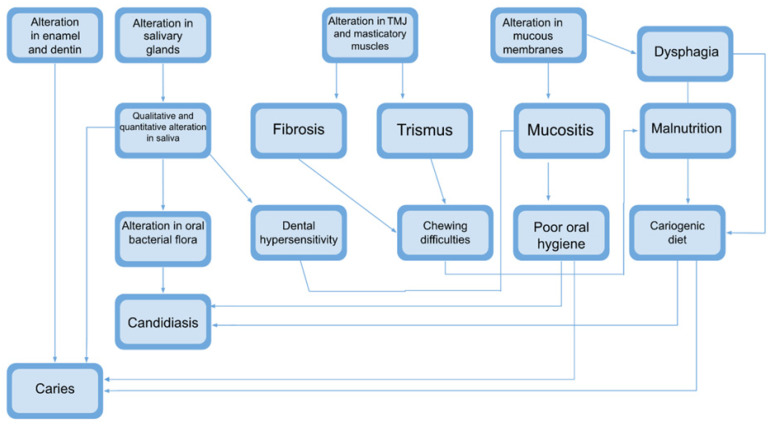
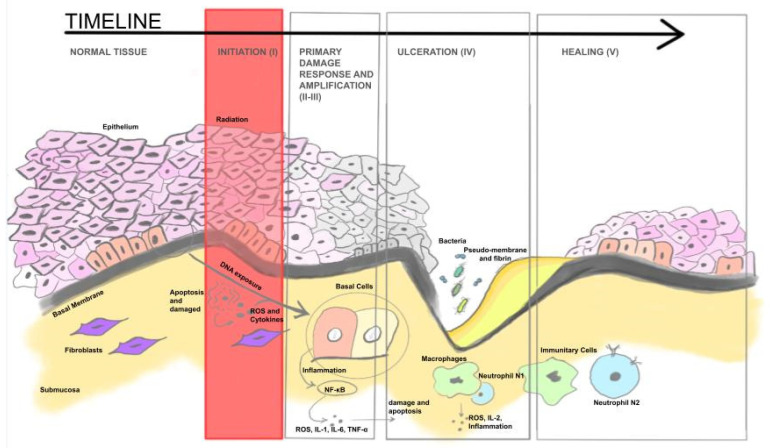
This review aims to provide a comprehensive overview of the literature on the oral side effects caused by radiotherapy for head and neck cancers. Various treatments are examined to mitigate these sequelae, and a protocol is proposed for dentists and dental hygienists to manage oncological patients. A literature search was conducted to select relevant articles addressing the effects of radiotherapy treatments on the oral cavity, with a particular focus on the development of mucositis, candidiasis, changes in salivary pH, trismus, fibrosis, and alterations in the oral biofilm. PubMed and MedLine were used as search engines, with keyword combinations including: head and neck cancer, mucositis, candida, dental care, dental hygiene, epidemiology, oral microbiome, biofilm, trismus, fibrosis, and salivary pH. A total of 226 articles were identified, spanning the period from 1998 to 2023. Articles deemed inappropriate or in languages other than English or Italian were excluded. A management protocol for oncological patients was proposed, divided into two phases: home-based and professional. Despite the advancements in intensity-modulated radiation therapy, it is impossible to completely avoid damage to healthy tissues. Preventive education and counseling in the dental chair, ongoing motivation, and education about oral hygiene are crucial to combine a good therapeutic outcome with an improved quality of life for the patient.
Keywords: head and neck cancer; hygiene; oral cavity; radiotherapy.
Conflict of interest statement
The authors declare no conflicts of interest.
Figures
References
-
- Bray F., Ferlay J., Soerjomataram I., Siegel R.L., Torre L.A., Jemal A. Global cancer statistics 2018: GLOBOCAN estimates of incidence and mortality worldwide for 36 cancers in 185 countries. CA Cancer J. Clin. 2018;68:394–424. doi: 10.3322/caac.21609. Erratum in: CA Cancer J. Clin. 2020, 70, 313. - DOI - PubMed
-
- Del Mistro A., Frayle H., Menegaldo A., Favaretto N., Gori S., Nicolai P., Spinato G., Romeo S., Tirelli G., da Mosto M.C., et al. Age-independent increasing prevalence of human papillomavirus-driven oropharyngeal carcinomas in North-East Italy. Sci. Rep. 2020;10:9320. doi: 10.1038/s41598-020-66323-z. - DOI - PMC - PubMed
-
- Baboci L., Boscolo-Rizzo P., Holzinger D., Bertorelle R., Biasini L., Michel A., Schmitt M., Spinato G., Bussani R., Alemany L., et al. Evidence of the causal role of human papillomavirus type 58 in an oropharyngeal carcinoma. Virol. J. 2013;10:334. doi: 10.1186/1743-422X-10-334. - DOI - PMC - PubMed
Publication types
LinkOut - more resources
Full Text Sources
