


High-dose colistin pharmacokinetics in critically ill patients receiving continuous renal replacement therapy
- PMID: 39340688
- PMCID: PMC11438743
- DOI: 10.1186/s13613-024-01384-1
High-dose colistin pharmacokinetics in critically ill patients receiving continuous renal replacement therapy
Abstract
Background: Colistin, administered as intravenous colistimethate (CMS), is still used in the critical care setting and current guidelines recommend high dosage CMS in patients undergoing continuous renal replacement therapy (CRRT). Due to the paucity of real-life data, we aimed to describe colistin pharmacokinetic/pharmacodynamic (PK/PD) profile in a cohort of critically ill patients with infections due to carbapenem-resistant (CR) bacteria undergoing CRRT.
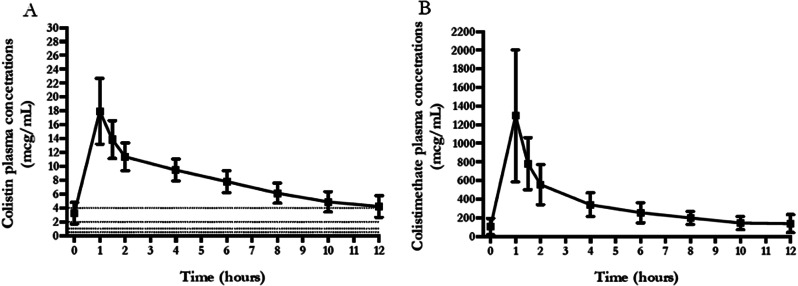
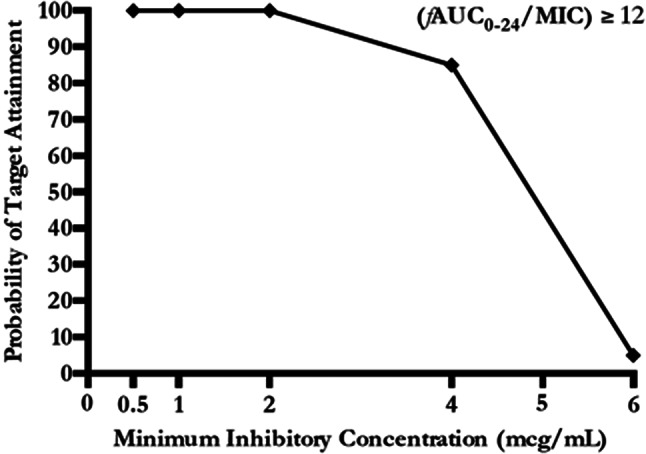
Results: All consecutive patients admitted to three Intensive Care Units (ICUs) of a large metropolitan University Hospital, treated with colistin for at least 48 h at the dosage of 6.75 MUI q12, after 9 MIU loading dose, and undergoing CRRT were included. After the seventh dose, patients underwent blood serial sampling during a time frame of 24 h. We included 20 patients, who had CR-Acinetobacter baumannii ventilator-associated pneumonia and were characterized by a median SAPS II and SOFA score of 41 [34.5-59.3] and 9 [6.7-11], respectively. Fifteen patients died during ICU stay and six recovered renal function. Median peak and trough colistin concentrations were 16.6 mcg/mL [14.8-20.6] and 3.9 mcg/mL [3.3-4.4], respectively. Median area under the time-concentration curve (AUC0 - 24) and average steady-state concentration (Css, avg) were 193.9 mcg h/mL [170.6-208.6] and 8.07 mcg/mL [7.1-8.7]. Probability of target attainment of colistin pharmacodynamics according to the fAUC0 - 24/MIC target ≥ 12 was 100% for MIC ≤ 2 mcg/mL and 85% for MIC = 4 mcg/ML, although exceeding the toxicity limit of Css, avg 3-4 mcg/mL.
Conclusions: In critically ill patients with CR infections undergoing CRRT, recommended CMS dosage resulted in colistin plasmatic levels above bacterial MIC90, but exceeding the safety Css, avg. limit.
Trial registration: This trial was registered in ClinicalTrials.gov on 23/07/2021 with the ID NCT04995133 (https//clinicaltrials.gov/study/NCT04995133).
Keywords: Colistimethate; Colistin; Critical care; Infection; Sepsis.
© 2024. The Author(s).
Conflict of interest statement
The authors declare that they have no competing interests.
Figures
References
-
- Vincent JL, Bihari DJ, Suter PM, Bruining HA, White J, Nicolas-Chanoin MH, et al. The prevalence of nosocomial infection in intensive care units in Europe. Results of the European prevalence of infection in Intensive Care (EPIC) study. EPIC International Advisory Committee. JAMA. 1995;274(8):639–44. - DOI - PubMed
Associated data
LinkOut - more resources
Full Text Sources
Medical
