


Precision patient selection for improved detection of circulating genetically abnormal cells in pulmonary nodules
- PMID: 39341939
- PMCID: PMC11438957
- DOI: 10.1038/s41598-024-73542-1
Precision patient selection for improved detection of circulating genetically abnormal cells in pulmonary nodules
Abstract
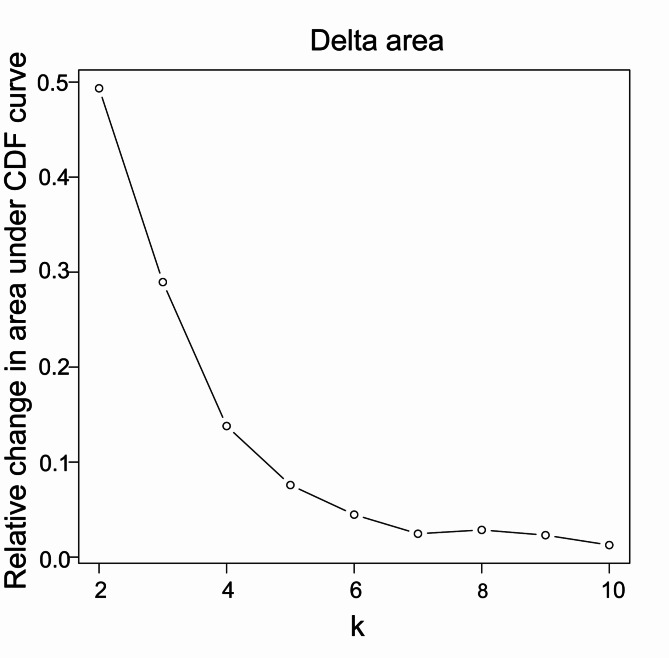
Circulating genetically abnormal cells (CACs) have emerged as a promising biomarker for the early diagnosis of lung cancer, particularly in patients with pulmonary nodules. However, their performance may be suboptimal in certain patient populations. This study aimed to refine patient selection to improve the detection of CACs in pulmonary nodules. A retrospective analysis was conducted on 241 patients with pulmonary nodules who had undergone pathological diagnosis through surgical tissue specimens. Utilizing consensus clustering analysis, the patients were categorized into three distinct clusters. Cluster 1 was characterized by older age, larger nodule size, and a higher prevalence of hypertension and diabetes. Notably, the diagnostic efficacy of CACs in Cluster 1 surpassed that of the overall patient population (AUC: 0.855 vs. 0.689, P = 0.044). Moreover, for Cluster 1, an integrated diagnostic model was developed, incorporating CACs, sex, maximum nodule type, and maximum nodule size, resulting in a further improved AUC of 0.925 (95% CI 0.846-1.000). In conclusion, our study demonstrates that CACs detection shows better diagnostic performance in aiding the differentiation between benign and malignant nodules in older patients with larger pulmonary nodules and comorbidities such as diabetes and hypertension. Further research and validation are needed to explore how to better integrate CACs detection into clinical practice.
Keywords: Circulating genetically abnormal cells; Early diagnosis; Lung cancer; Precision patient selection; Pulmonary nodule.
© 2024. The Author(s).
Conflict of interest statement
The authors declare no competing interests.
Figures




References
-
- Sung, H. et al. Global Cancer statistics 2020: GLOBOCAN estimates of incidence and Mortality Worldwide for 36 cancers in 185 countries. CA Cancer J. Clin.71, 209–249. 10.3322/caac.21660 (2021). - PubMed
-
- Hirsch, F. R. et al. Lung cancer: Current therapies and new targeted treatments. Lancet. 389, 299–311. 10.1016/S0140-6736(16)30958-8 (2017). - PubMed
-
- Goldstraw, P. et al. The IASLC Lung Cancer Staging Project: Proposals for revision of the TNM Stage groupings in the Forthcoming (Eighth) Edition of the TNM classification for Lung Cancer. J. Thorac. Oncol.11, 39–51. 10.1016/j.jtho.2015.09.009 (2016). - PubMed
-
- Katz, R. L. et al. Identification of circulating tumor cells using 4-color fluorescence in situ hybridization: Validation of a noninvasive aid for ruling out lung cancer in patients with low-dose computed tomography-detected lung nodules. Cancer Cytopathol.128, 553–562. 10.1002/cncy.22278 (2020). - PubMed
MeSH terms
Substances
LinkOut - more resources
Full Text Sources
Medical
