. 2024 Jul 13;40(4):639-651.
doi: 10.1007/s43188-024-00253-0. eCollection 2024 Oct.

Identification of acrolein as a novel diagnostic odor biomarker for 1,2,3-trichloropropane-induced hepatotoxicity in Sprague Dawley rats

Affiliations

Identification of acrolein as a novel diagnostic odor biomarker for 1,2,3-trichloropropane-induced hepatotoxicity in Sprague Dawley rats

Ji Eun Kim et al. Toxicol Res. .

Abstract

Body odor is considered a diagnostic indicator of various infectious and chronic diseases. But, few studies have examined the odor markers for various toxic effects in the mammalian system. This study attempted to identify the novel diagnostic odor biomarkers for chemical-induced hepatotoxicity in animals. The changes in the concentration of odors were analyzed in the urine of Sprague Dawley (SD) rats treated with two dosages (100 or 200 mg/kg) of 1,2,3-trichloropropane (TCP) using gas chromatography-mass spectrometry (GC-MS). The TCP treatment induced significant toxicity, including a decrease in body weight, an increase in serum biochemical factors, and histopathological changes in the liver of SD rats. During this hepatotoxicity, the concentrations of six odors (ethyl alcohol, acrolein (2-propenal), methanesulfonyl chloride, methyl ethyl ketone, cyclotrisiloxane, and 2-heptanone) in urine changed significantly after the TCP treatment. Among them, acrolein, an acrid and pungent compound, showed the highest rate of increase in the TCP-treated group compared to the Vehicle-treated group. In addition, this increase in acrolein was accompanied by enhanced spermine oxidase (SMOX) expression, an acrolein metabolic enzyme, and the increased level of IL-6 transcription as a regulator factor that induces SMOX production. The correlation between acrolein and other parameters was conformed using correlagram analyses. These results provide scientific evidence that acrolein have potential as a novel diagnostic odor biomarker for TCP-induced hepatotoxicity.

Supplementary information: The online version contains supplementary material available at 10.1007/s43188-024-00253-0.

Keywords: 1,2,3-Trichloropropane (TCP); Acrolein; Hepatotoxicity; Odor; Spermine oxidase.


Conflict of interest statement

Conflict of interestThe authors declare that they have no competing interests.

Figures
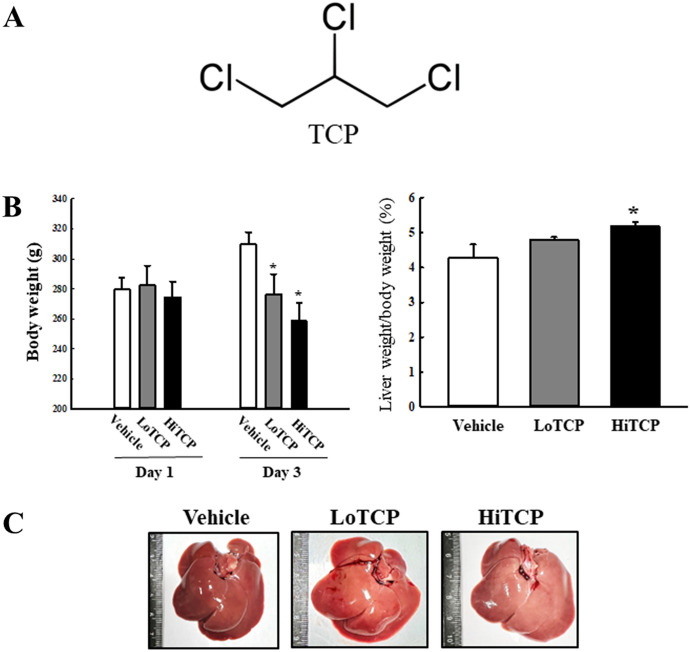
Fig. 1
Fig. 1
Body and liver weight in the TCP-treated SD rats. (a) Chemical structure of TCP. (b) Analyses of the body weight and liver weight/body weight rate. The body weight was measured on days one and three during the experimental period. The liver organ was collected from TCP-treated SD rats and weighed after removing some debris. (c) Morphological image of the liver organs. The body and liver weight were measured in five to seven rats per group, and each measurement was performed twice for each rat and tissue. The data are reported as the mean ± SD. *p < 0.0.5 compared to the Vehicle-treated group. TCP 1,2,3-Trichloropropane, LoTCP Low concentration of TCP, HiTCP High concentration of TCP
Fig. 2
Fig. 2
Histopathological structure of the liver in TCP-treated SD rats. After H&E staining of the liver section, the histopathological structure of the liver tissue was observed at 200 × and 400 × magnification. The stained liver tissue section was prepared from five to seven rats per group, and the histological structure was observed twice for each sample. TCP 1,2,3-Trichloropropane, LoTCP Low concentration of TCP, HiTCP High concentration of TCP, H&E Hematoxylin & Eosin, G Granulation, B Binucleated cells, I Inflammatory cells
Fig. 3
Fig. 3
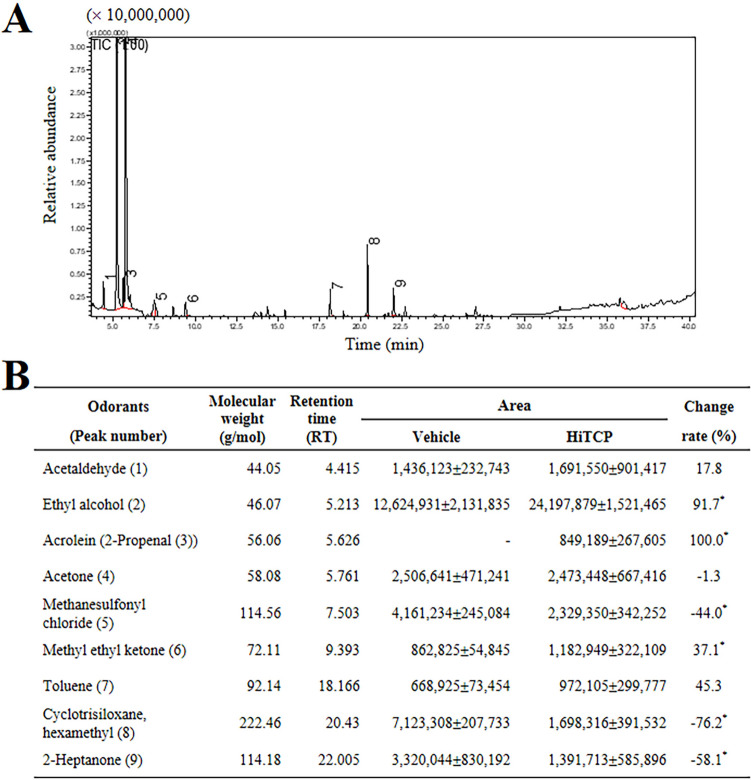
Changes in the concentrations of odor components in the urine of TCP-treated SD rats. (a) Chromatograms for urine samples. Each peak refers to the compounds mentioned in the bottom table. The odor compounds were identified by comparing the MS spectrum and RIs of the components in EHF with authentic standards available in the NIST Library (2005). (b) Retention time and peak area of nine compounds in the urine samples of TCP-treated SD rats. The urine sample was prepared from three to five SD rats per group, and GC–MS analyses were performed twice for each sample. The data are reported as the means ± SD. *p < 0.05 compared with the vehicle-treated group. TCP 1,2,3-Trichloropropane, HiTCP High concentration of TCP, GC–MS Gas chromatography-mass spectrometry, RIs retention indices, EHF extremely high frequency, NIST National Institute of Standards and Technology
Fig. 4
Fig. 4
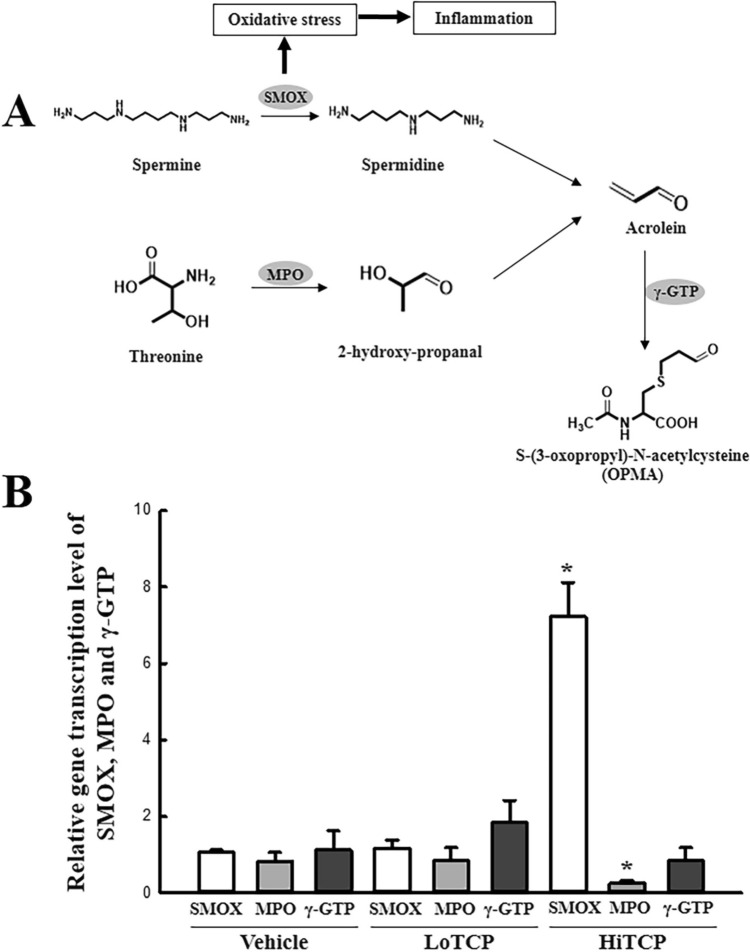
Transcription level of the genes for the acrolein metabolism-related enzymes. (a) Metabolic pathway of acrolein. Three key enzymes, including SMOX, MPO, and γ-GTP, mediated the production and conversation of acrolein. (b) Transcription levels of SMOX, MPO, and γ-GTP. The transcription levels of these three genes were detected in the total mRNA of the liver tissue by qRT-PCR analysis using the specific primers. The total RNA sample in liver tissue was prepared from three to five SD rats per group, and qRT-PCR analysis was performed twice for each sample. The data are reported as the means ± SD. *p < 0.05 compared to the Vehicle-treated group. TCP 1,2,3-Trichloropropane, LoTCP Low concentration of TCP, HiTCP High concentration of TCP, SMOX Spermine oxidase, MPO Myeloperoxidase, γ-GTP Gamma-Glutamyltransferase, qRT-PCR Quantitative real-time reverse transcription
Fig. 5
Fig. 5
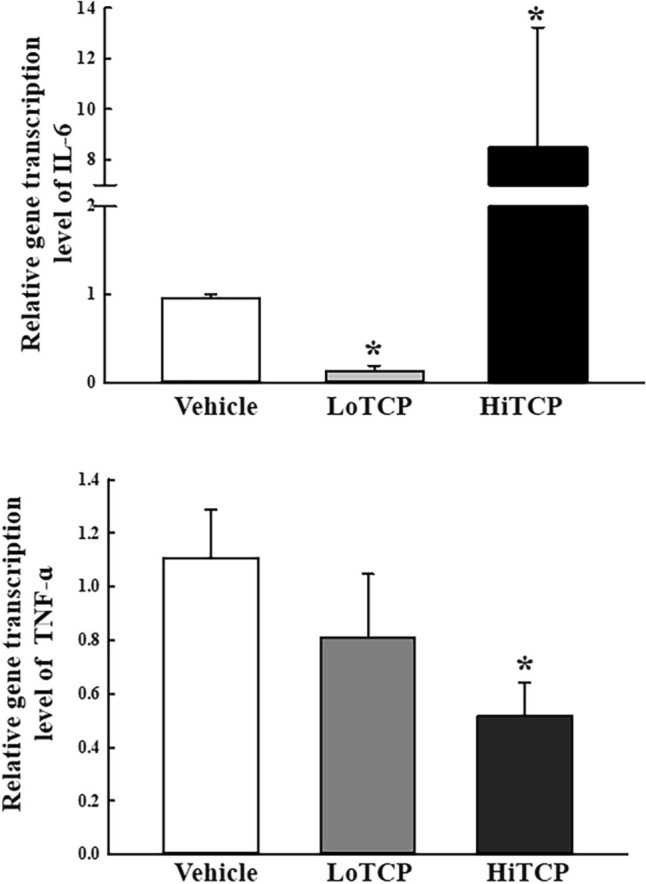
Transcription level of the inflammatory cytokines. The levels of IL-6 and TNF-ɑ transcription were detected in the total mRNA of the liver tissue by qRT-PCR analysis using the specific primers. Total RNA sample in the liver tissue was prepared from three to five SD rats per group, and qRT-PCR analyses were performed twice for each sample. The data are reported as the means ± SD. *p < 0.05 compared to the Vehicle-treated group. SMOX Spermine oxidase, IL-6 Interlukin-6, TNF-α Tumor necrosis factor-α, TCP 1,2,3-Trichloropropane, LoTCP Low concentration of TCP, HiTCP High concentration of TCP, qRT-PCR Quantitative real-time reverse transcription
Fig. 6
Fig. 6
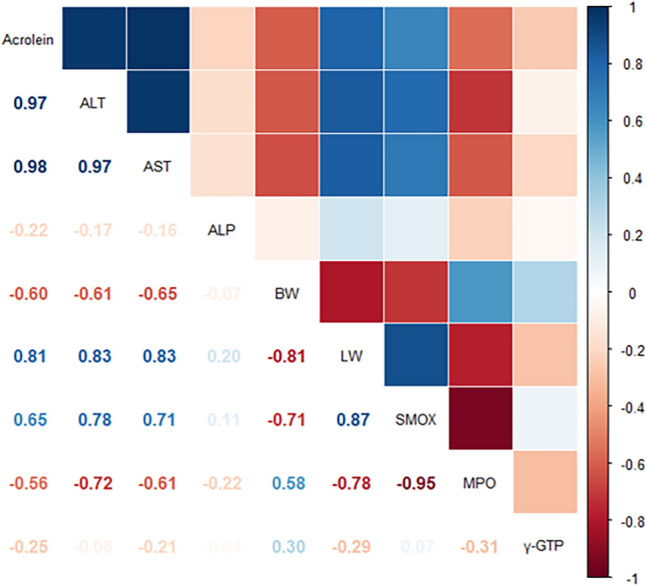
Correlogram drawn in Corrplot for the significance of correlative relationships between acrolein concentration and other parameters. P-values corresponding to the Pearson correlation coefficients were represented numbers. The coloring degree is scaled from strongly positive (dark red) to strongly negative (dark red). Numbers and colors represent the same values in a symmetrical structure based on the factors located on the diagonal. ALT Alanine transaminsase, AST Aspartate transaminase, ALP Alkaline phosphatase, LW Liver weight, BW Body weight, SMOX Spermine oxidase, MPO Myeloperoxidase, r-GTP gamma-glutamyl transpeptidase

References

    1. Shirasu M, Touhara K (2011) The scent of disease: volatile organic compounds of the human body related to disease and disorder. J Biochem 150:257–266. 10.1093/jb/mvr090 - PubMed
    1. Hakim M, Broza YY, Barash O, Peled N, Phillips M, Amann A, Haick H (2012) Volatile organic compounds of lung cancer and possible biochemical pathways. Chem Rev 112:5949–5966. 10.1021/cr300174a - PubMed
    1. Sharma A, Kumar R, Varadwaj P (2023) Smelling the disease: diagnostic potential of breath analysis. Mol Diag Ther 27:321–347. 10.1007/s40291-023-00640-7 - PMC - PubMed
    1. Broza YY, Vishinkin R, Barash O, Nakhleh MK, Haick H (2018) Synergy between nanomaterials and volatile organic compounds for non-invasive medical evaluation. Chem Soc Rev 47:4781–4859. 10.1039/c8cs00317c - PubMed
    1. Penn DJ, Oberzaucher E, Grammer K, Fischer G, Soini HA, Wiesler D, Novotny MV, Dixon SJ, Xu Y, Brereton RG (2007) Individual and gender fingerprints in human body odour. J R Soc Interface 4:331–340. 10.1098/rsif.2006.0182 - PMC - PubMed

LinkOut - more resources